Results by title
36 books match the query 'Be'
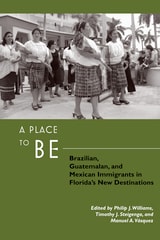
A Place to Be
Brazilian, Guatemalan, and Mexican Immigrants in Florida's New DestinationsEdited by Philip J. Williams, Timothy J. Steigenga, and Manuel A. Vásquez
Rutgers University Press, 2009
Contributors to this volume include Patricia Fortuny Loret de Mola, Carol Girón Solórzano, Silvia Irene Palma, Lúcia Ribeiro, Mirian Solfs Lizama, José Claúdio Souza Alves, Timothy J. Steigenga, Manuel A. Vásquez, and Philip J. Williams.
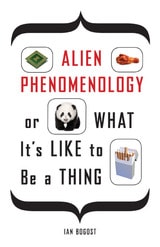
Alien Phenomenology, or What It’s Like to Be a Thing
Ian Bogost
University of Minnesota Press, 2012
Humanity has sat at the center of philosophical thinking for too long. The recent advent of environmental philosophy and posthuman studies has widened our scope of inquiry to include ecosystems, animals, and artificial intelligence. Yet the vast majority of the stuff in our universe, and even in our lives, remains beyond serious philosophical concern.
In Alien Phenomenology, or What It’s Like to Be a Thing, Ian Bogost develops an object-oriented ontology that puts things at the center of being—a philosophy in which nothing exists any more or less than anything else, in which humans are elements but not the sole or even primary elements of philosophical interest. And unlike experimental phenomenology or the philosophy of technology, Bogost’s alien phenomenology takes for granted that all beings interact with and perceive one another. This experience, however, withdraws from human comprehension and becomes accessible only through a speculative philosophy based on metaphor.
Providing a new approach for understanding the experience of things as things, Bogost also calls on philosophers to rethink their craft. Drawing on his own background as a videogame designer, Bogost encourages professional thinkers to become makers as well, engineers who construct things as much as they think and write about them.

Be a Great Boss
One Year to SuccessCatherine Hakala-Ausperk
American Library Association, 2011
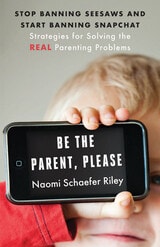
Be the Parent, Please
Stop Banning Seesaws and Start Banning Snapchat: Strategies for Solving the Real Parenting ProblemsNaomi Schaefer Riley
Templeton Press, 2018
Silicon Valley tech giants design their products to hook even the most sophisticated adults. Imagine, then, the influence these devices have on the developing minds of young people. Touted as tools of the future that kids must master to ensure a job in the new economy, they are, in reality, the culprits, stealing our children’s attention, making them anxious, agitated, and depressed.
What’s worse, schools across the country are going digital under the assumption that a tablet with a wi-fi connection is what’s lacking in our education system. Add to that the legion of dangers invited by unregulated access to the internet, and it becomes clear that our screen-saturated culture is eroding some of the essential aspects of childhood.
In Be the Parent, Please, former New York Post and Wall Street Journal writer Naomi Schaefer Riley draws from her experience as a mother of three and delves into the latest research on the harmful effects that excessive technology usage has on a child’s intellectual, social, and moral formation. Throughout each chapter, she backs up her discussion with “tough mommy tips”—realistic advice for parents who want to take back control from tech.
With the alluring array of gadgets, apps, and utopian promises expanding by the day, engulfing more and more of our lives, Be the Parent, Please is both a wake-up call and an indispensable guide for parents who care about the healthy development of their children.
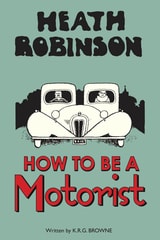
Heath Robinson
How to Be a MotoristW. Heath Robinson
Bodleian Library Publishing, 2015
For the car enthusiast, How to Be a Motorist offers a compendium of Robinson’s wonderfully inventive car-based contraptions, with innovations like a handy “zip-opening bonnet,” a rear wheel to turn the car around with one movement, and a fork attachment to help rural motorists to avoid the occasional chicken on the roadway. The days of unsolicited driving advice could be over with the realization of Robinson’s “duo car for the incompatible,” and the book also includes a parody of a production line demonstrating how cars are made.
A side-splittingly funny collection from the man whose “absurd, beautiful drawings” H. G. Wells claimed “give me a peculiar pleasure of the mind like nothing else in the world,” this book make a perfect gift for anyone looking to have a laugh at our complicated and increasingly mechanical modern life.
Heath Robinson
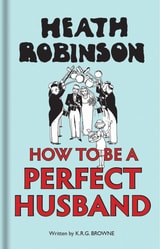
How to be a Perfect HusbandW. Heath Robinson & K.R.G. Browne
Bodleian Library Publishing, 2017
The cartoons in Heath Robinson: How to be a Perfect Husband provide sage advice for how to succeed in almost all aspects of married life—and, of course, it often features a complicated Robinsonian gadget. The perfect husband, for example, will take advantage of two simple attachments to the garden roller to tend the lawn and entertain the baby simultaneously. Likewise, he can peel onions with no fear of tears using a mirror and construct a cost-effective vacuum cleaner using items found around the house. Most importantly, he will devise a device to help him climb the stairs silently after a late night out with the boys.
A gently satirical collection, this book make a perfect gift for anyone looking to have a laugh at our complicated and increasingly mechanical modern life.
How We Came to Be
An Intellectual Genealogy of Chicano ScholarsEdited by Teresa Córdova, Aída Hurtado, Francisco J. Hernández, Avelardo Valdez; Foreword by Juan González
University of Arizona Press, 2026
This work chronicles the lives and legacies of Chicana and Chicano scholars whose formative experiences in the Chicano Movement shaped the development of Chicano studies and transformed higher education. Originating from the Reuniónes de Colegas—gatherings of veteran scholars reflecting on their shared histories—the volume features sixteen essays organized into five thematic sections that explore the intersections of activism, scholarship, and institutional change.
The contributors document how grassroots organizing evolved into academic inquiry, leading to the creation of departments, student support systems, and policy reforms that advanced equity and representation in universities. Essays address how community-engaged research influenced urban planning, health advocacy, and cultural production, while also highlighting Indigenous and transnational epistemologies that redefined theoretical frameworks in Chicano studies. The volume concludes with reflections on academic leadership and the breaking of barriers by Chicana scholars in higher education administration.
Together, these essays offer a powerful intellectual history and a testament to a generation’s enduring commitment to social justice. How We Came to Be is both a scholarly archive and a call to action, preserving the legacy of those who built Chicano studies and inspiring future generations to continue the work of transformation within and beyond the academy.
Contributors
José Calderón
Gilberto Cárdenas
Teresa Carrillo
Teresa Córdova
Estevan Flores
Yvette G. Flores
Felipe Gonzales
Deena J. González
Francisco J. Hernández
Inés Hernández-Ávila
Francisco Hernández Vázquez
Aída Hurtado
Larry Trujillo
Avelardo Valdez
Carlos G. Vélez-Ibáñez
James Diego Vigil
How to Be a Good Husband
Edited by the Bodleian Library
Bodleian Library Publishing, 2008
Don’t forget that very true remark that while face powder may catch a man, baking powder is the stuff to hold him.
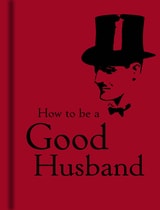
Marriage can be a series of humorous miscommunications, a power struggle, or a diplomatic nightmare. Men and women have long struggled to figure each other out—and the misunderstandings can continue well after they’ve been joined in matrimony. But long before Men Are From Mars, Women Are From Venus, couples turned to self-help booklets such as How to Be a GoodHusband and How to Be a Good Wife, two historic advice books that are now delightfully reproduced by the Bodleian Library.
The books, originally published in the 1930s for middle-class British couples, are filled with witty and charming aphorisms on how wives and husbands should treat each other. Some advice is unquestionably outdated—“It is a wife’s duty to look her best. If you don’t tidy yourself up, don’t be surprised if your husband begins to compare you unfavorably with the typist at the office”—but many other pieces of advice are wholly applicable today. They include such insightful sayings as: “Don’t tell your wife terminological inexactitudes, which are, in plain English, lies. A woman has wonderful intuition for spotting even minor departures from the truth”; “After all is said and done, husbands are not terribly difficult to manage”; or “Don’t squeeze the tube of toothpaste from the top instead of from the bottom. This is one of the small things of life that always irritates a careful wife.”
Entertaining and charmingly illustrated, How to Be a Good Husband and How to Be a Good Wife offer enduringly useful advice for all couples, from the newly engaged to those celebrating their golden anniversary.
How to Be a Good Wife
Edited by the Bodleian Library
Bodleian Library Publishing, 2008
Don’t forget that very true remark that while face powder may catch a man, baking powder is the stuff to hold him.
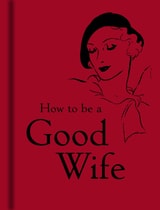
Marriage can be a series of humorous miscommunications, a power struggle, or a diplomatic nightmare. Men and women have long struggled to figure each other out—and the misunderstandings can continue well after they’ve been joined in matrimony. But long before Men Are From Mars, Women Are From Venus, couples turned to self-help booklets such as How to Be a GoodHusband and How to Be a Good Wife, two historic advice books that are now delightfully reproduced by the Bodleian Library.
The books, originally published in the 1930s for middle-class British couples, are filled with witty and charming aphorisms on how wives and husbands should treat each other. Some advice is unquestionably outdated—“It is a wife’s duty to look her best. If you don’t tidy yourself up, don’t be surprised if your husband begins to compare you unfavorably with the typist at the office”—but many other pieces of advice are wholly applicable today. They include such insightful sayings as: “Don’t tell your wife terminological inexactitudes, which are, in plain English, lies. A woman has wonderful intuition for spotting even minor departures from the truth”; “After all is said and done, husbands are not terribly difficult to manage”; or “Don’t squeeze the tube of toothpaste from the top instead of from the bottom. This is one of the small things of life that always irritates a careful wife.”
Entertaining and charmingly illustrated, How to Be a Good Husband and How to Be a Good Wife offer enduringly useful advice for all couples, from the newly engaged to those celebrating their golden anniversary.
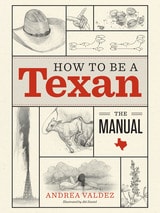
How to Be a Texan
The ManualBy Andrea Valdez
University of Texas Press, 2016
There are certain things every Texan should know how to do and say, whether your Lone Star roots reach all the way back to the 1836 Republic or you were just transplanted here yesterday. Some of these may be second nature to you, but others . . . well, maybe it wouldn’t hurt to have a few handy hints if, say, branding the herd or hosting a tamalada aren’t your usual pastimes. That’s where How to Be a Texan can help.
In a friendly, lighthearted style, Andrea Valdez offers illustrated, easy-to-follow steps for dozens of authentic Texas activities and sayings. In no time, you’ll be talking like a Texan and dressing the part; hunting, fishing, and ranching; cooking your favorite Texas dishes; and dancing cumbia and two-step. You’ll learn how to take a proper bluebonnet photo and build a Día de los Muertos altar, and you’ll have a bucket list of all the places Texans should visit in their lifetime. Not only will you know how to do all these things, you’ll finish the book with a whole new appreciation for what it means to be a Texan and even more pride in saying “I’m from Texas” anywhere you wander in the world.
How to Be an Indian in the 21st Century
Louis V. Clark (Two Shoes)
Wisconsin Historical Society Press, 2017
How to Be an Intellectual in the Age of TV
The Lessons of Gore VidalMarcie Frank
Duke University Press, 2005
Frank highlights the connections between Vidal’s attitudes toward TV, sex, and American politics as they have informed his literary and political writings and screen appearances. She deftly situates his public persona in relation to those of Andy Warhol, Jacqueline Susann, Mary McCarthy, Susan Sontag, and others. By describing Vidal’s shrewd maneuvering between different media, Frank suggests that his career offers a model to aspiring public intellectuals and a refutation to those who argue that electronic media have eviscerated public discourse.
How to be a Good Lover
Edited by the Bodleian Library
Bodleian Library Publishing, 2012
Across the centuries, few experiences in life rival the excitement and emotional intensity of falling in love. Yet from the moment we set eyes on a special someone, the path to their heart seems strewn with devastating pitfalls. What if the object of our affection hates the way we wear our hair, finds our kisses lacking, or resents our talk of former loves?How does one go about successfully wooing a future husband or wife? Fortunately, there are time-honored strategies to avoid these pitfalls and help us attract and keep the paramour of our dreams.
How to be a Good Mother-in-Law
Edited by the Bodleian Library
Bodleian Library Publishing, 2013
Originally published in the 1930s, How to be a Good Mother-in-Law offers advice that ranges from the amusingly old-fashioned to the surprisingly still relevant today. Among the topics discussed are how not to behave on your son or daughter’s wedding day, how to visit the couple in their new home, how to interact with the grandchildren, and what degree of independence should be granted to married sons. For mothers-in-law considering living with the married couple, a chapter presents suggestions for how to negotiate this famously fraught situation. In another chapter called “Are They as Bad as They are Painted?,” the book reproduces a selection of tabloid tragedies, including the story of a mother-in-law that surprised a hapless couple by accompanying them on their honeymoon.
Whether you’re a new mother-in-law, a veteran to this much-maligned role, or a long-suffering spouse whose partner’s parent seems impossible to please—the pithy advice on-hand in How to be a Good Mother-in-Law will be warmly welcomed.
How to be a Good Motorist
Edited by the Bodleian Library
Bodleian Library Publishing, 2013
Among the practical and unusual guidelines offered are what precautions one should take when another car approaches and which parts of a car’s engine can be fixed in a pinch with emery paper, copper wire, and insulating tape. Some of the observations, like the cautionary note that, when driving, one ought to “look on all other drivers as fools” are sure to strike a chord with many motorists today. Others, like the suggestion that “a good chauffeur will save his employer a great deal of expense” evoke the style of a glamorous bygone era. The book covers such topics as unscrupulous secondhand car dealers, simple maintenance, women drivers, and “dashboard delights.” (Spoiler: For a well-equipped dashboard, don’t forget the speedometer.) For those planning a longer journey, the book also advises on how to choose the most pleasant picnic site when on the road.
How to be a Good Motorist is the perfect gift for the new driver or anyone who longs for a simpler time before rush-hour traffic reports and roundabouts.
How to be a Good Parent
Compiled by Jaqueline Mitchell
Bodleian Library Publishing, 2015
The mere provision of the vegetable is not sufficient; it must be actually eaten.
If there is room enough for somersaults, the child can be satisfied.
These are just a few of the words of wisdom on offer in How to be a Good Parent, the latest in a series of delightful advice books from the Bodleian Library that also includes How to be a Good Husband and How to be a Good Wife. As developmental psychology began to show promise, beleaguered parents were drawn to the nascent discipline with the sorts of questions that will be familiar to any parent: How does one tell a toddler “no” without triggering a tantrum? Are there circumstances in which it’s acceptable to extract good behavior with bribery?
How to be a Good Parent brings together bits from the best of advice books of the 1920s and ’30s, taking readers through all the challenges involved in raising a child. Among the topics discussed are good—and bad—behavior, how to dress one’s dear son or darling daughter, mealtime, and the dreaded morning and bedtime routines. A section on taking medicine offers sage advice: “Gargling is a useful accomplishment” (while perhaps not appropriate for the dinner table). In a section on playtime, parents tasked with planning their child’s birthday will warmly welcome the book’s advice to “let the children give their own parties!”
By turns humorously old-fashioned and timeless, How to be a Good Parent is a charmingly illustrated guide to what any parent can tell you is the world's most difficult job.
How to be a Peer Research Consultant
A Guide for Librarians and StudentsMaglen Epstein
Assoc of College & Research Libraries, 2022
In seven highly readable chapters, How to Be a Peer Research Consultant provides focused support for anyone preparing undergraduate students to serve as peer research consultants, whether you refer to these student workers as research tutors, reference assistants, or research helpers. Inside you’ll find valuable training material to help student researchers develop metacognitive, transferable research skills and habits, as well as foundational topics like what research looks like in different disciplines, professionalism and privacy, ethics, the research process, inclusive research consultations, and common research assignments. It concludes with an appendix containing 30 activities, discussion questions, and written reflection prompts to complement the content covered in each chapter, designed to be easily printed or copied from the book.
How to Be a Peer Research Consultant can be read in its entirety to gather ideas and activities, or it can be distributed to each student as a training manual. It pays particular attention to the peer research consultant-student relationship and offers guidance on flexible approaches for supporting a wide range of research needs. The book is intended to be useful in a variety of higher education settings and is designed to be applicable to each institution’s unique library resources and holdings. Through mentoring and coaching, undergraduate students can feel confident in their ability to help their peers with research and may be inspired to continue this work as professional librarians in the future.
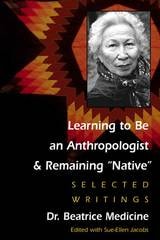
LEARNING TO BE AN ANTHROPOLOGIST
SELECTED WRITINGSDr. Beatrice Medicine
University of Illinois Press, 2001
For half a century, Dr. Medicine has defied stereotypes, racism, and sexism in her life and work while combating the reductive, patronizing views of Native Americans perpetuated by mainstream anthropologists. This retrospective collection reflects her unswerving commitment to furthering Native Americans' ability to speak for themselves and deal with the problems of contemporary life.
Learning to Be an Anthropologist and Remaining "Native" includes Medicine's clear-eyed views of assimilation, bilingual education, and the adaptive strategies by which Native Americans have conserved and preserved their ancestral languages. Her discussions of sex roles in contemporary Native American societies encompass homosexual orientation among males and females and the "warrior woman" role among Plains Indians as one of several culturally accepted positions according power and prestige to women. The volume also includes Medicine's thoughtful assessments of kinship and family structures, alcoholism and sobriety, the activism implicit in the religious ritual of the Lakota Sioux Sun Dance, and the ceremonial uses of Lakota star quilts.
"The Native American is possibly the least understood ethnic minority in contemporary American society," Medicine observes. Her decades of deliberate, generous, dedicated work have done much to reveal the workings of Native culture while illuminating the effects of racism and oppression on Indian families, kinship units, and social and cultural practices.
So You Want to Be an Academic Library Director
Colleen S. Harris
American Library Association, 2017
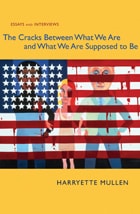
The Cracks Between What We Are and What We Are Supposed to Be
Essays and InterviewsHarryette Mullen
University of Alabama Press, 2012
The Cracks Between What We Are and What We Are Supposed to Be forms an extended consideration not only of Harryette Mullen’s own work, methods, and interests as a poet, but also of issues of central importance to African American poetry and language, women’s voices, and the future of poetry.
Together, these essays and interviews highlight the impulses and influences that drive Mullen’s work as a poet and thinker, and suggest unique possibilities for the future of poetic language and its role as an instrument of identity and power.
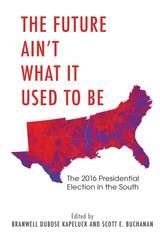
The Future Ain't What It Used to Be
The 2016 Presidential Election in the SouthBranwell DuBose Kapeluck
University of Arkansas Press, 2018
The Future Ain’t What It Used to Be details how the 2016 presidential election developed in the eleven states that make up the South. Preeminent scholars of Southern politics analyze this momentous election, including the issues that drove southern voters, the nomination process in early 2016, and where the region may be headed politically in the Trump era. In addition, each state chapter includes analysis on notable congressional races and important patterns within the states.
This new edited volume will be an important tool for scholars, and also journalists and political enthusiasts seeking a deeper understanding of contemporary southern electoral politics.
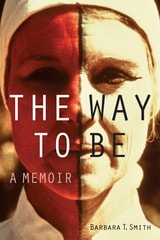
The Way to Be
A MemoirBarbara T. Smith
J. Paul Getty Trust, The, 0
For over fifty years, Barbara T. Smith has been at the forefront of artistic movements in California. Her work across many mediums explores concepts that strike at the core of human nature, including sexuality, physical and spiritual sustenance, technology, and death. In this memoir, Smith weaves together descriptive accounts of her pioneering performances with an intimate narrative of her life.
The Way to Be covers the years 1931 to 1981, up to the artist’s fiftieth birthday, resulting in an exhaustive catalogue of her early work. It reveals the personal stories and events behind her pieces and the challenges she faced in an art world dominated by sexism and machismo. Drawing on Smith’s archive at the Getty Research Institute, this enthralling book presents previously unpublished notes, documents, photographs, and firsthand accounts of her life and practice, as well as her more recent reflections on the past. The Way to Be demonstrates Smith’s lasting contributions to the field of contemporary art and provides an engaging commentary on a recent period of great cultural and political change.
This volume is published to accompany an exhibition on view at the Getty Research Institute at the Getty Center from February 28 to July 16, 2023.
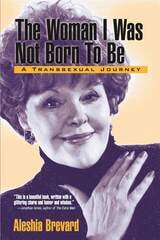
The Woman I Was Not Born To Be
A Transsexual JourneyAleshia Brevard
Temple University Press, 2001
Under the stage name Lee Shaw, Brevard worked as a drag queen at Finocchio's, a San Francisco club, doing Marilyn Monroe impersonations. (Like Marilyn, she sought romance all the time and had a string of entanglements with men.) Later, she worked as a stripper in Reno and as a Playboy Bunny at the Sunset Strip hutch.
After playing opposite Don Knotts in the movie The Love God, Brevard appeared in other films and broke into TV as a regular on the Red Skelton Show. She created the role of Tex on the daytime soap opera One Life To Live. As a woman, Brevard returned to teach theater at East Tennessee State, the same university she had attended as a boy.
This memoir is a rare pre-Women's Movement account of coming to terms with gender identity. Brevard writes frankly about the degree to which she organized her life around pleasing men, and how absurd it all seems to her now.
There Has to Be a Better Way
Lessons from Former Urban TeachersMawhinney, Lynnette
Rutgers University Press, 2019
Teacher attrition has long been a significant challenge within the field of education. It is a commonly-cited statistic that almost fifty percent of beginning teachers leave the field within their first five years, to the detriment of schools, students, and their own career development. There Has to be a Better Way offers an essential voice in understanding the dynamics of teacher attrition from the perspective of the teachers themselves. Drawing upon in-depth qualitative research with former teachers from urban schools in multiple regions of the United States, Lynnette Mawhinney and Carol R. Rinke identify several themes that uncover the rarely-spoken reasons why teachers so often willingly leave the classroom. The authors go further to provide concrete recommendations for how school administrators can better support their practicing teachers, as well as how teacher educators might enhance preparation for the next generation of educators. Complete with suggested readings and discussion questions, this book serves as an indispensable resource in understanding and building an effective and productive educational workforce for our nation’s students.
To Be A Slave in Brazil
1550-1888Mattoso, Katia M de Queiros
Rutgers University Press, 1986
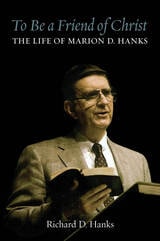
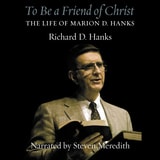
To Be a Friend of Christ
The Life of Marion D. HanksHanks, Richard D.
Signature Books, 2024
Marion Duff Hanks (1921–2011) was one of the most beloved and influential leaders of the Church of Jesus Christ of Latter-day Saints in the twentieth century, serving as a General Authority (senior leader) for forty years. He was also a leader of national import. As a recognized expert on youth, five US presidents appointed him to their President’s Council on Physical Fitness and Sports. Hanks also served as an executive leader of Rotary International and the Boy Scouts of America.
Author Richard Hanks draws on previously unavailable primary sources—journals, correspondence, notebooks, and recordings—to share this first and only authorized biography of his father. Hanks traces his father’s influence as he advocated for numerous changes in the institutional church, including humanitarian efforts, refugee relief services, missionary community service, a focus on mercy for the sinner, and a churchwide emphasis on “coming unto Christ.” A Renaissance man, Duff Hanks felt comfortable mingling with presidents and world leaders and speaking from pulpits and podiums to huge audiences and on television. But he found his greatest joy in assisting the individual, encouraging each in their personal search for happiness. Once, when asked about his goals, he replied, “My strongest desire is to qualify to be a friend of Christ.”
To Be a Friend of Christ
The Life of Marion D. HanksHanks, Richard D.
Signature Books, 2025
Marion Duff Hanks (1921–2011) was one of the most beloved and influential leaders of the Church of Jesus Christ of Latter-day Saints in the twentieth century, serving as a General Authority (senior leader) for forty years. He was also a leader of national import. As a recognized expert on youth, five US presidents appointed him to their President’s Council on Physical Fitness and Sports. Hanks also served as an executive leader of Rotary International and the Boy Scouts of America.
Author Richard Hanks draws on previously unavailable primary sources—journals, correspondence, notebooks, and recordings—to share this first and only authorized biography of his father. Hanks traces his father’s influence as he advocated for numerous changes in the institutional church, including humanitarian efforts, refugee relief services, missionary community service, a focus on mercy for the sinner, and a churchwide emphasis on “coming unto Christ.” A Renaissance man, Duff Hanks felt comfortable mingling with presidents and world leaders and speaking from pulpits and podiums to huge audiences and on television. But he found his greatest joy in assisting the individual, encouraging each in their personal search for happiness. Once, when asked about his goals, he replied, “My strongest desire is to qualify to be a friend of Christ.”
To Be a Man Is Not a One-Day Job
Masculinity, Money, and Intimacy in NigeriaDaniel Jordan Smith
University of Chicago Press, 2017
Drawing on twenty-five years of experience in southeastern Nigeria, Daniel Jordan Smith takes readers through the principal phases and arenas of men’s lives: the transition to adulthood; searching for work and making a living; courtship, marriage, and fatherhood; fraternal and political relationships; and finally, the attainment of elder status and death. He relates men’s struggles both to fulfill their own aspirations and to meet society’s expectations. He also considers men who behave badly, mistreat their wives and children, or resort to crime and violence. All of these men face similar challenges as they navigate the complex geometry of money and intimacy. Unraveling these connections, Smith argues, provides us with a deeper understanding of both masculinity and society in Nigeria.
To Be an Immigrant
Kay Deaux
Russell Sage Foundation, 2006
To Be in This Number
Alane Rollings
Northwestern University Press, 2005
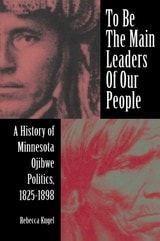
To Be the Main Leaders of Our People
A History of Minnesota Ojibwe Politics, 1825-1898Rebecca Kugel
Michigan State University Press, 1998
In the spring of 1868, people from several Ojibwe villages located along the upper Mississippi River were relocated to a new reservation at White Earth, more than 100 miles to the west. In many public declarations that accompanied their forced migration, these people appeared to embrace the move, as well as their conversion to Christianity and the new agrarian lifestyle imposed on them. Beneath this surface piety and apparent acceptance of change, however, lay deep and bitter political divisions that were to define fundamental struggles that shaped Ojibwe society for several generations.
In order to reveal the nature and extent of this struggle for legitimacy and authority, To Be The Main Leaders of Our People reconstructs the political and social history of these Minnesota Ojibwe communities between the years 1825 and 1898. Ojibwe political concerns, the thoughts and actions of Ojibwe political leaders, and the operation of the Ojibwe political system define the work's focus. Kugel examines this particular period of time because of its significance to contemporary Ojibwe history. The year 1825, for instance, marked the beginning of a formal alliance with the United States; 1898 represented not an end, but a striking point of continuity, defying the easy categorizations of Native peoples made by non-Indians, especially in the closing years of the nineteenth century.
In this volume, the Ojibwe "speak for themselves," as their words were recorded by government officials, Christian missionaries, fur traders, soldiers, lumbermen, homesteaders, and journalists. While they were nearly always recorded in English translation, Ojibwe thoughts, perceptions, concerns, and even humor, clearly emerge. To Be The Main Leaders of Our People expands the parameters of how oral traditions can be used in historical writing and sheds new light on a complex, but critical, series of events in ongoing relations between Native and non-Native people.
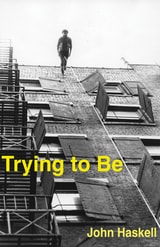
Trying to Be
A CollectionJohn Haskell
University of Alabama Press, 2025
With lyrical precision and aching intimacy, Trying to Be moves through history, memory, and the performance of ephemeral identity, as John Haskell assembles a quiet manifesto for how to think, how to live, and how to feel ourselves in our bodies.
Trying to Be is a book about presence, absence, and the intricate art of inhabiting one’s own life. John Haskell—known for his genre-defying literary voice—moves through a series of intimate, sharply observed portraits: Francis Bacon and his doomed lover; Danny Kaye and his split personality; Sophia Loren; Diego Velázquez; Ulrike Meinhof; and Yvonne Rainer’s radical reinvention of what dance can be.
But this isn’t cultural commentary as ornament. These figures mirror Haskell’s own attempts to grapple with grief, estrangement, memory, and the failures of language. The result is a book that blurs the line between criticism and confession, art history and personal inventory. Whether recalling a botched friendship, a beloved mentor, or the carefully choreographed movement in a dance workshop, Haskell searches for new ways of becoming—through art, through awareness, through stories that have the quality of song. In prose that’s quiet but unflinching, Trying to Be asks: What do we do with our bodies, our memories, and our regrets when even language feels exhausted? And what happens when, against the odds, we keep going?
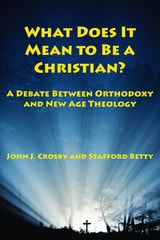
What Does It Mean to be a Christian?
A DebateJohn F. Crosby
St. Augustine's Press, 2016
The debate between the two friends is presented here in the form of a correspondence they conducted over a period of two years (and did not originally intend for publication). It has undergone very little editing and revision; the authors have wanted to preserve the spontaneous give and take of their exchange. Together they have produced a work of philosophical dialogue that is unusually fruitful in its ability to clarify some fundamental issues of religion.
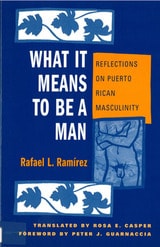
What It Means To Be A Man
Reflections on Puerto Rican MasculinityRafael L. Ramirez
Rutgers University Press, 1999
What It Means to Be a Man begins with a discussion of machismo set in the context of the social construction of masculinity. Ramírez presents his interpretation of what it means to be a Puerto Rican man, discussing the attributes and demands of masculinity, and pointing out the ways in which strength, competition, and sexuality are joined with power and pleasure. He examines the erotic relationships between men as part of the expressions of masculinity, and analyzes how the homosexual experience reproduces the dominant masculine ideology. Finally, Ramírez draws on the literature of the recent men's movements, offering Puerto Rican men the possibility of constructing a new masculinity, liberated from power games, to provide them with a chance to not only be better understood by others, but also to better understand themselves and their place in society.
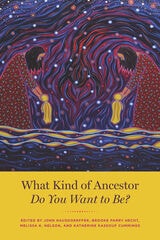
What Kind of Ancestor Do You Want to Be?
Edited by John Hausdoerffer, Brooke Parry Hecht, Melissa K. Nelson, and Katherine Kassouf Cummings
University of Chicago Press, 2021
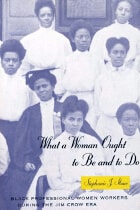
What a Woman Ought to Be and to Do
Black Professional Women Workers during the Jim Crow EraStephanie J. Shaw
University of Chicago Press, 1996
What a Woman Ought to Be and to Do brings to life a world in which African-American families, communities, and schools worked to encourage the self-confidence, individual initiative, and social responsibility of girls. Shaw shows us how, in a society that denied black women full professional status, these girls embraced and in turn defined an ideal of "socially responsible individualism" that balanced private and public sphere responsibilities. A collective portrait of character shaped in the toughest circumstances, this book is more than a study of the socialization of these women as children and the organization of their work as adults. It is also a study of leadership—of how African American communities gave their daughters the power to succeed in and change a hostile world.