Results by title
6 books match the query 'Bear'
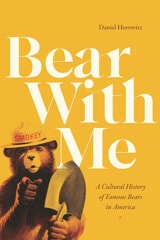
Bear With Me
A Cultural History of Famous Bears in AmericaDaniel Horowitz
Duke University Press, 2025
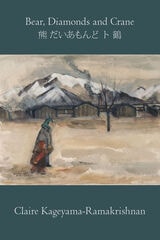
Bear, Diamonds and Crane
Claire Kageyama-Ramakrishnan
Four Way Books, 2011
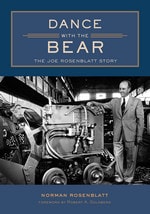
Dance with the Bear
The Joe Rosenblatt StoryNorman Rosenblatt
University of Utah Press, 2013
The “Little Hoover Commission” was modeled after the 1947 initiative of President Harry Truman, who created the Commission on Organization of the Executive Branch of Government to recommend administrative changes and appointed former president Herbert Hoover to chair it. Rosenblatt, a perceptive and outspoken figure, brought a much-needed dose of urgency and pragmatism to the Utah process and formulated a number of far-reaching suggestions to the legislature—many of which were adopted and still exist to this day. His work with the commission coupled with his later role on the San Francisco Federal Reserve Board did much to modernize Utah. Rosenblatt’s legacy as a perpetual champion of the community is further exemplified by his role as cultural conduit between Salt Lake’s Jewish community and the leaders of the Church of Jesus Christ of Latter-day Saints.
This readable work will serve as an integral addition to Utah business and political history, enriching the library of anyone looking for an engaging story of a remarkable and transformative figure.
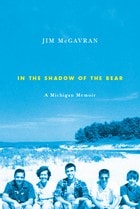
In the Shadow of the Bear
A Michigan MemoirJim McGavran
Michigan State University Press, 2010
In the Shadow of the Bear chronicles the author's return, after a forty-year absence, to the site of his childhood summer vacations at Little Glen Lake in northwestern Lower Michigan's Leelanau peninsula.
The ancient Ojibwa legend that gave a name to the area's most striking geographical feature, the Sleeping Bear Sand Dunes, offers a way of understanding his mother's powerful but sometimes restless force of love and ambition in the family, as well as his father's quieter, often self-sacrificing love. Chapters devoted to the return to Leelanau, to each of his parents, and to his father's family culminate in the narrative of his daughter's 2005 Leelanau wedding.
Jim McGavran tells his story of self-discovery in prose that is alternatively frank and lyrical as he recaptures his bewildered yet enchanted boyhood self, filtered through his consciousness of longing and loss, lending the writing a particular poignancy.
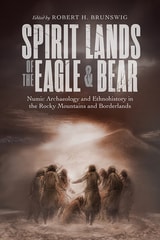
Spirit Lands of the Eagle and Bear
Numic Archaeology and Ethnohistory in the Rocky Mountains and BorderlandsRobert H. Brunswig
University Press of Colorado, 2020
New research into Numic archaeology, ethnohistory, and ethnography is significantly changing the understanding of migratory patterns, cultural interactions, chronology, and shared cultural-religious practices of regionally defined Numic branches and non-Numic populations of the American West. Contributors examine case studies of Ute and Shoshone material culture (ceramics, lithics, features and structures, trade and seasonal migration), chronology (dendrochronology, radiocarbon dating, thermoluminescence), and subsistence systems (hunting camps, game drives, faunal and botanical evidence of food sources). They also delineate different hunter-gatherer “ethnic groups” who co-occupied or interacted within one another’s territories through trade, raiding, or seasonal subsistence migrations, such as the Late Fremont/Ute and the Shoshone or the early Navajo/Ute and the Shoshone.
With a strong emphasis on diverse cases and new and original archaeological, ethnohistoric, and ethnographic lines of evidence, Spirit Lands of the Eagle and Bear interweaves anthropological theory and innovative applications of leading-edge scientific methodologies and technologies. The book presents a cross-section of field, laboratory, and ethnohistoric studies—including indigenous consultation—that explore past, recent, and ongoing developments in Numic cultural history and prehistory. It will be of interest to scholars of Southwestern archaeology, as well as private and government cultural resource specialists and museum staff.
Contributors:
Richard Adams, John Cater, Christine Chady, David Diggs, Rand Greubel, John Ives, Byron Loosle, Curtis Martin, Sally McBeth, Lindsay Montgomery, Bryon Schroeder, Matthew Stirn
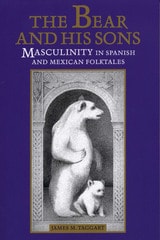
The Bear and His Sons
Masculinity in Spanish and Mexican FolktalesBy James M. Taggart
University of Texas Press, 1997
All the world over, people tell stories to express their deepest feelings about such things as what makes a "real" man or woman; what true love, courage, or any other virtue is; what the proper relationships are between people. Often groups of people widely separated by space or time will tell the same basic story, but with differences in the details that reveal much about a particular group's worldview.
This book looks at differences in the telling of several common Hispanic folktales. James Taggart contrasts how two men—a Spaniard and an Aztec-speaking Mexican—tell such tales as "The Bear's Son." He explores how their stories present different ways of being a man in their respective cultures.
Taggart's analysis contributes to a revision of Freud's theory of gender, which was heavily grounded in biological determinism. Taggart focuses instead on how fathers reproduce different forms of masculinity in their sons. In particular, he shows how fathers who care for their infant sons teach them a relational masculinity based on a connected view of human relationships. Thus, The Bear and His Sons will be important reading not only in anthropology and folklore, but also in the growing field of men's studies.