Results by title
25 books match the query 'Beats (Persons)'
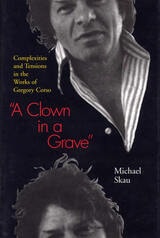
A Clown in a Grave
Complexities and Tensions in the Works of Gregory CorsoMichael Skau
Southern Illinois University Press, 1999
Using a number of critical approaches, Michael Skau examines Gregory Corso's complex imagination, his humor, and his poetic techniques in dealing with America, the Beat generation, and death.
Skau covers the complete works of Corso, one of the four major Beat Generation writers (with Jack Kerouac, Allen Ginsberg, and William S. Burroughs) who attempted to provide an alternative to what they saw as the academic forms of literature dominating American writing through the 1940s and 1950s. The Beat option focused on ordinary people, spurning the cultural pretensions of the intelligentsia and using common language as well as the rhythms of actual speech. Corso, abandoned as a child by his mother, subjected to a variety of foster homes, and imprisoned as an adolescent, became an authentic voice of America's neglected streetwise youth. He embodies much of the tension, confusion, and rebellion that emerged in America after World War II and eventually crested in the 1960s.
Corso emphasizes social issues, yet risks undermining this significance by using wit, wordplay, and humor. While conceding mortality, he is adamant in refusing to acknowledge death's power. Even as he rebels against conventional literature, he still is enchanted by classicism and romanticism, often borrowing their techniques and idioms. Skau examines these complexities and seeming contradictions throughout Corso's career, showing that Corso finds value in inconsistency and vacillation. For him, as illustrated in the poems "Hair" and "Marriage," contradiction and ambivalence suggest the foundations of freedom of imagination.
In spite of Corso's significance as an American poet, Skau's is the first extensive study of his work, including his fiction. Skau also provides the first complete bibliography of Corso's published work in more than thirty years.
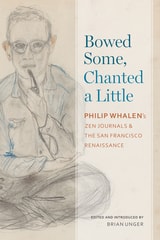
Bowed Some, Chanted a Little
Philip Whalen's Zen Journals and the San Francisco RenaissanceEdited and Introduced by Brian Unger
University of Alabama Press, 2023
The literary journals of a key figure in both the Beat and San Francisco Renaissance movements of the New American Poetry, and an ordained Zen Buddhist priest
Philip Whalen (1923–2002) authored twenty collections of verse, more than twenty broadsides, two novels, a huge assemblage of autobiographical literary journals, nine or ten experimental prose works, and dozens of critical essays, lectures, commentaries, introductions, prefaces, and interviews. But he came to regard his literary journals as his most important prose legacy.
Whalen’s literary work represents a significant turn in American letters, as he and his closest colleagues immersed themselves in East Asian literature and religion, reinvigorating strikingly new linguistic and aesthetic paths for North American writers and artists. However, until now Whalen’s forty-plus years of journals—sixty small eight-by-six-inch notebooks—have been largely inaccessible, archived in the rare book and manuscript library at the University of California, Berkeley, undigitized and unavailable online. Thus, the publication of a critical scholarly edition of Whalen’s journals and notebooks constitutes an important literary event and an invaluable resource for scholars, teachers, poets, and lay readers who follow twentieth-century North American poetry.
Capturing the Beat Moment
Cultural Politics and the Poetics of PresenceErik Mortenson
Southern Illinois University Press, 2010
CHOICE Outstanding Academic Title
Examining “the moment” as one of the primary motifs of Beat writing, Erik Mortenson offers the first book to investigate immediacy and its presence and importance in Beat writing. Capturing the Beat Moment: Cultural Politics and the Poetics of Presence places an expanded canon of Beat writers in an early postmodern context that highlights their importance in American poetics and provides an account of Beat practices that reveal how gender and race affect Beat politics of the moment.
Mortenson argues that Beat writers focused on action, desire, and spontaneity to establish an authentic connection to the world around them and believed that “living in the moment” was the only way in which they might establish the kind of life that led to good writing. With this in mind, he explores the possibility that, far from being the antithesis of their times, the Beats actually were a product of them. Mortenson outlines the effects of gender and race on Beat writing in the postwar years, as well as the Beats’ attempts to break free of the constrictive notions of time and space prevalent during the 1950s.
Mortenson discusses such topics as the importance of personal visionary experiences; the embodiment of sexuality and the moment of ecstasy in Beat writing; how the Beats used photographs to evoke the past; and the ways that Beat culture was designed to offer alternatives to existing political and social structures. Throughout the volume, Mortenson moves beyond the Kerouac-Ginsberg-Burroughs triumvirate commonly associated with Beat literature, discussing women—such as Diane di Prima, Janine Pommy Vega, and Joyce Johnson—and African American writers, including Bob Kaufman and Amiri Baraka. With the inclusion of these authors comes a richer understanding of the Beat writers’ value and influence in American literary history.
Carne de Dios
A NovelHomero Aridjis; Translated by Chloe Garcia Roberts
University of Arizona Press, 2025
María Sabina, the renowned Mazatec healer, spends her days in the small town of Huautla de Jiménez selling produce at the market and foraging under the new moon for the sacred mushrooms that grow near her home—her Holy Children, Carne de Dios, or Flesh of God. But her life changes forever when an amateur mycologist from New York, with a cameraman in tow, visits her to experience for himself the mushroom ceremony, or velada, he knows only from whispers in anthropological records. When he publishes an unauthorized article about his experience in LIFE Magazine 1957, the stage is set for an explosive encounter between the burgeoning international counterculture and the woman who became an unwilling icon of the psychedelic revolution.
Homero Aridjis’s novel, vividly translated by Chloe Garcia Roberts, tells the story of the motley crew of bohemians, researchers, and holy fools, both real and imagined, who descend on the town of Huautla de Jiménez searching for inspiration, distraction, and salvation in the sacred mushrooms. These seekers melt in and out of a narrative infiltrated by the slipstream logic of dreams. As John Lennon plays jazz on the patio of the Hotel Grande, Juan Rulfo contemplates horror movies, and Allen Ginsberg recites mantras at Philip Lamantia’s wedding, María Sabina’s life is increasingly thrown into turmoil.
Carne de Dios is a masterful and often humorous blend of history, myth, and poetic imagination, captured in a translation that mirrors the hallucinatory beauty of Aridjis’s original Spanish. Aridjis’s intimate portrayal of María Sabina, informed by his personal connection to her, serves as both a tribute to her enduring legacy and a critical reflection on the wave of global interest in mushroom culture still gaining momentum today.
This English translation includes an introduction by the translator and an afterword by the author.
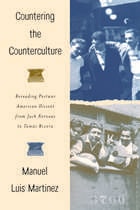
Countering the Counterculture
Rereading Postwar American Dissent from Jack Kerouac to Tomás RiveraManuel Luis Martinez
University of Wisconsin Press, 2003
Rebelling against bourgeois vacuity and taking their countercultural critique on the road, the Beat writers and artists have long symbolized a spirit of freedom and radical democracy. Manuel Martinez offers an eye-opening challenge to this characterization of the Beats, juxtaposing them against Chicano nationalists like Raul Salinas, Jose Montoya, Luis Valdez, and Oscar Acosta and Mexican migrant writers in the United States, like Tomas Rivera and Ernesto Galarza.
In an innovative rereading of American radical politics and culture of the 1950s and 1960s, Martinez uncovers reactionary, neoromantic, and sometimes racist strains in the Beats’ vision of freedom, and he brings to the fore the complex stances of Latinos on participant democracy and progressive culture. He analyzes the ways that Beats, Chicanos, and migrant writers conceived of and articulated social and political perspectives. He contends that both the Beats’ extreme individualism and the Chicano nationalists’ narrow vision of citizenship are betrayals of the democratic ideal, but that the migrant writers presented a distinctly radical and inclusive vision of democracy that was truly countercultural.
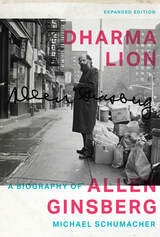
Dharma Lion
A Biography of Allen GinsbergMichael Schumacher
University of Minnesota Press, 2016
With the sweep of an epic novel, Michael Schumacher tells the story of Allen Ginsberg and his times, with fascinating portraits of Jack Kerouac, Neal Cassady, and William Burroughs, among others, along with many rarely seen photographs.
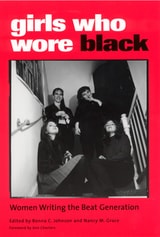
Girls Who Wore Black
Women Writing the Beat GenerationJohnson, Ronna C
Rutgers University Press, 2002
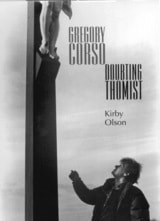
Gregory Corso
Doubting ThomistKirby Olson
Southern Illinois University Press, 2002
Gregory Corso is the most intensely spiritual of the Beat generation poets and still by far the least explored. The virtue of Kirby Olson’s Gregory Corso: Doubting Thomist is that it is the first book to place all of Corso’s work in a philosophical perspective, concentrating on Corso as a poet torn between a static Catholic Thomist viewpoint and that of a progressive surrealist.
While Corso is a subject of great controversy—his work often being seen as nihilistic and wildly comic—Olson argues that Corso’s poetry, in fact, maintains an insistent theme of doubt and faith with regard to his early Catholicism. Although many critics have attempted to read his poetry, and some have done so brilliantly, Olson—in his approach and focus—is the first to attempt to give a holistic understanding of the oeuvre as essentially one not of entertainment or hilarity but of a deep spiritual and philosophical quest by an important and profound mind.
In nine chapters, Olson addresses Corso from a broad philosophical perspective and shows how Corso takes on particular philosophical issues and contributes to new understandings. Corso’s concerns, like his influence, extend beyond the Beat generation as he speaks about concerns that have troubled thinkers from the beginning of the Western tradition, and his answers offer provocative new openings for thought.
Corso may very well be the most important Catholic poet in the American literary canon, a visionary like Burroughs and Ginsberg, whose work illuminated a generation. Written in a lively and engaging style, Gregory Corso: Doubting Thomist seeks to keep Corso’s memory alive and at last delve fully into Corso’s poetry.
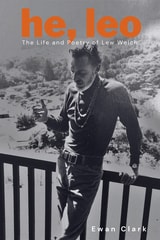
He, Leo
The Life and Poetry of Lew WelchEwan Clark
Oregon State University Press, 2023
He, Leo investigates Welch’s life and work in a chronological fashion, structured around Welch’s own notion of how three main aspects of his life—The Man, The Mountain, and The City—were interdependent. From his birth until his disappearance and presumed death, Welch’s life was often defined by problems, including a complex relationship with his mother, a long struggle with alcohol, and a fluctuating mental state. Yet he was open and candid about everything, a fact that is evident in all aspects of his work.
Each of the three main sections of He, Leo includes key poems, essays, and events—both personal and cultural—to help establish Welch’s importance as a prominent poet and figure during the San Francisco Renaissance. Despite his crushing self-criticism and his reputation as a “friend of,” he was bona fide poet with a strong voice and message of his own. With this first full-length biography, Ewan Clark restores Lew Welch to his rightful place as an important member of a significant American literary and cultural movement.
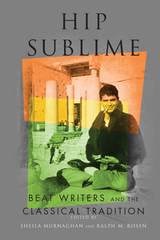
Hip Sublime
Beat Writers and the Classical TraditionEdited by Sheila Murnaghan and Ralph M. Rosen
The Ohio State University Press, 2018
In this volume, a diverse group of contributors explore for the first time the fascinating tensions and paradoxes that arose from interactions between these avant-garde writers and a literary tradition often seen as conservative and culturally hegemonic. With essays that cover the canonical Beat authors—such as Allen Ginsberg, Jack Kerouac, and William Burroughs—along with less well-known figures—including Kenneth Rexroth, Ed Sanders, and Diane di Prima—Hip Sublime: Beat Writers and the Classical Tradition brings long overdue attention to the Beat movement’s formative appropriation of the Greek and Latin classics.
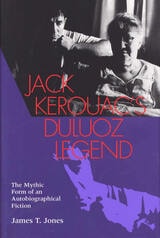
Jack Kerouac's Duluoz Legend
The Mythic Form of an Autobiographical FictionJames T. Jones
Southern Illinois University Press, 1999
In the only critical examination of all of Jack Kerouac's published prose, James T. Jones turns to Freud to show how the great Beat writer used the Oedipus myth to shape not only his individual works but also the entire body of his writing.
Like Balzac, Jones explains, Kerouac conceived an overall plan for his total writing corpus, which he called the Duluoz Legend after Jack Duluoz, his fictional alter ego. While Kerouac's work attracts biographical treatment—the ninth full-length biography was published in 1998—Jones takes a Freudian approach to focus on the form of the work. Noting that even casual readers recognize family relationships as the basis for Kerouac's autobiographical prose, Jones discusses these relationships in terms of Freud's notion of the Oedipus complex.
After establishing the basic biographical facts and explaining Freud's application of the Oedipus myth, Jones explicates Kerouac's novels of childhood and adolescence, focusing on sibling rivalry. Supporting his contention that the Beat writer worked according to a plan, Jones then shows how Kerouac revised The Town and the City (1950), his first published novel, in Vanity of Duluoz, the last novel published in his lifetime, to de-emphasize the death of the father. He treats three versions of Kerouac's road novel—including On the Road—as versions of Oedipus's fateful journey from Corinth to Thebes. And he argues that Pic, often considered peripheral to the Duluoz Legend, replicates the Oedipal themes.
Jones demonstrates that Maggie Cassidy, The Subterraneans, and Tristessa share a form that results from Kerouac's unresolved rivalry with his father for the love of his mother. He discusses Kerouac's replacement of the destructive brother figures in On the Road and Visions of Cody with the constructive hero of The Dharma Bums. He also shows how the Oedipal structure of the Duluoz Legend applies to Kerouac's nonfiction.
In the penultimate chapter, Jones explains how Big Sur, Kerouac's story of his alcohol-induced nervous breakdown, actually marks the climax of the Duluoz Legend. The alcoholism, Jones insists, is not the cause but a symptom of a breakdown brought on by his attachment to his mother. He shows how Kerouac's obsession with his family repeats Oedipal themes throughout the Duluoz Legend. Finally, he deals with Oedipal themes in Kerouac's nonnarrative work, including Old Angel Midnight, Some of the Dharma, The Scripture of the Golden Eternity, and several poems.
Mad to Be Saved
The Beats, the 50's, and FilmDavid Sterritt
Southern Illinois University Press, 1998
Film critic David Sterritt presents an interdisciplinary exploration of the Beat Generation, its intersections with main-stream and experimental film, and the interactions of all of these with American society and the culture of the 1950s. Sterritt balances the Beat countercultural goal of rebellion through both artistic creation and everyday behavior against the mainstream values of conformity and conservatism, growing worry over cold-war hostilities, and the "rat race" toward material success.
After an introductory overview of the Beat Generation, its history, its antecedents, and its influences, Sterritt shows the importance of "visual thinking" in the lives and works of major Beat authors, most notably Jack Kerouac, Allen Ginsberg, and William S. Burroughs. He turns to Mikhail Bakhtin's dialogic theory to portray the Beat writers-who were inspired by jazz and other liberating influences-as carnivalesque rebels against what they perceived as a rigid and stifling social order.
Showing the Beats as social critics, Sterritt looks at the work of 1950s photographers Robert Frank and William Klein; the attack against Beat culture in the pictures and prose of Life magazine; and the counterattack in Frank's film Pull My Daisy, featuring key Beat personalities. He further explores expressions of rebelliousness in film noir, the melodramas of director Douglas Sirk, and other Hollywood films.
Finally, Sterritt shows the changing attitudes toward the Beat sensibility in Beat-related Hollywood movies like A Bucket of Blood and The Beat Generation; television programs like Route 66 and The Many Loves of Dobie Gillis; nonstudio films like John Cassavetes's improvisational Shadows and Shirley Clarke's experimental The Connection; and radically avant-garde works by such doggedly independent screen artists as Stan Brakhage, Ron Rice, Bruce Connor, and Ken Jacobs, drawing connections between their achievements and the most subversive products of their Beat contemporaries.
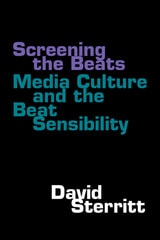
Screening the Beats
Media Culture and the Beat SensibilityDavid Sterritt
Southern Illinois University Press, 2004
Film critic David Sterritt’s Screening the Beats: Media Culture and the Beat Sensibility showcases the social and aesthetic viewpoints of lynchpin Beat writers Jack Kerouac, William S. Burroughs, and Allen Ginsberg, juxtaposing their artistry with 1950s culture and achieving what Kerouac might have called a “bookmovie” riff. In clear prose, Sterritt captures the raw energy of the Beats and joins in their celebration of aesthetic freakishness. Tapping into the diversified spirit of the Beat Generation and its nuanced relationship with postwar American culture, Sterritt considers how the Beats variously foreground, challenge, and illuminate major issues in Hollywood and avant-garde film, critical and cultural theory, and music in the mass-media age.
Sterritt engages the creative and spiritual facets of the Beats, emulating their desire to evoke ephemeral aspects of human existence. Dealing with both high and low cultures as well as various subcultures, he highlights the complementary contributions to cultural creativity made by these authors. Screening the Beats grapples with paradoxes in Beat writing, in particular the conflict between spiritual purity and secular connectedness, which often materialized in the beatific bebop spontaneity, Zen-like transcendentalism, and plain hipster smarts that characterized the writings of Kerouac, Burroughs, and Ginsberg.
This interdisciplinary study tackles such topics as Ginsberg’s and Kerouac’s uses of racial and ethnic stereotypes prevalent in the popular movies of the 1950s era; the uses and limitations of improvisation as a creative tool in literature, jazz, and film; Kerouac’s use of cinematic metaphor to evoke Buddhist concepts; and intersections of the grotesque and carnivalesque in works as seemingly diverse as autobiographical novels by Kerouac, a radio play by Antonin Artaud, cultural theories of Gilles Deleuze and Félix Guattari, and the boisterous lunacy of Three Stooges farce. Deftly threading literary, musical, and cinematic works with a colorful array of critical theories, Screening the Beats illuminates the relationship between American culture and the imaginative forces of the Beat Generation.
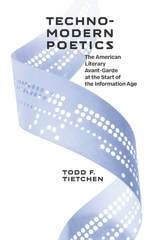
Technomodern Poetics
The American Literary Avant-Garde at the Start of the Information AgeTodd F. Tietchen
University of Iowa Press, 2018
After the second World War, the term “technology” came to signify both the anxieties of possible annihilation in a rapidly changing world and the exhilaration of accelerating cultural change. Technomodern Poetics examines how some of the most well-known writers of the era described the tensions between technical, literary, and media cultures at the dawn of the Digital Age. Poets and writers such as Allen Ginsberg, Charles Olson, Jack Kerouac, and Frank O’Hara, among others, anthologized in Donald Allen’s iconic The New American Poetry, 1945–1960, provided a canon of work that has proven increasingly relevant to our technological present. Elaborating on the theories of contemporaneous technologists such as Norbert Wiener, Claude Shannon, J. C. R. Licklider, and a host of noteworthy others, these artists express the anxieties and avant-garde impulses they wrestled with as they came to terms with a complex array of issues raised by the dawning of the nuclear age, computer-based automation, and the expansive reach of electronic media. As author Todd Tietchen reveals, even as these writers were generating novel forms and concerns, they often continued to question whether such technological changes were inherently progressive or destructive.
With an undeniable timeliness, Tietchen’s book is sure to appeal to courses in modern English literature and American studies, as well as among fans of Beat writers and early Cold War culture.
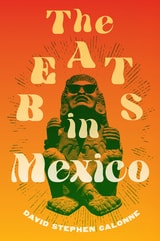
The Beats in Mexico
David Stephen Calonne
Rutgers University Press, 2022
The first book-length study of why the Beats were so fascinated by Mexico and how they represented its culture in their work, this volume examines such canonical figures as Kerouac, Burroughs, Ginsberg, Lamantia, McClure, and Ferlinghetti. It also devotes individual chapters to women such as Margaret Randall, Bonnie Bremser, and Joanne Kyger, who each made Mexico a central setting of their work and interrogated the misogyny they encountered in both American and Mexican culture.
The Beats in Mexico not only considers individual Beat writers, but also places them within a larger history of countercultural figures, from D.H. Lawrence to Antonin Artaud to Jim Morrison, who mythologized Mexico as the land of the Aztecs and Maya, where shamanism and psychotropic drugs could take you on a trip far beyond the limits of the American imagination.

The Bop Apocalypse
The Religious Visions of Kerouac, Ginsberg, and BurroughsJohn Lardas
University of Illinois Press, 2000
Presenting a religious biography of the Beats from the mid-1940s to the late 1950s, John Lardas shows that in rejecting many of the cultural tenets of postwar America, Kerouac, Ginsberg, and Burroughs created new visions of both self and country, visions they articulated through distinctive literary forms. Lardas examines how the Beat writers distilled a theology of experience--a religious vision that animated their everyday existence as well as their art--from a flurry of disparate influences that included the saxophone wails of Charlie Parker and Lester Young, the psychology of Wilhelm Reich, the linguistic theories of Alfred Korzybski, the hipster dialects of New York City, and especially the prophecies of Oswald Spengler. Revisiting the major works the Beats produced in the 1950s in terms of critical content, Lardas considers how their lived religion was incorporated into the way they wrote.
The first sustained treatment of Beat religiosity, The Bop Apocalypse takes a sophisticated look beyond the cartoonish reductions of the Beat counterculture. The Bop Apocalypse takes the Beats at face value, interpreting their sexual openness, drug use, criminality, compulsion to travel, and madness as the logical, physical enactments of a religious representation of the world. Far from dallying irrelevantly on the fringes of society, Lardas asserts, the Beats engaged America on moral grounds through the discourse of public religion.
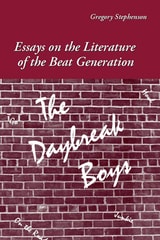
The Daybreak Boys
Essays on the Literature of the Beat GenerationGregory Stephenson
Southern Illinois University Press, 1990
In these critical essays Gregory Stephenson takes the reader on a journey through the literature of the Beat Generation: a journey encompassing that common ethos of Beat literature—the passage from darkness to light, from fragmented being toward wholeness, from Beat to Beatific. He travels through Jack Kerouac’s Duluoz Legend,following Kerouac’s quests for identity, community, and spiritual knowledge. He examines Allen Ginsberg’s use of transcendence in “Howl,” discovers the Gnostic vision in William S. Burroughs’s fiction, and studies the mythic, visionary power of Lawrence Ferlinghetti’s poetry. Stephenson also provides detailed examinations of the writing of lesser-known Beat authors: John Clellon Holmes, Gregory Corso, Richard Fariña, and Michael McClure. He explores the myth and the mystery of the literary legend of Neal Cassady. The book concludes with a look at the common traits of the Beat writers—their use of primitivism, shamanism, myth and magic, spontaneity, and improvisation, all of which led them to a new idiom of consciousness and to the expansion of the parameters of American literature.
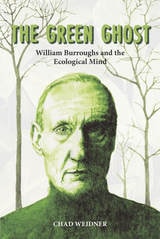
The Green Ghost
William Burroughs and the Ecological MindChad Weidner
Southern Illinois University Press, 2016
Using an ecocritical lens, Weidner explores the toxicity in Naked Lunch while at the same time teasing out latent ecological questions embedded in Burroughs’ later works. The author’s analysis of unknown and miniature “cut-ups,” texts that have been disassembled and rearranged to create new passages, provides a novel understanding of these cryptic forms. Weidner also examines in detail books by Burroughs that have been virtually ignored by critics, exposing the deep ecology of the Beat writer’s vision.
In calling attention to Burroughs’s narrative strategies that link him to an environmental political position, The Green Ghost demonstrates that the work of the Beat writer is a ripe source for ecocritical dialogue.
The Modernist Nation
Generation, Renaissance, and Twentieth-Century American LiteratureMichael Soto
University of Alabama Press, 2007
The Modernist Nation examines why America's modern literary movements have come to be characterized as "generations" and "renaissances," such as the Lost Generation and the Beat Generation or the Harlem, Southern, and San Francisco Renaissances. The metaphor of rebirth, Michael Soto argues, offered and continues to offer American writers a kind of shorthand for imagining American cultural history, especially as a departure from Old World (English) trappings.
Soto highlights the interracial dynamics of American literary movements, touching on authors as varied as James Weldon Johnson, Malcolm Cowley, W. E. B. DuBois, Gertrude Stein, Ernest Hemingway, Zora Neale Hurston, and Jack Kerouac. After assessing the origins of the Lost Generation and the Harlem Renaissance, Soto traces the rise of the "bohemian artist" narrative, and demonstrates how a polyethnic cast of writers and critics constructed American literary production in terms of symbolic rebirth.
The View From On the Road
The Rhetorical Vision of Jack KerouacOmar Swartz
Southern Illinois University Press, 2000
Through careful analysis of Jack Kerouac’s On the Road, Omar Swartz argues that Kerouac’s influence on American society is largely rhetorical. Kerouac’s significance as a cultural icon can be best understood, Swartz asserts, in terms of traditional rhetorical practices and principles.
To Swartz, Kerouac is a rhetor who symbolically reconstructs his world and offers arguments and encouragements for others to follow. Swartz proposes that On the Road constitutes a “rhetorical vision,” a reality-defining discourse suggesting alternative possibilities for growth and change. Swartz asserts that the reader of Kerouac’s On theRoadbecomes capable of responding to the larger, confusing culture in a strategic manner. Kerouac's rhetorical vision of an alternative social and cultural reality contributes to the identity of localized cultures within the United States.

Tokyo Boogie-woogie and D.T. Suzuki
Shoji Yamada
University of Michigan Press, 2022
Against this famous figure, however, is a largely unknown or forgotten shape: Suzuki Alan Masaru. Alan was D.T. Suzuki’s adopted son and, though he remained within his father’s shadow, is mostly known as the lyricist of the iconic pop hit “Tokyo Boogie-woogie.” Perhaps due to his frequent scandals and the fraught nature of the relationship, Alan remains unmentioned and unstudied by scholars and historians. Yet by exploring the nature of the relationship between these two, Shoji Yamada digs into the conflicting memories and experiences of these generations in Japan.
Translating the Counterculture
The Reception of the Beats in TurkeyErik Mortenson
Southern Illinois University Press, 2018
Mortenson examines how in Turkey the Beats have been framed by the label “underground literature”; explores the ways they are repurposed in the counterculture-inspired journal Underground Poetix; looks at the reception of Jack Kerouac’s On the Road and how that reaction provides a better understanding of the construction of “American-ness”; delves into the recent obscenity trial of William S. Burroughs’s novel The Soft Machine and the attention the book’s supporters brought to government repression and Turkish homophobia; and analyzes the various translations of Allen Ginsberg’s Howl to demonstrate the relevance Ginsberg still holds for social rebellion today.
Translating the Counterculture takes a revolutionary look at how contemporary readers in other parts of the world respond to the Beats. Challenging and unsettling an American-centric understanding of the Beats, Mortenson pushes the discipline toward a fuller consideration of their cultural legacy in a globalized twenty-first century.
William S. Burroughs At the Front
Critical Reception, 1959 - 1989Jennie Skerl
Southern Illinois University Press, 1991
Jennie Skerl and Robin Lydenberg have selected twenty-five critical essays on Burroughs that reflect the historical reception of his work, both positive and negative, decade by decade, and that represent the best essays written about him.
The essays cover Burroughs’ major novels—including the cut-up and new trilogies—the censorship issue, and his work in film and painting. The chronological organization brings into critical focus the shift from moral questions raised by the novels’ content, through examinations of Burroughs’ relationship to humanism and modernism, and finally to more focused literary and linguistic issues. In their introduction, the editors survey the progress of Burroughs’ critical reception and examine the reasons for the varied and intense responses to the work and the theoretical assumptions behind those responses.
The reviewers include prominent figures such as Mary McCarthy and Marshall McLuhan as well as major academic critics such as Cary Nelson, Tony Tanner, and Ihab Hassan.
World Beats
Beat Generation Writing and the Worlding of U.S. LiteratureJimmy Fazzino
Dartmouth College Press, 2016
Writing Beat and Other Occasions of Literary Mayhem
John Tytell
Vanderbilt University Press, 2014
Approaching the history of post-war twentieth century American literature, and in particular the Beat literary movement of Kerouac, Ginsberg, Burroughs, and others, Tytell finds himself uniquely positioned as an eyewitness to many of these stories. In this book, he shares his insight with the reader. As he interviewed, drank, traveled, and survived countless moments with some of these literary legends, Tytell discovered much about the craft of nonfiction, biography, and the nature of history. Writing Beat demonstrates, through Tytell's growth as a professor and historian of the Beats, lessons learned and hazards encountered for those aspiring to become writers themselves.
As we approach the sixtieth anniversary of Allen Ginsberg's Howl, Writing Beat reminds us writers do not spring to life fully formed, and the struggle to get to literature can be a blast.