Results by title
9 books match the query 'Beauty, Personal'
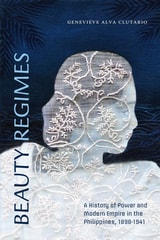
Beauty Regimes
A History of Power and Modern Empire in the Philippines, 1898–1941Genevieve Alva Clutario
Duke University Press, 2023

Beauty and the Beast
Michael Taussig
University of Chicago Press, 2012
Beauty and the Beast begins with the question: Is beauty destined to end in tragedy? Drawing on extensive fieldwork in Colombia, Michael Taussig scrutinizes the anxious, audacious, and sometimes destructive attempts people make to transform their bodies through cosmetic surgery and liposuction. He balances an examination of surgeries meant to enhance an individual’s beauty with an often overlooked counterpart, surgeries performed—often on high profile criminals—to disguise one’s identity. Situating this globally shared phenomenon within the economic, cultural, and political history of Colombia, Taussig links the country’s long civil war and its bodily mutilation and torture to the beauty industry at large, sketching Colombia as a country whose high aesthetic stakes make it a stage where some of the most important and problematic ideas about the body are played out.
Central to Taussig’s examination is George Bataille’s notion of depense, or “wasting.” While depense is often used as a critique, Taussig also looks at the exuberance such squandering creates and its position as a driving economic force. Depense, he argues, is precisely what these procedures are all about, and the beast on the other side of beauty should not be dismissed as simple recompense. At once theoretical and colloquial, public and intimate, Beauty and the Beast is a true-to-place ethnography—written in Taussig’s trademark voice—that tells a thickly layered but always accessible story about the lengths to which people will go to be physically remade.

Creating Beauty To Cure the Soul
Race and Psychology in the Shaping of Aesthetic SurgerySander L. Gilman
Duke University Press, 1998
In his exploration of the striking parallels between the development of cosmetic surgery and the field of psychiatry, Gilman entertains an array of philosophical and psychological questions that underlie the more practical decisions rountinely made by doctors and potential patients considering these types of surgery. While surveying and incorporating the relevant theories of Sigmund Freud, Alfred Adler, Karl Menninger, Paul Schilder, contemporary feminist critics, and others, Gilman considers the highly unstable nature of cultural notions of health, happiness, and beauty. He reveals how ideas of race and gender structured early understandings of aesthetic surgery in discussions of both the “abnormality” of the Jewish nose and the historical requirement that healthy and virtuous females look “normal,” thereby enabling them to achieve invisibility. Reflecting upon historically widespread prejudices, Gilman describes the persecutions, harrassment, attacks, and even murders that continue to result from bodily difference and he encourages readers to question the cultural assumptions that underlie the increasing acceptability of this surgical form of psychotherapy.
Synthesizing a vast body of related literature and containing a comprehensive bibliography, Creating Beauty to Cure the Soul will appeal to a broad audience, including those interested in the histories of medicine and psychiatry, and in philosophy, cultural studies, Jewish cultural studies, and race and ethnicity.
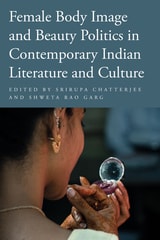
Female Body Image and Beauty Politics in Contemporary Indian Literature and Culture
Edited by Srirupa Chatterjee and Shweta Rao Garg
Temple University Press, 2024
Influences from the colonial period through the age of the internet and globalization have reinforced Eurocentric ideals about femininity and womanhood. This long overdue volume addresses the pressures of beautification that Indian women face as they struggle with body acceptance and are often denied pride in their natural bodies.
Contributors: Annika Taneja, Anurima Chanda, Aratrika Bose, Kavita Daiya, Ketaki Chowkhani, Nishat Haider, Samrita Sinha, Shailendra Kumar Singh, Shubhra Ray, Sucharita Sarkar, Sukshma Vedere, Swatie, Tanupriya, Turni Chakrabarti, and the editors.
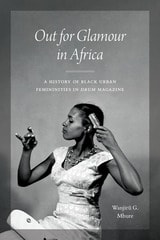
Out for Glamour in Africa
A History of Black Urban Femininities in Drum MagazineWanjiru G. Mbure
University of Michigan Press, 2026
Out for Glamour in Africa critically reflects on how Black women utilized Drum magazine, a leading publication in Africa during the era of independence, for political empowerment and constructing notions of Black femininity. Wanjirũ G. Mbure terms the concept of femme urbAfricana, a model of Black femininity depicted as urban, political, fashionable, paradoxically Afrocentric, heteronormative, and transnational. Foregrounding stories of the women who embodied these traits and the social, political, and economic forces that shaped their presence in Drum, Mbure argues that these representations of Black women from Africa, the Caribbean, Europe, and the United States produced a novel form of Black urban femininity. Utilizing a breadth of archival materials from cover girl photographs, advertisements, and columns, to readers’ comments, Mbure reveals the complex relationship between the Black urban woman and the era’s contested ideals within a transnational matrix.
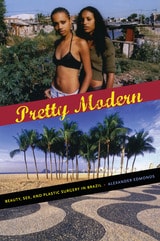
Pretty Modern
Beauty, Sex, and Plastic Surgery in BrazilAlexander Edmonds
Duke University Press, 2010

Promiscuous Grace
Imagining Beauty and Holiness with Saint Mary of EgyptSonia Velázquez
University of Chicago Press, 2023
Saint Mary of Egypt has fascinated theologians, poets, and artists since the seventh century. Her story is richly evocative, encompassing sin and sanctity, concupiscence and asceticism, youth and old age. In Promiscuous Grace, Sonia Velázquez thinks with Saint Mary of Egypt about the relationship between beauty and holiness. Drawing on an archive spanning Spanish medieval poetry, Baroque paintings, seventeenth-century hagiography, and Balzac’s Le chef-d’œuvre inconnu, Velázquez argues for the importance of the senses on the surface of religious texts on her way to revealing why the legend of Saint Mary of Egypt still matters today.
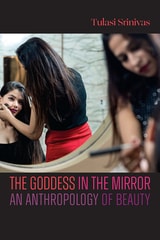
The Goddess in the Mirror
An Anthropology of BeautyTulasi Srinivas
Duke University Press, 2025
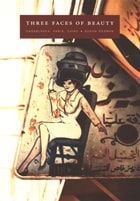
Three Faces of Beauty
Casablanca, Paris, CairoSusan Ossman
Duke University Press, 2002
By examining how images from fashion magazines, film, and advertising are enacted in beauty salons, Ossman demonstrates how embodiment is able to display and rework certain hierarchies. While offering the possibility of freedom from the tethers of status, nation, religion, and nature, beauty is created by these very categories and values, Ossman shows. Drawing on hundreds of interviews, she documents the various rituals of welcome, choice-making, pricing practices, and spatial arrangements in multiple salons . She also reveals ways in which patrons in all three cities imagine and co-opt looks they believe are fashionable in the other cities. By observing salons as scenes of instruction, Ossman reveals that beautiful bodies evolve within the intertwining contexts of media, modernity, location, time, postcolonialism, and male expectation.