Results by title
6 books match the query 'Beauty culture'
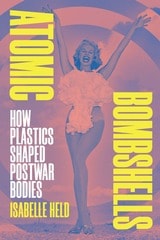
Atomic Bombshells
How Plastics Shaped Postwar BodiesIsabelle Held
Duke University Press, 2026
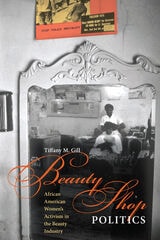
Beauty Shop Politics
African American Women's Activism in the Beauty IndustryTiffany M. Gill
University of Illinois Press, 2010
Looking through the lens of black business history, Beauty Shop Politics shows how black beauticians in the Jim Crow era parlayed their economic independence and access to a public community space into platforms for activism. Tiffany M. Gill argues that the beauty industry played a crucial role in the creation of the modern black female identity and that the seemingly frivolous space of a beauty salon actually has stimulated social, political, and economic change.
From the founding of the National Negro Business League in 1900 and onward, African Americans have embraced the entrepreneurial spirit by starting their own businesses, but black women's forays into the business world were overshadowed by those of black men. With a broad scope that encompasses the role of gossip in salons, ethnic beauty products, and the social meanings of African American hair textures, Gill shows how African American beauty entrepreneurs built and sustained a vibrant culture of activism in beauty salons and schools. Enhanced by lucid portrayals of black beauticians and drawing on archival research and oral histories, Beauty Shop Politics conveys the everyday operations and rich culture of black beauty salons as well as their role in building community.

Beauty and the Beast
Michael Taussig
University of Chicago Press, 2012
Beauty and the Beast begins with the question: Is beauty destined to end in tragedy? Drawing on extensive fieldwork in Colombia, Michael Taussig scrutinizes the anxious, audacious, and sometimes destructive attempts people make to transform their bodies through cosmetic surgery and liposuction. He balances an examination of surgeries meant to enhance an individual’s beauty with an often overlooked counterpart, surgeries performed—often on high profile criminals—to disguise one’s identity. Situating this globally shared phenomenon within the economic, cultural, and political history of Colombia, Taussig links the country’s long civil war and its bodily mutilation and torture to the beauty industry at large, sketching Colombia as a country whose high aesthetic stakes make it a stage where some of the most important and problematic ideas about the body are played out.
Central to Taussig’s examination is George Bataille’s notion of depense, or “wasting.” While depense is often used as a critique, Taussig also looks at the exuberance such squandering creates and its position as a driving economic force. Depense, he argues, is precisely what these procedures are all about, and the beast on the other side of beauty should not be dismissed as simple recompense. At once theoretical and colloquial, public and intimate, Beauty and the Beast is a true-to-place ethnography—written in Taussig’s trademark voice—that tells a thickly layered but always accessible story about the lengths to which people will go to be physically remade.
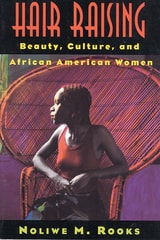
Hair Raising
Beauty, Culture, and African American WomenRooks, Noliwe M
Rutgers University Press, 1996
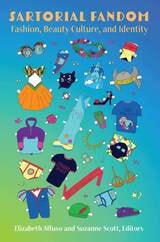
Sartorial Fandom
Fashion, Beauty Culture, and IdentityElizabeth Affuso and Suzanne Scott, Editors
University of Michigan Press, 2023
Sartorial Fandom shines a spotlight on the fashion and beauty cultures that undergird fandoms, considering the retailers, branded products, and fan-made objects that serve as forms of identity expression. This collection is invested in the subcultural and mainstream expression of style and in the spaces where the two intersect. Fan culture is, in many respects, an optimal space to situate a study of style because fandom itself is often situated between the subcultural and the mainstream. Collectively, the chapters in this anthology explore how various axes of lived identity interact with a growing movement to consider fandom as a lifestyle category, ultimately contending that sartorial practices are central to fan expression but also indicative of the primacy of fandom in contemporary taste cultures.
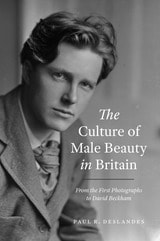
The Culture of Male Beauty in Britain
From the First Photographs to David BeckhamPaul R. Deslandes
University of Chicago Press, 2021
Spanning the decades from the rise of photography to the age of the selfie, this book traces the complex visual and consumer cultures that shaped masculine beauty in Britain, examining the realms of advertising, health, pornography, psychology, sport, and celebrity culture. Paul R. Deslandes chronicles the shifting standards of male beauty in British culture—from the rising cult of the athlete to changing views on hairlessness—while connecting discussions of youth, fitness, and beauty to growing concerns about race, empire, and degeneracy. From earlier beauty show contestants and youth-obsessed artists, the book moves through the decades into considerations of disfigured soldiers, physique models, body-conscious gay men, and celebrities such as David Beckham and David Gandy who populate the worlds of television and social media.
Deslandes calls on historians to take beauty and gendered aesthetics seriously while recasting how we think about the place of physical appearance in historical study, the intersection of different forms of high and popular culture, and what has been at stake for men in “looking good.”