Results by title
48 books match the query 'Becoming'
A World of Becoming
William E. Connolly
Duke University Press, 2010
Attunement to a world of becoming, Connolly argues, may help us address dangerous resonances between global finance capital, cross-regional religious resentments, neoconservative ideology, and the 24-hour mass media. Coming to terms with subliminal changes in the contemporary experience of time that challenge traditional images can help us grasp how these movements have arisen and perhaps even inspire creative counter-movements. The book closes with the chapter “The Theorist and the Seer,” in which Connolly draws insights from early Greek ideas of the Seer and a Jerry Lewis film, The Nutty Professor, to inform the theory enterprise today.
Becoming a Bilingual Family
Help Your Kids Learn Spanish (and Learn Spanish Yourself in the Process)By Stephen Marks and Jeffrey Marks
University of Texas Press, 2013
Would you like your children to grow up bilingual, even if you aren’t yet? Then speak to your kids in Spanish as you learn the language along with them. Becoming a Bilingual Family gives English-speaking parents the tools to start speaking Spanish with their kids in their earliest years, when children are most receptive to learning languages. It teaches the vocabulary and idioms for speaking to children in Spanish and offers practical, proven ways to create a language-learning environment at home.
The first part of the book introduces parents to many resources—books, audio books, music, television, computer programs, childcare workers, school, and friends—that can help you establish a home environment conducive to the acquisition of Spanish. The second part is a Spanish phrasebook that takes you through all the typical activities that parents and children share, from getting up in the morning to going to bed at night. Few, if any, other Spanish study aids provide this much vocabulary and guidance for talking to small children about common daily activities. The authors also include a quick course in Spanish pronunciation and enough grammar to get a parent started. Spanish-language resources, kids’ names in Spanish, and an easy-to-use index and glossary complete the book.
Take the Markses’ advice and start talking to your kids in Spanish, even if it’s not perfect. You’ll learn the language together and share the excitement of discovering the peoples and cultures that make up the Spanish-speaking world.
Becoming a Historian
An Informal GuideEdited by Penelope J. Corfield and Tim Hitchcock
University of London Press, 2022
Writing history is both an art and a craft. This handbook is designed as an instructional guide to support students, independent scholars, and more. Becoming a Historian guides prospective historians on how best to participate in this vibrant community of scholars. This friendly guide will teach readers how to design research projects, how to differentiate between quantitative and qualitative research methodologies, and how to follow a project through to a positive conclusion. Becoming a Historian is also frank about the pains and pleasures of sticking with a long-term project. Finally, this guide explains how to present original research to wider audiences, including the appropriate use of social media, the art of public lecturing, and strategies for publication.
Written by esteemed historians Penelope J. Corfield and Tim Hitchcock, who bring more than forty years of collective experience to the project, Becoming a Historian explodes the myths and systems that can make the world of research seem intimidating. Instead, this guide offers step-by-step advice designed to make it easier to join this community of scholarship.

Becoming a Library Leader
Seven Stages of Leadership Development for Academic LibrariansShin Freedman
Assoc of College & Research Libraries, 2019
Becoming a Marihuana User
Howard S. Becker
University of Chicago Press, 2015
Becker doesn’t judge, but neither does he holler for legalization, tell you how to grow it in a hollowed-out dresser, or anything else like that for which there are plenty of other books you can buy. Instead, he looks at marijuana with a clear sociological lens—as a substance that some people enjoy, and that some others have decided none of us should. From there he asks: so how do people decide to get high, and what kind of experience do they have as a result of being part of the marijuana world? What he discovers will bother some, especially those who proselytize the irrefutably stunning effects of the latest strain: chemistry isn’t everything—the important thing about pot is how we interact with it. We learn to be high. We learn to like it. And from there, we teach others, passing the pipe in a circle that begins to resemble a bona fide community, defined by shared norms, values, and definitions just like any other community.
All throughout this book, you’ll see the intimate moments when this transformation takes place. You’ll see people doing it for the first time and those with considerable experience. You’ll see the early signs of the truths that have come to define the marijuana experience: that you probably won’t get high at first, that you have to hold the hit in, and that there are other people here who are going to smoke that, too.
Becoming a Marihuana User
Howard S. Becker
University of Chicago Press, 2015
OG Kush. Sour Diesel. Wax, shatter, and vapes. Marijuana has come a long way since its seedy days in the back parking lots of our culture. So has Howard S. Becker, the eminent sociologist, jazz musician, expert on “deviant” culture, and founding NORML board member. When he published Becoming a Marihuana User more than sixty years ago, hardly anyone paid attention—because few people smoked pot. Decades of Cheech and Chong films, Grateful Dead shows, and Cannabis Cups later, and it’s clear—marijuana isn’t just an established commodity, it’s an entire culture. And that’s just the thing—Becker totally called it: pot has everything to do with culture. It’s not a blight on culture, but a culture itself—in fact, you’ll see in this book the first use of the term “users,” rather than “abusers” or “addicts.” Come along on this short little study—now a famous timestamp in weed studies—and you will be astonished at how relevant it is to us today.
Becker doesn’t judge, but neither does he holler for legalization, tell you how to grow it in a hollowed-out dresser, or anything else like that for which there are plenty of other books you can buy. Instead, he looks at marijuana with a clear sociological lens—as a substance that some people enjoy, and that some others have decided none of us should. From there he asks: so how do people decide to get high, and what kind of experience do they have as a result of being part of the marijuana world? What he discovers will bother some, especially those who proselytize the irrefutably stunning effects of the latest strain: chemistry isn’t everything—the important thing about pot is how we interact with it. We learn to be high. We learn to like it. And from there, we teach others, passing the pipe in a circle that begins to resemble a bona fide community, defined by shared norms, values, and definitions just like any other community.
All throughout this book, you’ll see the intimate moments when this transformation takes place. You’ll see people doing it for the first time and those with considerable experience. You’ll see the early signs of the truths that have come to define the marijuana experience: that you probably won’t get high at first, that you have to hold the hit in, and that there are other people here who are going to smoke that, too.

Becoming a Media Mentor
A Guide for Working with Children and FamiliesCen Campbell
American Library Association, 2016
Becoming a Mighty Voice
Daniel Cornfield
Russell Sage Foundation, 1989
Becoming a Nazi Town
Culture and Politics in Göttingen between the World WarsDavid Imhoof
University of Michigan Press, 2013
Becoming a Nazi Townreveals the ways in which ordinary Germans changed their cultural lives and their politics from the mid-1920s to the mid-1930s. Casting the origins of Nazism in a new light, David Imhoof charts the process by which Weimar and Nazi culture flowed into each other. He analyzes this dramatic transition by looking closely at three examples of everyday cultural life in the mid-sized German city of Göttingen: sharpshooting, an opera festival, and cinema.
Imhoof draws on individual and community experiences over a series of interwar periods to highlight and connect shifts in culture, politics, and everyday life. He demonstrates how Nazi leaders crafted cultural policies based in part on homegrown cultural practices of the 1920s and argues that overdrawn distinctions between “Weimar” and “Nazi” culture did not always conform to most Germans’ daily lives. Further, Imhoof presents experiences in Göttingen as a reflection of the common reality of many German towns beyond the capital city of Berlin.
Becoming a New Self
Practices of Belief in Early Modern CatholicismMoshe Sluhovsky
University of Chicago Press, 2017
Practices such as the examination of conscience, general confession, and spiritual exercises, which until the 1400s had been restricted to monastic elites, breached the walls of monasteries in the period that followed. Thanks in large part to Franciscans and Jesuits, lay urban elites—both men and women—gained access to spiritual practices whose goal was to enhance belief and create new selves. Using Michel Foucault’s writing on the hermeneutics of the self, and the French philosopher’s intuition that the early modern period was a moment of transition in the configurations of the self, Sluhovsky offers a broad panorama of spiritual and devotional techniques of self-formation and subjectivation.
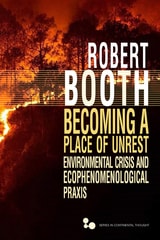
Becoming a Place of Unrest
Environmental Crisis and Ecophenomenological PraxisRobert Booth
Ohio University Press, 2021

Becoming a Poet
Elizabeth Bishop with Marianne Moore and Robert LowellDavid Kalstone
University of Michigan Press, 2001
Becoming a Psychotherapist
A Clinical PrimerRosemary Marshall Balsam and Alan Balsam
University of Chicago Press, 1984
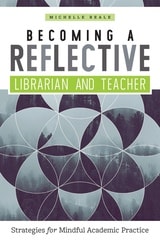
Becoming a Reflective Librarian and Teacher
Strategies for Mindful Academic PracticeMichelle Reale
American Library Association, 2016
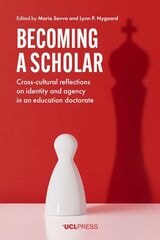
Becoming a Scholar
Cross-Cultural Reflections on Identity and Agency in an Education DoctorateEdited by Maria Savva and Lynn P. Nygaard
University College London, 2021
This book provides a window into the lives of nine non-traditional doctoral students. As mature, part-time, international students enrolled in a professional doctorate program, the students reflect on the transformation process of becoming scholars, as their narratives provide breadth and depth to themes that represent a diverse cross-section of cultures, identities, and communities. The volume brings the “human face” behind the doctoral journey to the forefront, as the narratives draw much-needed attention to the personal journey that inevitably parallels and intersects with the academic journey. Although the narratives are drawn from a professional doctor-in-education program based in the United Kingdom, the struggles will resonate with a much wider range of doctoral students and academics, sparking lively discussion, debate, and reflection. A must-read for students preparing to embark on the doctoral journey, this book will be essential reading for leaders of doctoral programs who wish to equip students with important knowledge about the challenges ahead.
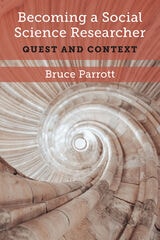
Becoming a Social Science Researcher
Quest and ContextBruce Parrott
University of Michigan Press, 2023
Becoming a Social Science Researcher is designed to help aspiring social scientists, including credentialed scholars, understand the formidable complexities of the research process. Instead of explaining specific research techniques, it concentrates on the philosophical, sociological, and psychological dimensions of social research. These dimensions have received little coverage in guides written for social science researchers, but they are arguably even more important than particular analytical techniques. Truly sophisticated social science scholarship requires that the researcher understand the intellectual and social contexts in which they collect and interpret information. While social science training in US graduate schools has become more systematic over the past two decades with numerous publications aimed at instruction, training and guidance still fall short in addressing the fundamental needs of this field.
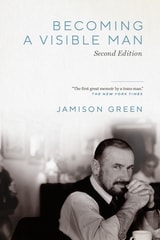
Becoming a Visible Man
Second EditionJamison Green
Vanderbilt University Press, 2020
Since the first edition's publication, author Jamison Green's writings and advocacy among business and governmental organizations around the world have led to major changes in the fields of law, medicine, and social policy, and his (mostly invisible) work has had significant effects on trans people globally. This new edition captures the changes of the last two decades, while also imparting a message of self-acceptance and health.
With profoundly personal and eminently practical threads, Green clarifies transgender experience for transgender people and their families, friends, and coworkers. Medical and mental health care providers, educators, business leaders, and advocates seeking information about transgender concerns can all gain from Green's integrative approach to the topic. This book candidly addresses emotional relationships that are affected by a transition, and brings refined integrity to the struggle to self-define, whether one undergoes a transition or chooses not to.
Emphasizing the lives of transgender men—who are often overlooked—he elucidates the experience of masculinity in a way that is self-assured and inclusive of feminist values. Green's inspirational wisdom has informed and empowered thousands of readers. There is still no other book like Becoming a Visible Man in the transgender canon.
Becoming a Visible Man
Second EditionJamison Green
Vanderbilt University Press, 2020
Since the first edition's publication, author Jamison Green's writings and advocacy among business and governmental organizations around the world have led to major changes in the fields of law, medicine, and social policy, and his (mostly invisible) work has had significant effects on trans people globally. This new edition captures the changes of the last two decades, while also imparting a message of self-acceptance and health.
With profoundly personal and eminently practical threads, Green clarifies transgender experience for transgender people and their families, friends, and coworkers. Medical and mental health care providers, educators, business leaders, and advocates seeking information about transgender concerns can all gain from Green's integrative approach to the topic. This book candidly addresses emotional relationships that are affected by a transition, and brings refined integrity to the struggle to self-define, whether one undergoes a transition or chooses not to.
Emphasizing the lives of transgender men—who are often overlooked—he elucidates the experience of masculinity in a way that is self-assured and inclusive of feminist values. Green's inspirational wisdom has informed and empowered thousands of readers. There is still no other book like Becoming a Visible Man in the transgender canon.

Becoming a Visually Reflective Practitioner
An Integrated Self-Study Model for Professional PracticeSheri R. Klein and Kathy Marzilli Miraglia
Intellect Books, 2024
Professional practice is increasingly becoming more complex, demanding, dynamic, and diverse, and the fluctuating nature of professional practice necessitates the pursuit of discernment and clarity through ongoing reflective practice. Ideal for visual arts practitioners of all levels, this book presents a self-study model grounded in compelling research that highlights arts-based methods for examining four areas of professional practice: professional identities, work cultures, change and transitions, and new pathways.
Each chapter focuses on a component of the self-study model and an area of professional practice. Additional chapters are devoted to artistic materials and research methods for interpreting self-study artifacts with the aim of goal setting. Throughout the text, charts and end-of-chapter prompts summarize key points, and images by visual arts practitioners represent a wide range of artistic media, methods, and approaches appropriate for self-study. The appendices provide additional resources for enhanced understanding of chapter concepts and key terms, guidelines, and rubrics for writing reflections, creating visual responses, and using a visual journal in the self-study process.
Becoming an Embedded Librarian
Making Connections in the ClassroomMichelle Reale
American Library Association, 2015
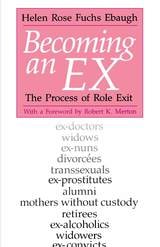
Becoming an Ex
The Process of Role ExitHelen Rose Fuchs Ebaugh
University of Chicago Press, 1988
Ebaugh is herself an ex, having left the life of a Catholic nun to become a wife, mother, and professor of sociology. Drawing on interviews with 185 people, Ebaugh explores a wide range of role changes, including ex-convicts, ex-alcoholics, divorced people, mothers without custody of their children, ex-doctors, ex-cops, retirees, ex-nuns, and—perhaps most dramatically—transsexuals. As this diverse sample reveals, Ebaugh focuses on voluntary exits from significant roles. What emerges are common stages of the role exit process—from disillusionment with a particular identity, to searching for alternative roles, to turning points that trigger a final decision to exit, and finally to the creation of an identify as an ex.
Becoming an Ex is a challenging and influential study that will be of great interest to sociologists, mental health counselors, members of self-help groups such as Alcoholics Anonymous and Parents Without Partners, those in corporate settings where turnover has widespread implications for the organization, and for anyone struggling through a role exit who is trying to establish a new sense of self.
Becoming an Expert Caregiver
How Structural Flaws Shape Autism Carework and CommunityCara A. Chiaraluce
Rutgers University Press, 2025
Throughout the chapters in this book, the expert caregiver is one person who faces unbelievably daunting tasks of filling or reforming persistent institutional gaps, primarily in education and health care, and subverting ableist cultural norms. Without institutional support, answers to their questions, or pragmatic avenues to access resources, lay caregivers become the experts. Their trials and tribulations, especially when navigating the boundaries of professional/lay and private/public worlds, illuminate a type of carework that is increasingly relevant to a growing number of young families caring for neurodivergent, disabled, medically fragile, and/or chronically ill children. These stories offer a vivid picture of the often invisible complex challenges and structural forces that drive individuals to become expert caregivers in the first place.
Becoming an Expert Writer
A Holistic Guide to Writing for PublicationDana Lynn Driscoll
University Press of Colorado, 2026
In Becoming an Expert Writer, Dana Lynn Driscoll explores the core concepts that create publication expertise. Informed by groundbreaking studies of successful emerging and expert writers as they seek to publish their work, this research-based guide illuminates the often-invisible dimensions of writing for publication. Driscoll describes strategies that move beyond conventional advice, allowing writers to craft a holistic process and relationship with their work. Each chapter integrates empirical research with reflective and practical activities, guiding writers from idea generation and flow to identity development and mentoring. The result is a transformative resource for developing sustainable, meaningful, and expert writing practices.

Becoming an Interpreter
Rachel E. Herring
Gallaudet University Press, 2026
How does one become an interpreter, and what knowledge and skills are developed along the way? What does developing an identity as an interpreter involve? Becoming an Interpreter bridges the gap between theory and practice, weaving together personal narratives and research insights to explore questions like these.
Becoming an Interpreter is structured around five dimensions of becoming that connect foundational concepts to lived experience: community, social aspects, acquisition of interpreting skills, ethical reasoning and decision-making, and coping with emotion and stress. Together, these varied perspectives and experiences show that there is no one single breakthrough moment for becoming an interpreter; there are many. At the end of each chapter, there are interactive prompts that invite readers to pause and reflect.
Designed for students, developing interpreters, and individuals considering interpreting as a career, Becoming an Interpreter is an introduction to the field and an essential resource for professional reflection and growth.
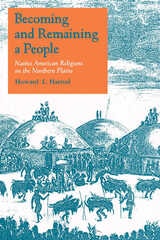
Becoming and Remaining a People
Native American Religions on the Northern PlainsHoward L. Harrod
University of Arizona Press, 1995
This book offers a bold new interpretation of anthropological studies, demonstrating how religious traditions and ritual processes became sources of group and individual identity for many people. Harrod reconstructs the long religious development of two village peoples, the Mandans and the Hidatsas, describing how their oral traditions enabled them to reinterpret their experiences as circumstances changed. He then shows how these and other groups on the Northern Plains remained distinct peoples in the face of increased interactions with Euro-Americans, other Indians,.and the new religion of Christianity.
Harrod proposes that other interpretations of culture change may fail to come to terms with the role that religion plays in motivating both cultural conservatism and social change. For Northern Plains peoples, religion was at the heart of social identity and thus resisted change, but religion was also the source of creative reinterpretation, which produced culture change. Viewed from within the group, such change often seemed natural and was understood as an elaboration of traditions having roots in a deeper shared past. In addition to demonstrating religious continuity and change among the Mandans and the Hidatsas, he also describes instances of religious and social transformation among the peoples who became the Crows and the Cheyennes.
Becoming and Remaining a People adopts a challenging analytical approach that draws on the author's creative interpretations of rituals and oral traditions. By enabling us to understand the relation of religion both to the construction of social identity and to the interpretation of social change, it reveals the richness, depth, and cultural complexity of both past Native American people and their contemporary successors.
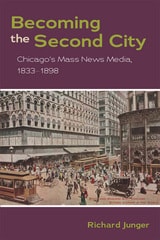
Becoming the Second City
Chicago's Mass News Media, 1833-1898Richard Junger
University of Illinois Press, 2010
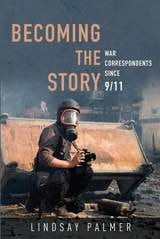
Becoming the Story
War Correspondents since 9/11Lindsay Palmer
University of Illinois Press, 2018
Becoming the Story examines the transformation of war reporting in the decade after 9/11. Lindsay Palmer delves into times when print or television correspondents themselves received intense public scrutiny because of an incident associated with the work of war reporting. Such instances include Daniel Pearl’s kidnapping and murder; Bob Woodruff’s near-fatal injury in Iraq; the expulsions of Maziar Bahari and Nazila Fathi from Iran in 2009; the sexual assault of Lara Logan; and Marie Colvin’s 2012 death in Syria. Merging analysis with in-depth interviews of Woodruff and others, Palmer shows what these events say about how post-9/11 conflicts transformed the day-to-day labor of reporting. But they also illuminate how journalists’ work became entangled with issues ranging from digitization processes to unprecedented hostility from all sides to the political logic of the War on Terror.
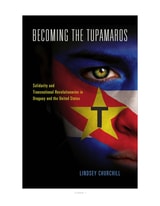
Becoming the Tupamaros
Solidarity and Transnational Revolutionaries in Uruguay and the United StatesLindsey Churchill
Vanderbilt University Press, 2013
Churchill examines the relationship between state repression and revolutionary resistance, the transnational connections between the Uruguayan Tupamaro revolutionaries and leftist groups in the US, and issues of gender and sexuality within these movements. Angela Davis and Eldridge Cleaver, for example, became symbols of resistance in both the United States and Uruguay. and while much of the Uruguayan left and many other revolutionary groups in Latin America focused on motherhood as inspiring women's politics, the Tupamaros disdained traditional constructions of femininity for female combatants. Ultimately, Becoming the Tupamaros revises our understanding of what makes a Movement truly revolutionary.
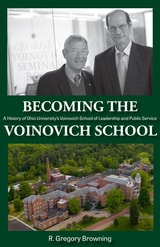
Becoming the Voinovich School
A History of Ohio University’s Voinovich School of Leadership and Public ServiceR. Gregory Browning, Ph.D.
Ohio University Press, 0
The evolution of a university-based public service model that integrates leadership, applied research, and regional engagement in Appalachian Ohio
Becoming the Voinovich School chronicles the evolution of Ohio University’s Voinovich School of Leadership and Public Service, a pioneering institution that blends academic rigor with hands-on public engagement. Founded on the vision of political scientist Mark Weinberg and inspired by the leadership philosophy of former US senator and Ohio governor George V. Voinovich, the school has become a national model for university-based public service.
From its modest beginnings in 1976—when Weinberg was hired to build a public administration program from scratch—the school has grown into a dynamic “do tank” serving the Appalachian Ohio region and beyond. Early initiatives like the Institute for Local Government Administration and Rural Development laid the groundwork for a new kind of academic center: one that connects faculty expertise with real-world problem-solving. Through applied research, GIS analysis, leadership training, and program evaluation, the school has become a trusted convener and catalyst for change.
The Voinovich School’s mission spans five key sectors: economic development, community development, education and child wellness, environmental restoration, and health and well-being. Its work is rooted in a commitment to empowering communities, especially those facing the economic and health challenges of postindustrial Appalachia. By pairing grant-funded projects with experiential education, the school has created opportunities for students to engage directly with pressing public issues while building leadership capacity across the region.
In 2007, the center was formally renamed the Voinovich School, reflecting its expanded scope and growing impact. Over the next decade, it launched new graduate programs, raised its national ranking, and became the educational partner for the Ohio Economic Development Institute. Today, the school continues to leverage state and federal funding, private-sector partnerships, and alumni networks to address complex challenges with innovative, community-driven solutions.
This book offers a compelling account of how one university unit transformed public service education—and how its legacy continues to shape leadership and policy in and beyond Ohio.
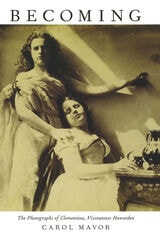
Becoming
The Photographs of Clementina, Viscountess HawardenCarol Mavor
Duke University Press, 1999
With drama, wit, and verve, Lady Hawarden’s girls, becoming women, entwine each other, their mirrored reflections and select feminine objects (an Indian traveling cabinet, a Gothic-style desk, a shell-covered box) as homoerotic partners. The resulting mise-en-scène is secretive, private, delicious, and arguably queer—a girltopia ripe with maternality and adolescent flirtation, as touching as it is erotic. Luxuriating in the photographs’ interpretive possibilities, Mavor makes illuminating connections between Hawarden and other artists and writers, including Vermeer, Christina Rossetti, George Eliot, Lewis Carroll, and twentieth-century photographers Sally Mann and Francesca Woodman. Weaving psychoanalytic theory and other photographic analyses into her work, Mavor contemplates the experience of the photograph and considers the relationship of Hawarden’s works to the concept of the female fetish, to voyeurism, mirrors and lenses, and twins and doubling. Under the spell of Roland Barthes, Mavor’s voice unveils the peculiarities of the erotic in Lady Hawarden’s images through a writerly approach that remembers and rewrites adolescence as sustained desire.
In turn autobiographical, theoretical, historical, and analytical, Mavor’s study caresses these mysteriously ripped and scissored images into fables of sapphic love and the real magic of photography.
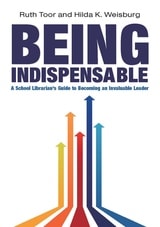
Being Indispensable
A School Librarian's Guide to Becoming an Invaluable LeaderRuth Toor
American Library Association, 2010
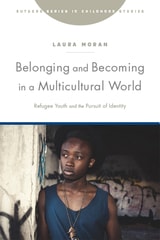
Belonging and Becoming in a Multicultural World
Refugee Youth and the Pursuit of IdentityLaura Moran
Rutgers University Press, 2020
Download open access ebook.
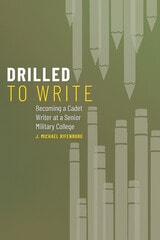
Drilled to Write
Becoming a Cadet Writer at a Senior Military Collegeby J. Michael Rifenburg
Utah State University Press, 2022
Drilled to Write offers a rich account of US Army cadets navigating the unique demands of Army writing at a senior military college. In this longitudinal case study, J. Michael Rifenburg follows one cadet, Logan Blackwell, for four years and traces how he conceptualizes Army writing and Army genres through immersion in military science classes, tactical exercises in the Appalachian Mountains, and specialized programs like Airborne School.
Drawing from research on rhetorical genre studies, writing transfer, and materiality, Drilled to Write speaks to scholars in writing studies committed to capturing how students understand their own writing development. Collectively, these chapters articulate four ways Blackwell leveraged resources through ROTC to become a cadet writer at this military college. Each chapter is dedicated to one year of his undergraduate experience with focus on curricular writing for his business management major and military science classes as well as his extracurricular writing, like his Ballroom Dance Club bylaws and a three-thousand-word short story.
In Drilled to Write, Rifenburg invites readers to see how cadets are positioned between civilian and military life—a curiously liminal space where they develop as writers. Using Army ROTC as an entry into genre theory and larger conversations about the role higher education plays in developing Army officers, he shows how writing students develop genre awareness and flexibility while forging a personal identity.
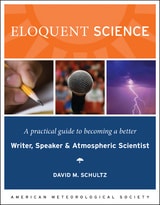
Eloquent Science
A Practical Guide to Becoming a Better Writer, Speaker and ScientistDavid M. Schultz
American Meteorological Society, 2009
Eloquent Science evolved from a workshop aimed at offering atmospheric science students formal guidance in communications, tailored for their eventual scientific careers. Drawing on advice from over twenty books and hundreds of other sources, this volume presents informative and often humorous tips for writing scientific journal articles, while also providing a peek behind the curtain into the operations of editorial boards and publishers of major journals. The volume focuses on writing, reviewing, and speaking and is aimed at the domain of the student or scientist at the start of her career. The volume offers tips on poster presentations, media communication, and advice for non-native speakers of English, as well as appendices on proper punctuation usage and commonly misunderstood meteorological concepts. A further reading section at the end of each chapter suggests additional sources for the interested reader, and sidebars written by experts in the field offer diverse viewpoints on reference topics.
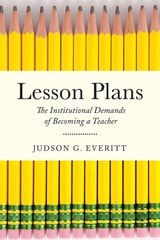
Lesson Plans
The Institutional Demands of Becoming a TeacherEveritt, Judson G.
Rutgers University Press, 2017
In Lesson Plans, Judson G. Everitt takes readers into the everyday worlds of teacher training, and reveals the complexities and dilemmas teacher candidates confront as they learn how to perform a job that many people assume anybody can do. Using rich qualitative data, Everitt analyzes how people make sense of their prospective jobs as teachers, and how their introduction to this profession is shaped by the institutionalized rules and practices of higher education, K-12 education, and gender. Trained to constantly adapt to various contingencies that routinely arise in schools and classrooms, teacher candidates learn that they must continually try to reconcile the competing expectations of their jobs to meet students’ needs in an era of accountability. Lesson Plans reveals how institutions shape the ways we produce teachers, and how new teachers make sense of the multiple and complicated demands they face in their efforts to educate students.
Module 8
Becoming a Trusted Digital RepositorySteve Marks
Society of American Archivists, 2015
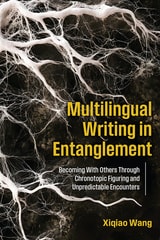
Multilingual Writing in Entanglement
Becoming With Others Through Chronotopic Figuring and Unpredictable EncountersXiqiao Wang
Utah State University Press, 2025
This longitudinal qualitative study follows Morgan and Leo through their undergraduate careers, collecting rich ethnographic data across private, academic, and digital spaces. The resulting theoretical framework conceptualizes multilingual writing as simultaneously strategic, agentive, creative, diffused, contingent, and messy—a phenomenon shaped by dynamic interplay between ephemeral encounters and established practices. Employing chronotopic figuring as a methodological tool, Wang illuminates aspects of multilingual writing often elided in research: fleeting encounters that energize composition, reciprocal relationships that distribute writing labor, unexpected detours that redirect the writing process, and the layering of writing and identity practices across multiple historical trajectories. This approach moves beyond examining writing in isolated moments to trace how meaning emerges across languages, modes, and spacetimes.
Multilingual Writing in Entanglement offers crucial insights into how international students strategically and improvisationally reconfigure their semiotic and rhetorical repertoires to write multilingual lives into meaning. This work is influential for scholars and educators in composition, literacy studies, multilingual education, ESL, and linguistics.
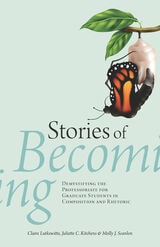
Stories of Becoming
Demystifying the Professoriate for Graduate Students in Composition and RhetoricClaire Lutkewitte
Utah State University Press, 2021
Using data from the study, the authors offer six specific strategies—including how to manage time, how to create a work/life balance, and how to collaborate with others—that readers can use to prepare for the composition and rhetoric job market and to begin their careers as full-time faculty members. Readers will learn about the possible responsibilities they may take on as new faculty, particularly those that go beyond teaching, research, service, and administration to include navigating the politics of higher education and negotiating professional identity construction. And they will also engage in activities and answer questions designed to deepen their understanding of the field and help them identify their own values and desired career trajectory.
Stories of Becoming demystifies the professoriate, compares what current new faculty have to say of their job expectations with the realities that students might face when on the job, and brings to light the invisible, behind-the-scenes work done by new faculty. It will be invaluable to graduate students, those who teach graduate students, new faculty, and hiring administrators in composition and rhetoric.
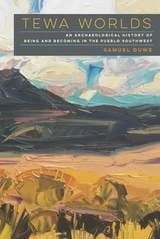
Tewa Worlds
An Archaeological History of Being and Becoming in the Pueblo SouthwestSamuel Duwe
University of Arizona Press, 2020
Tewa Worlds tells a history of eight centuries of the Tewa people, set among their ancestral homeland in northern New Mexico. Bounded by four sacred peaks and bisected by the Rio Grande, this is where the Tewa, after centuries of living across a vast territory, reunited and forged a unique type of village life. It later became an epicenter of colonialism, for within its boundaries are both the ruins of the first Spanish colonial capital and the birthplace of the atomic bomb. Yet through this dramatic change the Tewa have endured and today maintain deep connections with their villages and a landscape imbued with memory and meaning.
Anthropologists have long trekked through Tewa country, but the literature remains deeply fractured among the present and the past, nuanced ethnographic description, and a growing body of archaeological research. Samuel Duwe bridges this divide by drawing from contemporary Pueblo philosophical and historical discourse to view the long arc of Tewa history as a continuous journey. The result is a unique history that gives weight to the deep past, colonial encounters, and modern challenges, with the understanding that the same concepts of continuity and change have guided the people in the past and present, and will continue to do so in the future.
Focusing on a decade of fieldwork in the northern portion of the Tewa world—the Rio Chama Valley—Duwe explores how incorporating Pueblo concepts of time and space in archaeological interpretation critically reframes ideas of origins, ethnogenesis, and abandonment. It also allows archaeologists to appreciate something that the Tewa have always known: that there are strong and deep ties that extend beyond modern reservation boundaries.
The Becoming of Time
Integrating Physical and Religious TimeLawrence W. Fagg
Duke University Press, 2002
Integrating concepts of time derived from the physical sciences and world religions, The Becoming of Time examines various questions about time, including its origin, its relation to space and motion, its irreversible nature, the notion of timelessness, and the reality of the future. Lawrence W. Fagg contends that the use of spatial metaphors to describe time obscures its true character. He offers an alternative, non-spatial description of time by developing the concept of time as becoming.
”This lucid and wide-ranging study sets out to reconcile the objective and subjective perspectives in the investigation of the phenomenon of time. [Lawrence W. Fagg] . . . explores the wondrous subtleties of time that modern physics continues to reveal, but complements them with the rich insights of the spiritual perspectives on time that the world's major religions have to offer.”—Helga Nowotny, Former President, International Society for the Study of Time
”Lawrence W. Fagg has made a fundamental contribution to our reflection upon time. His work immediately takes its place as a basic text for students and researchers, from college to seminary and university levels.”—Philip Hefner, Director, Zygon Center for Religion and Science
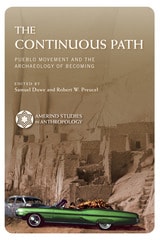
The Continuous Path
Pueblo Movement and the Archaeology of BecomingEdited by Samuel Duwe and Robert W. Preucel
University of Arizona Press, 2019
The Continuous Path challenges archaeologists to take Pueblo notions of movement seriously by privileging Pueblo concepts of being and becoming in the interpretation of anthropological data. In this volume, archaeologists, anthropologists, and Native community members weave multiple perspectives together to write histories of particular Pueblo peoples. Within these histories are stories of the movements of people, materials, and ideas, as well as the interconnectedness of all as the Pueblo people find, leave, and return to their middle places. What results is an emphasis on historical continuities and the understanding that the same concepts of movement that guided the actions of Pueblo people in the past continue to do so into the present and the future.
Movement is a never-ending and directed journey toward an ideal existence and a continuous path of becoming. This path began as the Pueblo people emerged from the underworld and sought their middle places, and it continues today at multiple levels, integrating the people, the village, and the individual.
The Mangle in Practice
Science, Society, and BecomingAndrew Pickering and Keith Guzik, eds.
Duke University Press, 2008
The Mangle in Practice opens with a fresh introduction to the mangle by Pickering. Several contributors then present empirical studies that demonstrate the mangle’s applicability to topics as diverse as pig farming, Chinese medicine, economic theory, and domestic-violence policing. Other contributors offer examples of the mangle in action: real-world practices that implement a self-consciously “mangle-ish” stance in environmental management and software development. Further essays discuss the mangle as philosophy and social theory. As Pickering argues in the preface, the mangle points to a shift in interpretive sensibilities that makes visible a world of de-centered becoming. This volume demonstrates the viability, coherence, and promise of such a shift, not only in science and technology studies, but in the social sciences and humanities more generally.
Contributors: Lisa Asplen, Dawn Coppin, Adrian Franklin, Keith Guzik, Casper Bruun Jensen,Yiannis Koutalos, Brian Marick, Randi Markussen, Andrew Pickering, Volker Scheid, Esther-Mirjam Sent, Carol Steiner, Maxim Waldstein
The Medical Library Association Essential Guide to Becoming an Expert Searcher
Terry Ann Jankowski
American Library Association, 2008
The Ontology of Becoming and the Ethics of Particularity
M. C. Dillon
Ohio University Press, 2012
M. C. Dillon (1938–2005) was widely regarded as a world-leading Merleau-Ponty scholar. His book Merleau-Ponty’s Ontology (1988) is recognized as a classic text that revolutionized the philosophical conversation about the great French phenomenologist. Dillon followed that book with two others: Semiological Reductionism, a critique of early-1990s linguistic reductionism, and Beyond Romance, a richly developed theory of love. At the time of his death, Dillon had nearly completed two further books to which he was passionately committed. The first one offers a highly original interpretation of Nietzsche’s ontology of becoming. The second offers a detailed ethical theory based on Merleau-Ponty’s account of carnal intersubjectivity. The Ontology of Becoming and the Ethics of Particularity collects these two manuscripts written by a distinguished philosopher at the peak of his powers—manuscripts that, taken together, offer a distinctive and powerful view of human life and ethical relations.
The Tewa World
Space, Time, Being and Becoming in a Pueblo SocietyAlfonso Ortiz
University of Chicago Press, 1972
The Thought of Becoming
Gilles Deleuze’s Poetics of LifeKathrin Thiele
Diaphanes, 2008
While this formula might estrange at first, the author, by approaching it through the conceptual figure of becoming, not only manages to carefully develop the Deleuzian thought-universe via its coordinates Spinoza, Bergson, and Nietzsche, but shows in her argument as well that the substitution of becoming for Being is no insignificant matter but rather the preparation for a new thought of ontology as an ontology of becoming and – as such – for a new thought of ethics as a poetics of life.
›Indirection‹ is the movement of becoming into this world, brought forth here as the most compelling dimension of Deleuze’s thought. Such a position dares to conceive of thought as practice without collapsing the gap that always persists between thinking and acting.
Unfinished
The Anthropology of BecomingJoão Biehl and Peter Locke, editors
Duke University Press, 2017
Contributors. Lucas Bessire, João Biehl, Naisargi N. Dave, Elizabeth A. Davis, Michael M. J. Fischer, Angela Garcia, Peter Locke, Adriana Petryna, Bridget Purcell, Laurence Ralph, Lilia M. Schwarcz

iatrogenesis
Essays on Becoming a PhysicianMichigan Publishing Services, 2018
In Greek, iatro- means doctor, and -genesis means origin: Iatrogenesis thus describes any effect, good or bad, brought forth by a physician’s actions. This essay compendium looks beyond a physician’s impact on patients, instead turning inward to examine the impact of medical training on student doctors. These essays written by University of Michigan medical students span from the donning of the White Coat to graduation. Along the way, each writer weaves a story, the threads of which unite in a tapestry highlighting the universality of this coming-of-age journey. These essays breathe life into each stage of medical apprenticeship, displaying the full spectrum of human emotion as medical students find ways to reinvent themselves as the physicians of tomorrow.