Results by title

16 books match the query 'Beginnings'

cover of A Final Story: Science, Myth, and Beginnings

A Final Story

Science, Myth, and Beginnings

Nasser Zakariya

University of Chicago Press, 2017

Popular science readers embrace epics—the sweeping stories that claim to tell the history of all the universe, from the cosmological to the biological to the social. And the appeal is understandable: in writing these works, authors such as E. O. Wilson or Steven Weinberg deliberately seek to move beyond particular disciplines, to create a compelling story weaving together natural historical events, scientific endeavor, human discovery, and contemporary existential concerns.

In A Final Story, Nasser Zakariya delves into the origins and ambitions of these scientific epics, from the nineteenth century to the present, to see what they reveal about the relationship between storytelling, integrated scientific knowledge, and historical method. While seeking to transcend the perspectives of their own eras, the authors of the epics and the debates surrounding them are embedded in political and social struggles of their own times, struggles to which the epics in turn respond. In attempts to narrate an approach to a final, true account, these synthesizing efforts shape and orient scientific developments old and new. By looking closely at the composition of science epics and the related genres developed along with them, we are able to view the historical narrative of science as a form of knowledge itself, one that discloses much about the development of our understanding of and relationship to science over time.

[more]
cover of A Pragmatism of Beginnings: Governing Crises in the Anthropocene

A Pragmatism of Beginnings

Governing Crises in the Anthropocene

Pol Bargués

University of Michigan Press, 2027

As climate change, pandemics, disasters, migrations, and conflicts increasingly overlap, crises are becoming more complex and difficult to address. The Anthropocene is an era characterized by uncertainty and contestation, in which traditional approaches to crisis management are no longer working. This book examines the ideas that have emerged to help societies move forward, including resilience, navigation, adaptation, precaution, and slow peacebuilding. While these approaches promise hope and progress, A Pragmatism of Beginnings critically highlights their limitations, showing how they often focus on coping with crises in ways that merely preserve and reproduce a decaying status quo.

Drawing on philosophical pragmatism, the book places these imaginaries that drive crisis management today in dialogue with the work of the classical pragmatists William James, John Dewey, and Jane Addams, as well as contemporary philosophers Bruno Latour, Graham Harman, and Elizabeth Grosz, to assess both their promises and their limitations. Across a series of case studies covering disaster response, peacebuilding, global health, climate governance, migration management, and the Women, Peace and Security agenda, the book shows how contemporary crisis governance often seeks to preserve the status quo by managing risks and avoiding breakdown rather than pursue transformative change. A Pragmatism of Beginnings argues that responding to today’s crises requires more; it also demands the courage and imagination to seize new beginnings.
[more]
cover of Book Of The Incipit: Beginnings in the Fourteenth Century

Book Of The Incipit

Beginnings in the Fourteenth Century

D. Vance Smith

University of Minnesota Press, 2001

An intriguing evaluation of the concept of beginnings in the medieval period.

Medieval Studies/Literary Theory

An intriguing evaluation of the concept of beginnings in the medieval period. In the first book to examine one of the most peculiar features of one of the greatest and most perplexing poems of England’s late Middle Ages-the successive attempts of Piers Plowman to begin, and to keep beginning-D. Vance Smith compels us to rethink beginning, as concept and practice, in both medieval and contemporary terms.The problem of beginning was invested with increasing urgency in the fourteenth century, imagined and grappled with in the courts, the churches, the universities, the workshops, the fields, and the streets of England. The Book of the Incipit reveals how Langland’s poem exemplifies a widespread interest in beginning in the thirteenth and fourteenth centuries, an interest that appears in such divergent fields as the physics of motion, the measurement of time, logic, grammar, rhetoric, theology, book production, and insurrection. Smith offers a theoretical understanding of beginning that departs from the structuralisms of Edward Said and the traditional formalisms of A. D. Nuttall and most medievalist and modernist treatments of closure. Instead, he conceives a work’s beginning as a figure of the beginning of the work itself, the inception of language as the problem of beginning to which we continue to return.ISBN 0-8166-3760-1 Cloth/jacket £24.50 $34.95x296 Pages 5 7/8 x 9 MayMedieval Cultures Series, volume 28Translation Inquiries: University of Minnesota Press
[more]
cover of Cato the Censor and the Beginnings of Latin Prose: From Poetic Translation to Elite Transcription

Cato the Censor and the Beginnings of Latin Prose

From Poetic Translation to Elite Transcription

Enrica Sciarrino

The Ohio State University Press, 2011

In the past decade, classical scholarship has been polarized by questions concerning the establishment of a literary tradition in Latin in the late third century BCE. On one side of the divide, there are those scholars who insist on the primacy of literature as a hermeneutical category and who, consequently, maintain a focus on poetic texts and their relationship with Hellenistic precedents. On the other side are those who prefer to rely on a pool of Latin terms as pointers to larger sociohistorical dynamics, and who see the emergence of Latin literature as one expression of these dynamics. Through a methodologically innovative exploration of the interlacing of genre and form with practice, Enrica Sciarrinobridges the gap between these two scholarly camps and develops new areas of inquiry by rescuing from the margins of scholarship the earliest remnants of Latin prose associated with Cato the Censor—a “new man” and one of the most influential politicians of his day. By systematically analyzing poetic and prose texts in relation to one another and to diverse authorial subjectivities, Cato the Censor and the Beginnings of Latin Prose: From Poetic Translation to Elite Transcription offers an entirely new perspective on the formation of Latin literature, challenges current assumptions about Roman cultural hierarchies, and sheds light on the social value attributed to different types of writing practices in mid-Republican Rome.
[more]
cover of Genentech: The Beginnings of Biotech

Genentech

The Beginnings of Biotech

Sally Smith Hughes

University of Chicago Press, 2011
In the fall of 1980, Genentech, Inc., a little-known California genetic engineering company, became the overnight darling of Wall Street, raising over $38 million in its initial public stock offering. Lacking marketed products or substantial profit, the firm nonetheless saw its share price escalate from $35 to $89 in the first few minutes of trading, at that point the largest gain in stock market history. Coming at a time of economic recession and declining technological competitiveness in the United States, the event provoked banner headlines and ignited a period of speculative frenzy over biotechnology as a revolutionary means for creating new and better kinds of pharmaceuticals, untold profit, and a possible solution to national economic malaise.
 
Drawing from an unparalleled collection of interviews with early biotech players, Sally Smith Hughes offers the first book-length history of this pioneering company, depicting Genentech’s improbable creation, precarious youth, and ascent to immense prosperity. Hughes provides intimate portraits of the people significant to Genentech’s science and business, including cofounders Herbert Boyer and Robert Swanson, and in doing so sheds new light on how personality affects the growth of science. By placing Genentech’s founders, followers, opponents, victims, and beneficiaries in context, Hughes also demonstrates how science interacts with commercial and legal interests and university research, and with government regulation, venture capital, and commercial profits.
 
Integrating the scientific, the corporate, the contextual, and the personal, Genentech tells the story of biotechnology as it is not often told, as a risky and improbable entrepreneurial venture that had to overcome a number of powerful forces working against it.  
[more]
cover of Joseph Smith and the Beginnings of Mormonism

Joseph Smith and the Beginnings of Mormonism

Richard L. Bushman

University of Illinois Press, 1984

Winner of the David Woolley Evans and Beatrice Evans Biography Award and a History Book Club selection, 1985.

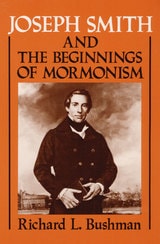
The core of Mormon belief was a conviction about actual events. The test of faith was not adherence to a certain confession of faith but belief that Christ was resurrected, that Joseph Smith saw God, that the Book of Mormon was true history, and that Peter, James, and John restored the apostleship. Mormonism was history, not philosophy.

It is as history that Richard L. Bushman analyzes the emergence of Mormonism in the early nineteenth century. Bushman, however, brings to his study a unique set of credentials--he is both a prize-winning historian and a faithful member of the Latter-day Saints church. For Mormons and non-Mormons alike, his book provides a very special perspective on an endlessly fascinating subject.

Building upon previous accounts and incorporating recently discovered contemporary sources, Bushman focuses on the first twenty-five years of Joseph Smith's life--up to his move to Kirtland, Ohio, in 1831. Bushman shows how the rural Yankee culture of New England and New York--especially evangelical revivalism, Christian rationalism, and folk magic--both influenced and hindered the formation of Smith's new religion.

Mormonism, Bushman argues, must be seen not only as the product of this culture, but also as an independent creation based on the revelations of its charismatic leader. In the final analysis, it was Smith's ability to breathe new life into the ancient sacred stories and to make a sacred story out of his own life which accounted for his own extraordinary influence. By presenting Smith and his revelations as they were viewed by the early Mormons themselves, Bushman leads us to a deeper understanding of their faith.
[more]
cover of Marshall Plan Modernism: Italian Postwar Abstraction and the Beginnings of Autonomia

Marshall Plan Modernism

Italian Postwar Abstraction and the Beginnings of Autonomia

Jaleh Mansoor

Duke University Press, 2016
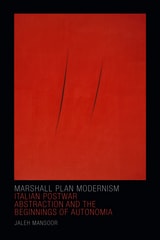
Focusing on artwork by Lucio Fontana, Alberto Burri, and Piero Manzoni, Jaleh Mansoor demonstrates and reveals how abstract painting, especially the monochrome, broke with fascist-associated futurism and functioned as an index of social transition in postwar Italy. Mansoor refuses to read the singularly striking formal and procedural violence of Fontana's slit canvasses, Burri's burnt and exploded plastics, and Manzoni's "achromes" as metaphors of traumatic memories of World War II. Rather, she locates the motivation for this violence in the history of the medium of painting and in the economic history of postwar Italy. Reconfiguring the relationship between politics and aesthetics, Mansoor illuminates how the monochrome's reemergence reflected Fontana, Burri, and Manzoni's aesthetic and political critique of the Marshall Plan's economic warfare and growing American hegemony. It also anticipated the struggles in Italy's factories, classrooms, and streets that gave rise to Autonomia in the 1960s. Marshall Plan Modernism refigures our understanding of modernist painting as a project about labor and the geopolitics of postwar reconstruction during the Italian Miracle.
[more]
cover of Mixing Oil and Water: The Beginnings of Chautauqua at Fair Point

Mixing Oil and Water

The Beginnings of Chautauqua at Fair Point

Dr. Richard P. Heitzenrater

Bridwell Press, 2024

Mixing Oil and Water: The Beginnings of Chautauqua at Fair Point treats the background and development of Chautauqua as a part of the imagination of H. H. Moore, Lewis Miller, John H. Vincent, and others in the Chautauqua Lake Camp Meeting at Fair Point and then since 1874 as the Chautauqua Assembly. The first decade of Chautauqua’s existence as a church body (but independent) has not been examined carefully before. One can see the roots of many traditions coalescing in that first decade into what has become the powerful institution that is the Chautauqua of today.
[more]
cover of Railroad Labor Disputes: The Beginnings of Federal Strike Policy

Railroad Labor Disputes

The Beginnings of Federal Strike Policy

Gerald G. Eggert

University of Michigan Press, 1967

At Martinsburg, West Virginia, on July 16, 1877, angry laborers struck the B & O Railroad because of a 10 percent wage cut. Spontaneous strikes soon choked railroad service from Baltimore to St. Louis and from Buffalo to Louisville. The violent wave of discontent developed into the country's first national labor crisis. The use of federal troops to restore order was only one of many decisions—sometimes blundering or biased, sometimes enlightened—the government would make during the next twenty years in coping with railway strikes. Not until the defeat of the Pullman Strike in 1894 did railway labor disorders subside. Railroad Labor Disputes describes the federal government's methods of dealing with railroad labor problems in the last quarter of the nineteenth century and shows how the beginnings of federal strike policy evolved. To explain the bias of government officials against the working man and for railroad management, Gerald Eggert examines the backgrounds, interests, and ambitions of the shapers of federal policy. Eggert also underscores the lack of congressional leadership and the erratic planning of the executive branch, which compelled the federal courts to play a large part in making policy. Particularly in times of crisis, accident and chance determined the policy as much as reason and forethought. Occasionally decisions supported strikers, but policy became increasingly anti-labor in its bias. "Riots" and "insurrections" were quelled by troops; "conspiring to obstruct the mails" justified federal strikebreaking; hampering interstate commerce produced federal reprisal. Court injunctions were first used to protect railroads in receivership, later any railroad at any time. Strikes were even judged violations of the Sherman Antitrust Act. After the Pullman strike of 1894, government policy grew more reasonable. Eggert emphasizes that the Erdman Act reflected this trend. Thereafter, railroad officials increasingly accepted the principle of collective bargaining. 
[more]
cover of Sandow the Magnificent: Eugen Sandow and the Beginnings of Bodybuilding

Sandow the Magnificent

Eugen Sandow and the Beginnings of Bodybuilding

David L. Chapman

University of Illinois Press, 1994

Before Arnold Schwarzenegger, Steve Reeves, or Charles Atlas, there was German-born Eugen Sandow (1867-1925), a muscular vaudeville strongman who used his good looks, intelligence, and business savvy to forge a fitness empire. 

David L. Chapman tells the story of the immensely popular showman who emphasized physique display rather than lifting prowess. But he also looks at Sandow's success off-stage, where the entertainer helped found the fitness movement by establishing a worldwide chain of gyms, publishing a popular magazine, selling exercise equipment, and pioneering the use of food supplements. Chapman explains physical culture's popularity in terms of its wider social implications while delving into how Sandow, by making exercise fashionable, ushered in the fitness craze that continues today. 

This new edition has been revised and enlarged with an afterword that includes unpublished information, new photographs of Sandow and his contemporaries, and an updated index.
[more]
cover of Syriac Christian Culture: Beginnings to Renaissance

Syriac Christian Culture

Beginnings to Renaissance

Aaron Michael Butts

Catholic University of America Press, 2021

Syriac Christianity developed in the first centuries CE in the Middle East, where it continued to flourish throughout Late Antiquity and the Medieval period, while also spreading widely, as far as India and China. Today, Syriac Christians are found in the Middle East, in India, as well in diasporas scattered across the globe. Over this extended time period and across this vast geographic expanse, Syriac Christians have built impressive churches and monasteries, crafted fine pieces of art, and written and transmitted a sizable body of literature. Though often overlooked, neglected, and even persecuted, Syriac Christianity has been – and continues to be – an important part of the humanistic heritage of the last two millennia. The present volume brings together fourteen studies that offer fresh perspectives on Syriac Christianity, especially its literary texts and authors. The timeframes of the individual studies span from the second-century Syriac translation of the Hebrew Bible up to the thirteenth century with the end of the Syriac Renaissance. Several studies analyze key authors from Late Antiquity, such as Aphrahat, Ephrem, Narsai, and Jacob of Serugh. Others investigate translations into Syriac, both from Hebrew and from Greek, while still others examine hagiography, especially its formation and transmission. Reflecting a growing trend in the field, the volume also devotes significant attention to the Medieval period, during which Syriac Christians lived under Islamic rule. The studies in the volume are united in their quest to explore the richness, diversity, and vibrance of Syriac Christianity.
[more]
cover of The Beginnings of Anti-Jewish Legislation: The 1920 Numerus Clausus Law in Hungary

The Beginnings of Anti-Jewish Legislation

The 1920 Numerus Clausus Law in Hungary

Mária M. Kovács

Central European University Press, 2024

The Nazi 1933 Civil Service Law and the 1935 Nuremberg Laws are often considered the first anti-Jewish decrees in interwar Europe. Mária M. Kovács convincingly argues that Hungary’s numerus clausus law of 1920, which introduced a Jewish quota at Hungary’s institutions of higher learning, was, in fact, interwar Europe’s first antisemitic law. By defining—and discriminating against—Jews as a separate “racial” or “national” group, it abrogated the principle of equal rights that had been enshrined into law; as such, it marked an abrupt reversal of Jewish emancipation in Hungary. Moreover, the numerus clausus law set the stage for subsequent “Jewish Laws” (in the late 1930s and early 1940s) that sought to solve Hungary’s “Jewish Question” by means of extraordinary legal measures that targeted Jews alone. This book examines the origins and implementation of the numerus clausus, as well as the attempts to dampen its impact on Hungary’s international reputation, focusing on the debates surrounding it promulgation (1920), its modification (1928) and its eventual application to other areas of Jewish life (1938–45).

[more]
cover of The Beginnings of Western Science: The European Scientific Tradition in Philosophical, Religious, and Institutional Context, 600 B.C. to A.D. 1450

The Beginnings of Western Science

The European Scientific Tradition in Philosophical, Religious, and Institutional Context, 600 B.C. to A.D. 1450

David C. Lindberg

University of Chicago Press, 1992

This landmark book represents the first attempt in two decades to survey the science of the ancient world, the first attempt in four decades to write a comprehensive history of medieval science, and the first attempt ever to present a full, unified account of both ancient and medieval science in a single volume. In The Beginnings of Western Science, David C. Lindberg provides a rich chronicle of the development of scientific ideas, practices, and institutions from the pre-Socratic Greek philosophers to the late-medieval scholastics.

Lindberg surveys all the most important themes in the history of ancient and medieval science, including developments in cosmology, astronomy, mechanics, optics, alchemy, natural history, and medicine. He synthesizes a wealth of information in superbly organized, clearly written chapters designed to serve students, scholars, and nonspecialists alike. In addition, Lindberg offers an illuminating account of the transmission of Greek science to medieval Islam and subsequently to medieval Europe. And throughout the book he pays close attention to the cultural and institutional contexts within which scientific knowledge was created and disseminated and to the ways in which the content and practice of science were influenced by interaction with philosophy and religion. Carefully selected maps, drawings, and photographs complement the text.

Lindberg's story rests on a large body of important scholarship produced by historians of science, philosophy, and religion over the past few decades. However, Lindberg does not hesitate to offer new interpretations and to hazard fresh judgments aimed at resolving long-standing historical disputes. Addressed to the general educated reader as well as to students, his book will also appeal to any scholar whose interests touch on the history of the scientific enterprise.
[more]
cover of The Beginnings of Western Science: The European Scientific Tradition in Philosophical, Religious, and Institutional Context, Prehistory to A.D. 1450, Second Edition

The Beginnings of Western Science

The European Scientific Tradition in Philosophical, Religious, and Institutional Context, Prehistory to A.D. 1450, Second Edition

David C. Lindberg

University of Chicago Press, 2008

The most comprehensive account of ancient and medieval science, a standard work for understanding the history of science

The Beginnings of Western Science is a landmark, the best book to ever to present a unified account of both ancient and medieval science in a single volume. Chronicling the development of scientific ideas, practices, and institutions from pre-Socratic Greek philosophy to late-Medieval scholasticism, David C. Lindberg surveys all the most important themes in the history of science, including developments in cosmology, astronomy, mechanics, optics, alchemy, natural history, and medicine. In addition, he offers an illuminating account of the transmission of Greek science to medieval Islam and subsequently to medieval Europe.
            For decades this book has shaped the way students and scholars understand these critically formative periods of scientific development, and it continues to be essential to an understanding of the field. this updated second edition includes revisions on nearly every page, as well as several sections that have been completely rewritten. For example, the section on Islamic science was thoroughly retooled to reveal the magnitude and sophistication of medieval Muslim scientific achievement. And the book now reflects a sharper awareness of the importance of Mesopotamian science for the development of Greek astronomy. In all, the second edition of The Beginnings of Western Science captures the current state of our understanding of more than two millennia of science and promises to continue to inspire both students and general readers.
[more]
cover of The New Anthology of American Poetry: Traditions and Revolutions, Beginnings to 1900

The New Anthology of American Poetry

Traditions and Revolutions, Beginnings to 1900

Edited by Steven Gould Axelrod, Camille Roman, and Thomas Travisano

Rutgers University Press, 2002

Volume I begins with a generous selection of Native American materials, then spans the years from the establishment of the American colonies to about 1900, a world on the brink of World War I and the modern era. Part One focuses on poetry from the very beginnings through the end of the eighteenth century. The expansion and development of a newly forged nation engendered new kinds of poetry. Part Two includes works from the early nineteenth century through the time of the Civil War. The poems in Part Three reflect the many issues affecting a nation undergoing tumultuous change: the Civil War, immigration, urbanization, industrialization, and cultural diversification.

Such well-recognized names as Anne Bradstreet, Edward Taylor, Phillis Wheatley, Edgar Allan Poe, Herman Melville, Walt Whitman, Emily Dickinson, and Stephen Crane appear in this anthology alongside such less frequently anthologized poets as George Horton, Sarah Helen Whitman, Elizabeth Oakes-Smith, Frances Harper, Rose Terry Cooke, Helen Hunt Jackson, Adah Menken, Sarah Piatt, Ina Coolbrith, Emma Lazarus, Albery Whitman, Owl Woman (Juana Manwell) Sadakichi Hartmann, Ernest Fenollosa, James Weldon Johnson, Paul Laurence Dunbar, and—virtually unknown as a poet—Abraham Lincoln. It also includes poems and songs reflecting the experiences of a variety of racial and ethnic groups.
[more]
cover of Written on Bamboo and Silk: The Beginnings of Chinese Books and Inscriptions, Second Edition

Written on Bamboo and Silk

The Beginnings of Chinese Books and Inscriptions, Second Edition

Tsuen-Hsuin Tsien

University of Chicago Press, 2004

Paleography, which often overlaps with archaeology, deciphers ancient inscriptions and modes of writing to reveal the knowledge and workings of earlier societies. In this now-classic paleographic study of China, Tsuen-Hsuin Tsien traces the development of Chinese writing from the earliest inscriptions to the advent of printing, with specific attention to the tools and media used. This edition includes material that treats the many major documents and ancient Chinese artifacts uncovered over the forty years since the book’s first publication, as well as an afterword by Edward L. Shaughnessy.
Written on Bamboo and Silk has long been considered a landmark in its field. Critical in this regard is the excavation of numerous sites throughout China, where hundreds of thousands of documents written on bamboo and silk—as well as other media—were found, including some of the earliest copies of historical, medical, astronomical, military, and religious texts that are now essential to the study of early Chinese literature, history, and philosophy. Discoveries such as these have made the amount of material evidence on the origins and evolution of communication throughout Chinese history exceedingly broad and rich, and yet Tsien succeeds in tackling it all and building on the earlier classic work that changed
[more]