Results by title
11 books match the query 'Behavioral Management'
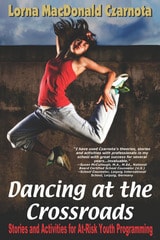
Dancing At The Crossroads
Stories and Activities for At-Risk Youth ProgrammingLorna Czarnota
Parkhurst Brothers, Inc., 2014
Dancing at the Crossroads: Stories for Mentoring At-Risk Youth, Caregiver’s Guidebook and Practitioner’s Guidebook are packed with the lessons of fifteen years in the field working with at-risk populations in runaway shelters, group homes, residential treatment facilities and one-on one with youth and parents. Out of a real understanding of these young people and their needs, and a passion for helping guide them into the adult circle, Lorna MacDonald Czarnota has compiled a collection of time-tested stories with activities, advice and information for parents and families, and a series of programs that storytellers, mental health workers, counselors, therapists, and others can utilize with groups of their own.
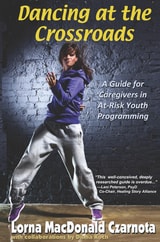
Dancing at the Crossroads
A Guide for Caregivers in At-Risk Youth ProgramsLorna Czarnota
Parkhurst Brothers, Inc., 2014
The books Dancing at the Crossroads: Stories for Mentoring At-Risk Youth, Practitioner’s Guidebook and Caregiver’s Guidebook are packed with the lessons of fifteen years in the field working with at-risk populations in runaway shelters, group homes, residential treatment facilities and one-on one with youth and parents. Out of a real understanding of these young people and their needs, and a passion for helping guide them into the adult circle, Lorna MacDonald Czarnota has compiled a collection of time-tested stories with activities, advice and information for parents and families, and a series of programs that storytellers, mental health workers, counselors, therapists, and others can utilize with groups of their own.
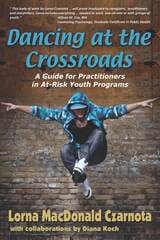
Dancing at the Crossroads
A Guide for Practitioners in At-Risk Youth ProgramsLorna Czarnota
Parkhurst Brothers, Inc., 2014
The books Dancing at the Crossroads: Stories for Mentoring At-Risk Youth, Practitioner’s Guidebook and Caregiver’s Guidebook are packed with the lessons of fifteen years in the field working with at-risk populations in runaway shelters, group homes, residential treatment facilities and one-on one with youth and parents. Out of a real understanding of these young people and their needs, and a passion for helping guide them into the adult circle, Lorna MacDonald Czarnota has compiled a collection of time-tested stories with activities, advice and information for parents and families, and a series of programs that storytellers, mental health workers, counselors, therapists, and others can utilize with groups of their own.
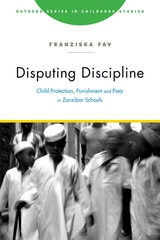
Disputing Discipline
Child Protection, Punishment, and Piety in Zanzibar SchoolsFranziska Fay
Rutgers University Press, 2021
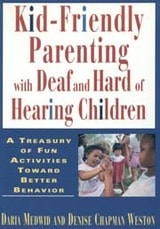
Kid-Friendly Parenting with Deaf and Hard of Hearing Children
Daria Medwid
Gallaudet University Press, 1995
For the parents of thousands of deaf and hard of hearing children, this step-by-step guide offers hundreds of ideas and methods that work with children ages 3 to 12. It provides scores of play activities to help parents enhance communication, solve problems, and strengthen relationships in skillful, fun ways. Also, parenting techniques are concisely presented to help parents set limits while avoiding power struggles and help foster positive behavior changes. In addition, this manual provides information about special resources and support services.
At each chapter’s beginning, experts (some deaf, some hearing), including I. King Jordan, Jack Gannon, Merv Garretson, and others, offer their insights on the subject discussed. Designed for parents with various styles, Kid-Friendly Parenting is a complete, step-by-step guide and reference to raising a deaf or hard of hearing child.
Pain and Shock in America
Politics, Advocacy, and the Controversial Treatment of People with DisabilitiesJan Nisbet
Brandeis University Press, 2021
For more than forty years, professionals in the field of disability studies have engaged in debates over the use of aversive interventions (such as electric shock) like the ones used at the Judge Rotenberg Center. Advocates and lawyers have filed complaints and lawsuits to both use them and ban them, scientists have written hundreds of articles for and against them, and people with disabilities have lost their lives and, some would say, lived their lives because of them. There are families who believe deeply in the need to use aversives to control their children’s behavior. There are others who believe the techniques used are torture. All of these families have children who have been excluded from numerous educational and treatment programs because of their behaviors. For most of the families, placement at the Judge Rotenberg Center is the last resort.
This book is a historical case study of the Judge Rotenberg Center, named after the judge who ruled in favor of keeping its doors open to use aversive interventions. It chronicles and analyzes the events and people involved for over forty years that contributed to the inability of the state of Massachusetts to stop the use of electric shock, and other severe forms of punishment on children and adults with disabilities. It is a long story, sad and tragic, complex, filled with intrigue and questions about society and its ability to protect and support its most vulnerable citizens.
Spare the Rod
Punishment and the Moral Community of SchoolsCampbell F. Scribner and Bryan R. Warnick
University of Chicago Press, 2021
Spare the Rod traces the history of discipline in schools and its ever increasing integration with prison and policing, ultimately arguing for an approach to discipline that aligns with the moral community that schools could and should be.
In Spare the Rod, historian Campbell F. Scribner and philosopher Bryan R. Warnick investigate the history and philosophy of America’s punishment and discipline practices in schools. To delve into this controversial subject, they first ask questions of meaning. How have concepts of discipline and punishment in schools changed over time? What purposes are they supposed to serve? And what can they tell us about our assumptions about education? They then explore the justifications. Are public school educators ever justified in punishing or disciplining students? Are discipline and punishment necessary for students’ moral education, or do they fundamentally have no place in education at all? If some form of punishment is justified in schools, what ethical guidelines should be followed?
The authors argue that as schools have grown increasingly bureaucratic over the last century, formalizing disciplinary systems and shifting from physical punishments to forms of spatial or structural punishment such as in-school suspension, school discipline has not only come to resemble the operation of prisons or policing, but has grown increasingly integrated with those institutions. These changes and structures are responsible for the school-to-prison pipeline. They show that these shifts disregard the unique status of schools as spaces of moral growth and community oversight, and are incompatible with the developmental environment of education. What we need, they argue, is an approach to discipline and punishment that fits with the sort of moral community that schools could and should be.
Spare the Rod
Punishment and the Moral Community of SchoolsCampbell F. Scribner and Bryan R. Warnick
University of Chicago Press, 2021
This is an auto-narrated audiobook edition of this book.
Spare the Rodtraces the history of discipline in schools and its ever increasing integration with prison and policing, ultimately arguing for an approach to discipline that aligns with the moral community that schools could and should be.
In Spare the Rod, historian Campbell F. Scribner and philosopher Bryan R. Warnick investigate the history and philosophy of America’s punishment and discipline practices in schools. To delve into this controversial subject, they first ask questions of meaning. How have concepts of discipline and punishment in schools changed over time? What purposes are they supposed to serve? And what can they tell us about our assumptions about education? They then explore the justifications. Are public school educators ever justified in punishing or disciplining students? Are discipline and punishment necessary for students’ moral education, or do they fundamentally have no place in education at all? If some form of punishment is justified in schools, what ethical guidelines should be followed?
The authors argue that as schools have grown increasingly bureaucratic over the last century, formalizing disciplinary systems and shifting from physical punishments to forms of spatial or structural punishment such as in-school suspension, school discipline has not only come to resemble the operation of prisons or policing, but has grown increasingly integrated with those institutions. These changes and structures are responsible for the school-to-prison pipeline. They show that these shifts disregard the unique status of schools as spaces of moral growth and community oversight, and are incompatible with the developmental environment of education. What we need, they argue, is an approach to discipline and punishment that fits with the sort of moral community that schools could and should be.
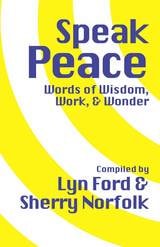
Speak Peace
Words of Wisdom, Work, and WonderLynette Ford
Parkhurst Brothers, Inc., 2019

Youthful Offenders at Highfields
An Evaluation of the Effects of the Short-Term Treatment of Delinquent BoysH. Ashley Weeks
University of Michigan Press, 1958
Youthful Offenders at Highfields
An Evaluation of the Effects of the Short-Term Treatment of Delinquent BoysH. Ashley Weeks
University of Michigan Press, 1958