Results by title
27 books match the query 'Belonging (Social psychology)'

Ashore
Laurel Nakanishi
Tupelo Press, 2021

Beautiful Cosmos
Performance and Belonging in the Caribbean DiasporaTina K. Ramnarine
Pluto Press, 2007
Belonging and Identity in STEM Higher Education
Edited by Camille Kandiko Howson and Martyn Kingsbury
University College London, 2024
In Belonging and Identity in STEM Higher Education, Camille Kandiko Howson and Martyn Kingsbury examine the role of science, technology, engineering, and mathematics (STEM) pedagogies in facilitating belonging, variable impacts across student characteristics, and the experiences of STEM students in higher education. Through case study contributions, the book analyzes the unique educational environments for STEM staff and students throughout Europe and Asia, challenging the assumptions that STEM fields are inherently unemotional and impersonal disciplines.
Betrayal U
The Politics of Belonging in Higher EducationEdited by Rebecca G. Martínez and Monica J. Casper
University of Arizona Press, 2025
Betrayal U intervenes in this context with a diverse, rich collection of essays, art, poetry, and research that explores these inequities through the lens of institutional betrayal, theorized by psychologist Jennifer Freyd. Edited by Rebecca G. Martínez and Monica J. Casper, this collection brings together thirty-six contributors who share personal experiences covering a range of topics in higher education. The work spans five thematic sections that examine the complexities of belonging and exclusion in academic settings.
The contributors share their lived experiences of academic life from diverse vantage points, showing the ways minoritized groups are made to feel unwelcome, further marginalized, and often positioned as the problem. Exhibiting courage, compassion, and a commitment to better futures, the voices in this collection offer both a searing indictment of higher education and pathways to alternative practices and structures. They shine a spotlight on academia today, including the promise of inclusion and the perils of exclusion.
Contributors
Celeste Atkins
Jasmine Banks
Krista L. Benson
Jessica Bishop-Royse
Samit Dipon Bordoloi
Monica J. Casper
Aparajita De
Kathy Diehl
Taylor Marie Doherty
Reshmi Dutt-Ballerstadt
Alma Flores
Alanna Gillis
C. Goldberg
Jennifer M. Gómez
Kristina Gupta
Jasmine L. Harris
Susan Hillock
Doreen Hsu
Jennifer Lai
Amy Andrea Martinez
Rebecca G. Martínez
Shantel Martinez
Sara A. Mata
Rachael McCollum
Wang Ping
Emily Rosser
Angélica Ruvalcaba
Brandy L. Simula
Rashna Batliwala Singh
Cierra Raine Sorin
Connor Spencer
Chantelle Spicer
James M. Thomas
Mercedes Valadez
Meg A. Warren
Matthew Wills
Caminos
Memoirs from the Center for Mexican American Studies at the University of Texas at AustinEdited by Zita Arocha
University of Texas Press, 2026
Fourteen writers reflect on the complexities of Mexican American identity in hyphenated America.
At a time when memoir has become an increasingly popular form of self-expression, fourteen writers from diverse backgrounds engaged with one another in a series of writing workshops sponsored by the Center for Mexican American Studies at UT Austin to reflect on their life journeys. They wrestle with issues that shaped them in provocative, evocative, and sometimes humorous short essays. The writers include a lawyer, a civil rights activist, actors, journalists, and professors who write of belonging, national and sexual identity, coping with illness and loss, career challenges, and life-altering events familiar to us all. The contributors write poignantly about losing a parent at an early age; growing up in segregated communities; bravely confronting serious health problems; living in a household with a mentally disturbed family member; the complexity of being “American” as well as “Mexican”; and the professional challenges facing all hyphenated Americans, many of whom are often the first person of color in their workplaces.
Caribbean Inhospitality
The Poetics of Strangers at HomeNatalie Lauren Belisle
Rutgers University Press, 2025
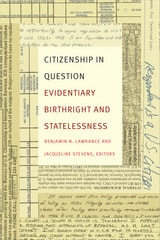
Citizenship in Question
Evidentiary Birthright and StatelessnessBenjamin N. Lawrance and Jacqueline Stevens, editors
Duke University Press, 2017
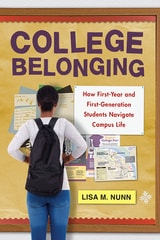
College Belonging
How First-Year and First-Generation Students Navigate Campus LifeLisa M. Nunn
Rutgers University Press, 2021
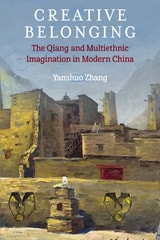
Creative Belonging
The Qiang and Multiethnic Imagination in Modern ChinaYanshuo Zhang
University of Michigan Press, 2026
China is a multicultural country home to fifty-five ethnic minority groups, yet due to linguistic and cultural barriers many of these groups remain understudied or unknown in the West. The Qiang, one of modern China’s officially recognized ethnic minorities, is also China’s longest-standing ethnoracial identity marker that has existed since the earliest recorded history of China. Creative Belonging investigates the formation and evolution of the Qiang as a people, a concept, and a cultural history in China. It further examines how the contemporary Qiang ethnic group interacts strategically with mainstream Chinese society, challenging the historically entrenched hierarchies between the sociocultural “centers” of China and its ethnic “peripheries.”
This book is based on years of ethnographic and textual-archival research in the Himalayan regions of southwest China, where the contemporary Qiang group resides. Drawing on a diverse range of official and local political discourses and previously unstudied literary, historiographical, and cinematic works, Yanshuo Zhang illuminates how the Qiang have carved out spaces of “creative belonging” within the parameters of multiculturalism in contemporary China. Rooted in ethnographic and textual-archival research, the book presents original materials produced by Qiang indigenous writers, scholars, artists, grassroots village cultural activists, and entrepreneurs at both the local and the global levels. Creative Belonging invites readers to rethink ethnicity and national belonging in China by centering minority groups’ efforts to expand the meanings and implications of “Chinese culture.”
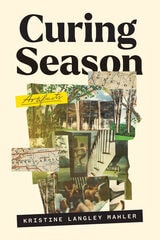
Curing Season
ArtifactsKristine Langley Mahler
West Virginia University Press, 2022
“A lovely and rapturous excavation and examination of the past, a lesson in writing oneself into history when it doesn’t offer you a space.” —Jenny Boully, author of Betwixt-and-Between: Essays on the Writing Life
After spending four years of adolescence in suburban North Carolina, Kristine Langley Mahler, even as an adult, is still buffeted by the cultural differences between her pioneer-like upbringing in Oregon and the settled southern traditions into which she could never assimilate. Collecting evidence of displacement—a graveyard in a mall parking lot, a suburban neighborhood of white kids bused to desegregate public schools in the 1990s, and the death of her best friend—Curing Season is an attempt to understand her failed grasp at belonging.
Mahler’s yearning for acceptance remains buried like a splinter, which she carefully tweezes out in the form of artifacts from her youth. But it isn’t until she encounters a book of local family histories that she takes inhabitation and truth apart, grafting and twisting and imprinting her history on theirs, until even she can no longer tell the difference between their truth and her own. Using inventive essay forms, Mahler pries apart the cracks of exclusion and experiments with the nature of belonging, memory, and place. Curing Season is a coming-of-age memoir for anyone who grew up anywhere but home.
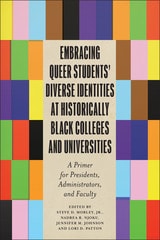
Embracing Queer Students’ Diverse Identities at Historically Black Colleges and Universities
A Primer for Presidents, Administrators, and FacultySteve D. Mobley Jr.
Rutgers University Press, 2025
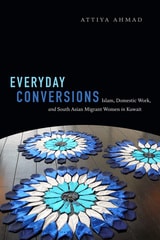
Everyday Conversions
Islam, Domestic Work, and South Asian Migrant Women in KuwaitAttiya Ahmad
Duke University Press, 2017
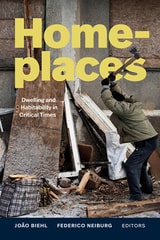
Homeplaces
Dwelling and Habitability in Critical TimesJoão Biehl and Federico Neiburg, editors
Duke University Press, 2026
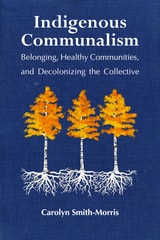
Indigenous Communalism
Belonging, Healthy Communities, and Decolonizing the CollectiveCarolyn Smith-Morris
Rutgers University Press, 2020
Told in vibrant detail, the narrative of the book conveys the importance of communalism as a value system present in all human groups and one at the center of Indigenous survival. Carolyn Smith-Morris draws on her work among the Akimel O'odham and the Wiradjuri to show how communal work and culture help these communities form distinctive Indigenous bonds. The results are not only a rich study of Indigenous relational lifeways, but a serious inquiry to the continuing acculturative atmosphere that Indigenous communities struggle to resist. Recognizing both positive and negative sides to the issue, she asks whether there is a global Indigenous communalism. And if so, what lessons does it teach about healthy communities, the universal human need for belonging, and the potential for the collective to do good?
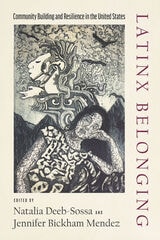
Latinx Belonging
Community Building and Resilience in the United StatesEdited by Natalia Deeb-Sossa and Jennifer Bickham Mendez
University of Arizona Press, 2022
What does it mean to be Latinx? This pressing question forms the core of Latinx Belonging, which brings together cutting-edge research to discuss the multilayered ways this might be answered.
Latinx Belonging is anchored in the claim that Latinx people are not defined by their marginalization but should instead be understood as active participants in their communities and contributors to U.S. society. The volume’s overarching analytical approach recognizes the differences, identities, and divisions among people of Latin American origin in the United States, while also attending to the power of mainstream institutions to shape their lives and identities. Contributors to this volume view “belonging” as actively produced through struggle, survival, agency, resilience, and engagement.
This work positions Latinxs’ struggles for recognition and inclusion as squarely located within intersecting power structures of gender, race, sexuality, and class and as shaped by state-level and transnational forces such as U.S. immigration policies and histories of colonialism. From the case of Latinxs’ struggles for recognition in the arts, to queer Latinx community resilience during COVID-19 and in the wake of mass shootings, to Indigenous youth’s endurance and survival as unaccompanied minors in Los Angeles, the case studies featured in this collection present a rich and textured picture of the diversity of the U.S. Latinx experience in the twenty-first century.
Contributors
Andrés Acosta
Jack “Trey” Allen
Jennifer Bickham Mendez
Stephanie L. Canizales
Christopher Cuevas
Natalia Deeb-Sossa
Yvette G. Flores
Melanie Jones Gast
Monika Gosin
Pierrette Hondagneu-Sotelo
Nolan Kline
Verónica Montes
Yvonne Montoya
Michael De Anda Muñiz
Suzanne Oboler
Gilda L. Ochoa
Dina G. Okamoto
Marco Antonio Quiroga
Michelle Téllez
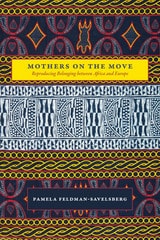
Mothers on the Move
Reproducing Belonging between Africa and EuropePamela Feldman-Savelsberg
University of Chicago Press, 2016
Feldman-Savelsberg introduces readers to several Cameroonian mothers, each with her own unique history, concerns, and voice. Through scenes of their lives—at a hometown association’s year-end party, a celebration for a new baby, a visit to the Foreigners’ Office, and many others—as well as the stories they tell one another, Feldman-Savelsberg enlivens our thinking about migrants’ lives and the networks and repertoires that they draw on to find stability and, ultimately, belonging. Placing women’s individual voices within international social contexts, this book unveils new, intimate links between the geographical and the generational as they intersect in the dreams, frustrations, uncertainties, and resolve of strong women holding families together across continents.
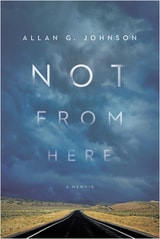
Not from Here
A MemoirAllan Johnson
Temple University Press, 2015
As a white man with Norwegian and English lineage, Johnson explores both America and the question of belonging to a place whose history holds the continuing legacy of the displacement, dispossession, and genocide of Native peoples.
More than a personal narrative, Not from Here illuminates the national silence around unresolved questions of accountability, race, and identity politics, and the dilemma of how to take responsibility for “a past we did not create.” Johnson’s story—about the past living in the present; of redemption, fate, family, tribe, and nation; of love and grief—raises profound questions about belonging, identity, and place.
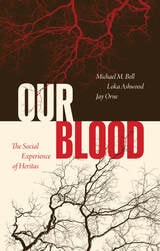
Our Blood
The Social Experience of HeritasMichael M. Bell, Loka Ashwood and Jay Orne
University of Chicago Press, 2026
From whom do I come? Our Blood describes the central importance of our sense not just of our heritage, but our embodied heritage: that our past is in our bodies and runs in our blood, and that our embodied past is central to our futures. Deeply felt heritas, as Michael M. Bell, Loka Ashwood, and Jay Orne call it, can be a source of great love and kindness for one another. But it can also be a beautiful horror, the source of some of our greatest hate and meanness towards one another. We think of our embodied heritage as natural and historical facts, beyond our choice, and therefore free of manipulation for social gain. We think of it as spirited presences in our bodies that we did not choose. We think of its origins as external to us, whether we are talking about family, class, caste, places, things, ethnoraciality, or our professions. We think of it as legitimate and rightful, therefore. But we do choose. We do select. Bell, Ashwood, and Orne argue that greater awareness of heritas’s social origins and social selectivity can help us cultivate a wider sense of mutual care and ease the divisiveness of our time. Ultimately, Our Blood asks us all to consider heritas, and in doing so, to perhaps even reconsider our very selves.
Precarity and Belonging
Labor, Migration, and NoncitizenshipCatherine S. Ramírez
Rutgers University Press, 2021
Remittance as Belonging
Global Migration, Transnationalism, and the Quest for HomeHasan Mahmud
Rutgers University Press, 2025
Risk and Adaptation in a Cancer Cluster Town
Laura Hart
Rutgers University Press, 2023
In Risk and Adaptation in a Cancer Cluster Town, Laura Hart examines another understudied dimension of community inaction: the role of emotion and its relationship to community experiences of social belonging and inequality. Using a cancer cluster community in Northwest Ohio as a case study, Hart advances an approach to risk that grapples with the complexities of community belonging, disconnect, and disruption in the wake of suspected industrial pollution. Her research points to a fear driven not only by economic anxiety, but also by a fear of losing security within the community—a sort of pride that is not only about status, but connectedness. Hart reveals the importance of this social form of risk—the desire for belonging and the risk of not belonging—ultimately arguing that this is consequential to how people make judgements and respond to issues. Within this context where the imperative for self-protection is elusive, affected families experience psychosocial and practical conflicts as they adapt to cancer as a way of life. Considering a future where debates about risk and science will inevitably increase, Hart considers possibilities for the democratization of risk management and the need for transformative approaches to environmental justice.

South Pole Station
Ashley Shelby
University of Minnesota Press, 2024
A New York TimesBook Review Editors’ Choice
A Shelf Awareness Best Book of the Year
Hudson Booksellers Book of the Year
One of the New York Post’s Best Books of the Summer
One of The Millions’s Most Anticipated Books of the Year
IndieNext Pick
A Time Magazine “What to Read Now” Selection
A wry novel set at the edge of the earth about the courage it takes to band together, even as everything around you falls apart
Unmoored by a recent family tragedy, Cooper Gosling is adrift at thirty and on the verge of ruining her career. So when the opportunity arises to join the National Science Foundation’s Artists & Writers Program in Antarctica, she jumps at the chance—and finds herself in the company of others who are just abnormal enough for Polar life, a group of eccentrics motivated by desires as ambiguous as her own. When they are joined by a fringe scientist who claims climate change is a hoax, the Polies’ already-imbalanced community is rattled, bringing them to the center of a global controversy and threatening the ancient ice chip they call home.
Sports, Power, and Resistance
An Introduction to Critical Sports StudiesEdited by Thomas P. Oates and Travis Vogan
University of Illinois Press, 2026
Topics range from Black coaches in the National Football League to disordered eating within distance running to transgender athletes’ fight to participate in sports. The editors have organized the contributions into three sections. Part one probes how sports build communities that foster belonging as well as exclusion. The essays in part two explore multiple forms of resistance in sports through various performances and representations. In the final section, essayists analyze more explicit efforts to use sports as a platform for activism from various political viewpoints. Throughout, the works nurture and demonstrate a sensibility that encourages humanistic, critical, and interdisciplinary inquiry.
Wide-reaching and accessible, Sports, Power, and Resistance explores timely issues while demonstrating the value of blending perspectives to better understand the games we play and watch.
Contributors: Ali Bouterse, Adrian Burgos, Jr., Michael L. Butterworth, Noah Cohan, Douglas Hartmann, Victoria E. Johnson, Abraham I. Khan, Jason Kido Lopez, Theresa Runstedtler, Jaime Schultz, Samantha N. Sheppard, and Travers
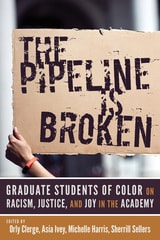
The Pipeline Is Broken
Graduate Students of Color on Racism, Justice, and Joy in the AcademyOrly Clerge
Utah State University Press, 2026
The Pipeline Is Broken explores the reality of racial exclusion and bias in graduate student education, arguing that the insidious effects of structural and institutional racism substantially chip away at the very pipeline of future BIPOC academics—already limited for other racialized reasons.
A series of letters written by graduate students of color, this collection offers a multifaceted account of the challenges, oppositions, microaggressions, and outright discrimination that these students face in higher education settings. Graduate students describe navigating hostile mentoring relationships and unwelcoming campus cultures and peers and laboring for poverty wages to earn their degrees. Yet these letters celebrate joy, community, and agency, offering a more complete and affirming view of graduate student life. Through these brave personal stories, The Pipeline Is Broken asks readers to interrogate what it means to navigate higher education as a person of color and to understand that the reality of faculty of color’s numerical-minority status is a complicated phenomenon whose genesis rests not at the moment of job interview. Rather, these letters show, this status is an intricate manifestation of a process that begins in elementary schools, is reinforced in high schools and colleges, and is part and parcel of the minefield that is graduate education in America.
Essential reading for anyone who cares about racial equity in education, mentorship, leadership development, or student well-being, The Pipeline Is Broken is a guide, a mirror, and a call to action all in one, challenging graduate programs, faculty, and administrators to examine their complicity in maintaining inequitable systems and offering suggestions for building cultures of care.

There Is Only Us
Zoe Ballering
University of North Texas Press, 2022
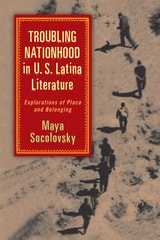
Troubling Nationhood in U.S. Latina Literature
Explorations of Place and BelongingSocolovsky, Maya
Rutgers University Press, 2013
Looking at such concerns as nation, place, trauma, and storytelling, writers Denise Chavez, Sandra Cisneros, Esmeralda Santiago, Ana Castillo, Himilce Novas, and Judith Ortiz Cofer challenge popular views of Latino cultural “unbelonging” and make strong cases for the legitimate presence of Latinas/os within the United States. In this way, they also counter much of today’s anti-immigration rhetoric.
Imagining the U.S. as part of a broader "Americas," these writings trouble imperialist notions of nationhood, in which political borders and a long history of intervention and colonization beyond those borders have come to shape and determine the dominant culture's writing and the defining of all Latinos as "other" to the nation.
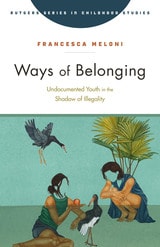
Ways of Belonging
Undocumented Youth in the Shadow of IllegalityFrancesca Meloni
Rutgers University Press, 2024
Ways of Belonging examines the experiences of undocumented young people who are excluded from K–12 schools in Canada and are rendered invisible to the education system. Canadian law doesn’t mention the existence of undocumented children, and thus their access to education rests on discretionary practices and is often denied altogether. This book brings the stories of undocumented young people vividly alive, putting them into conversation with the perspectives of the different actors in schools and courts who fail to include these young people.
Drawing on long-term ethnographic fieldwork, Francesca Meloni shows how ambivalence shapes the lives of young people who are caught between the desire to belong and the impossibility of fully belonging. Meloni pays close attention to these young people’s struggles and hopes, showing us what it means to belong and to endure in contexts of social exclusion. Ways of Belonging reveals the opacities and failures of a system that excludes children from education and puts their lives in invisibility mode.
An interview with the author (https://www.qmul.ac.uk/clpn/news-views/book-interviews/items/interview-with-francesca-meloni-about-her-book-ways-of-belonging-undocumented-youth-in-the-shadow-of-illegality.html)