Results by title
2 books match the query 'Benedictines'
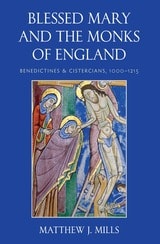
Blessed Mary and the Monks of England, 1000-1215
Matthew J. Mills
Catholic University of America Press, 2024
In the study of historical Mariology, the monastic communities of England before and after the Norman conquest receive too little attention. Classic surveys, such as Hilda Graef’s, Mary: A History of Doctrine and Devotion (2 vols, orig. 1963, 1965), highlight key figures and developments; and a fine book by Mary Clayton, The Cult of the Virgin Mary in Anglo-Saxon England (1990), takes scholarship as far as the early-eleventh century. The present volume, building upon such works, delves more deeply into the prayerful, intellectual and artistic contemplation of Mary during the age of monasticism, roughly the two hundred years prior to the advent of the mendicant orders in the thirteenth century. In the history of England, this was a time of high drama: conquest, power struggle, martyrdom; for English monasticism, it was marked by suppression, reform and renewal, patronage, and new currents of prayer and thought. Against this backdrop, Matthew Mills uncovers many vibrant contributions to Marian doctrine and devotion by theologians and communities living according to the sixth-century Rule of St Benedict: the Benedictines and their successors, the Cistercians, who arrived in England in 1128. In a thematic unfolding of Mary’s life and identity, from conception to assumption and intercession, a picture emerges of a Mariology shaped by the constant of monastic liturgy, anchored in deep biblical and patristic wisdom, cherished and transmitted by the Englishman, St Bede (d. 735), and animated by profound love. Towering figures, St Anselm (d. 1109) and St Ælred (d. 1167), are placed within a wider landscape, alongside lesser-known but still significant individuals, including the Cistercian abbot, John of Forde (d. 1214), royal confessor and pioneer of Marian exegesis of the Song of Songs. England’s monastic Mariology was colored by Greek as well as Latin influences and touched by key experiences of the contemporary church at large: apocalyptic disappointment, eleventh-century reform (sometimes called, ‘Gregorian’), sacramentalism, intense yearning for salvation. This book also sheds light upon the significance of Mary for medieval monks’ understanding of their own profession; their mother and their lady, she was, in addition, their icon and exemplar of life in St Benedict’s ‘school for the Lord’s service’ (Rule, Prol. 45).
[more]
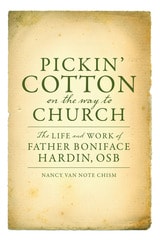
Pickin’ Cotton on the Way to Church
The Life and Work of Father Boniface Hardin, OSBNancy Van Note Chism
Indiana Historical Society Press, 2019
Pickin’ Cotton on the Way to Church highlights the life of Father Boniface Hardin, a Benedictine monk. James Dwight Randolph (Randy) Hardin was born on November 18, 1933, in Bardstown, Kentucky, educated in Catholic schools in Kentucky, and thirteen years old when he asked to become a priest. Excluded from the seminaries in Kentucky because of his race, he enrolled in Saint Meinrad Seminary in Spencer County, Indiana, which had just started accepting black students. After six years of study he took his vows as monk and was given the name Boniface. He was ordained a priest in 1959 and attained a graduate degree in 1963.
In 1965 Father Hardin accepted the position of associate pastor at Holy Angels Catholic Church, a predominately black parish in Indianapolis. Father Hardin was a social activist who spoke out against poverty, segregation, police brutality, and fought against the construction of an interstate highway that would adversely affect the black community. Such actions were considered inappropriate for a priest and the Archbishop of Indianapolis removed him from his position at Holy Angels.
Although reinstated due to public outcries, Father Hardin soon left Holy Angels, and, along with Sister Jane Shilling, opened the Martin Center, where they could advocate full time for the poor and disenfranchised through a series of programs and services. Realizing the correlation between education and career advancement, Father Boniface and Sister Jane founded Martin University, the only predominately African American institution of higher learning in Indiana. The university continues to play a unique role in the community, with a special focus on educational opportunities to those who have been too often discounted, discouraged, and disregarded by society.
Although Father Hardin was widely known in Indiana during his lifetime, accumulating many awards and honors, it is important to document his life and work for posterity. It is hoped that this volume will provide an overview of his story and lay the foundation for other scholarly efforts.
[more]