Results by title
4 books match the query 'Berry, Don'

Majority of Scoundrels, A
An Informal History of the Rocky Mountain Fur CompanyDon Berry
Oregon State University Press, 2006
Berry’s fresh and invigorating narrative captures the peak years (1822-1834) of the fur trade in the Mountain West, the period in which the Rocky Mountain Fur Company grew to be “the greatest name in the mountains.” These were heady times in which trappers and traders explored the far corners of the western country, disputed territory with Native American tribes and the Hudson’s Bay Company, learned the lore of the land, and perfected their drinking, brawling, yarn-spinning, and boasting at the annual rendezvous.
With lively prose and an ear for a good yarn, Berry brings to life the principal trappers—colorful figures including Jim Bridger, Hugh Glass (who miraculously survived the mauling of a bear and came back from death to haunt his fellows), champion liar James P. Beckwourth, Joe Meek, Jedediah Smith, Jim Clyman, and many more. Using their journals, business records, and other sources, Berry laces his back-country narrative with an analysis of the power struggle between the St. Louis businessmen who controlled the trade and the trappers.
A new introduction by historian Stephen Dow Beckham looks beyond the romantic legends of the mountain men to set A Majority of Scoundrels in the context of recent scholarship on the American West. While Beckham demonstrates just how much our sense of history has changed in the almost fifty years since Berry’s work was first published, he also helps readers understand the continuing appeal of the mythology of the fur trade era and the lasting importance of A Majority of Scoundrels.
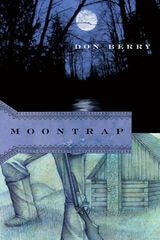
Moontrap
Don Berry
Oregon State University Press, 1962
Winner of the Western Writers of America Spur Award for best historical novel, Moontrap is a book of remarkable beauty and power about a man caught between his vivid past and an uncertain future.
The year is 1850, a transitional period in the new Oregon Territory, with settlers and lawmakers working to subdue the untamed region. Johnson Monday, a former mountain man, has been living on a bend of the Willamette River near Oregon City for seven years with his Shoshone Indian wife, struggling to make a place in settled society. One day, Webster T. Webster, a raucous, unrepentant trapper, arrives for an unexpected visit. With his earthy humor and stubborn adherence to the simple life, "Webb" leads Monday through adventures that flirt dangerously close to lawlessness, while helping him to rediscover his moral center. Through defiance, triumph, and tragedy, Moontrap follows Johnson Monday as he realizes that relinquishing the stark honesty of mountain life for the compromises of civilization may be too high a price to pay.
Following Trask in Don Berry's trilogy of novels set in the Oregon Territory, Moontrap offers a richly comic and intensely poignant portrayal of pioneer life.
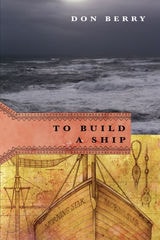
To Build a Ship
Don Berry
Oregon State University Press, 2004
In To Build a Ship, Don Berry explores the extent to which a man can betray himself and his morality for a dream or an obsession. It's the story of a handful of settlers who take up land in the fertile Tillamook Bay Valley in the early 1850s -- defiant dreamers battling the wilderness. With impenetrable mountains at their backs and the open sea as their sole road to trade, they are suddenly isolated from the outside world when the only captain willing to enter their harbor dies. With the survival of their new settlement threatened, they decide to build their own schooner.
At first the challenge brings out the best in the men, but soon the tensions inherent in this monumental task engulf them. Obstacles accumulate and complications mount: a death, a murder trial, trouble with restive Indians, and finally a travesty of justice. Excitement, shock, and gripping drama mark this story of men pushed to the point of madness as they see the Morning Star of Tillamook slowly take shape on the wild Pacific shore.
Don Berry's three novels about the Oregon Territory — Trask, Moontrap, and To Build a Ship — are as rich and compelling today as when they were first published more than 40 years ago. The new OSU Press editions of these books include an introduction by Jeff Baker, former book critic for The Oregonian.

Trask
Don Berry
Oregon State University Press, 2004
Trask is at once a gripping tale of adventure and a portrayal of one man's return to the naked simplicity of life. Inspired by his belief in the transcendent power of nature, his fascination with Eastern philosophy, and the lives of historical men and women, Don Berry created a story that is strongly imagined and powerfully rendered-a landmark work. This new edition of Berry's celebrated first novel includes an introduction by Jeff Baker, book critic for The Oregonian.