Results by title
2 books match the query 'Best Years'
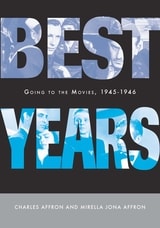
Best Years
Going to the Movies, 1945-1946Charles Affron and Mirella Jona Affron
Rutgers University Press, 2009
Best Years is a panoramic study, shining light on this critical juncture in American historyand the history of American cinemaùthe end of World War II (1945) and a year of unprecedented success in Hollywood's "Golden Age" (1946). This unique time, the last year of war and the first full year of peace, provides a rich blend of cinema genres and typesùfrom the battlefront to the home front, the peace film to the woman's film, psychological drama, and the period's provocative new style, film noir.
Best Years focuses on films that were famous, infamous, forgotten, and unforgettable. Big budget A-films, road shows, and familiar series share the spotlight. From Bergman and Grant in Notorious to Abbott and Costello in Lost in a Harem, Charles Affron and Mirella Jona Affron examine why the bond between screen and viewer was perhaps never tighter. Paying special attention to the movie-going public in key cities--Atlanta, New York, Boston, Honolulu, and Chicago--this ambitious work takes us on a cinematic journey to recapture a magical time.
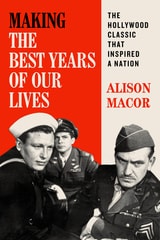
Making The Best Years of Our Lives
The Hollywood Classic That Inspired a NationBy Alison Macor
University of Texas Press, 2022
2023 Wall Award Finalist, Theatre Library Association
How a Hollywood gem transformed the national discourse on post-traumatic stress disorder.
Released in 1946, The Best Years of Our Lives became an immediate success. Life magazine called it “the first big, good movie of the post-war era” to tackle the “veterans problem.” Today we call that problem PTSD, but in the initial aftermath of World War II, the modern language of war trauma did not exist. The film earned the producer Samuel Goldwyn his only Best Picture Academy Award. It offered the injured director, William Wyler, a triumphant postwar return to Hollywood. And for Harold Russell, a double amputee who costarred with Fredric March and Dana Andrews, the film provided a surprising second act.
Award-winning author Alison Macor illuminates the film’s journey from script to screen and describes how this authentic motion picture moved audiences worldwide. General Omar Bradley believed The Best Years of Our Lives would help “the American people to build an even better democracy” following the war, and the movie inspired broad reflection on reintegrating the walking wounded. But the film’s nuanced critique of American ideals also made it a target, and the picture and its creators were swept up in the anti-Communist witch hunts of the late 1940s. In this authoritative history, Macor chronicles the making and meaning of a film that changed America.