484 books match the query 'Biblical Studies' and 32 start with a
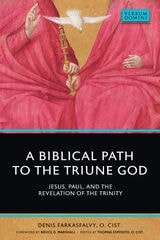
cover of A Biblical Path to the Triune God: Jesus, Paul and the Revelation of the Trinity

A Biblical Path to the Triune God

Jesus, Paul and the Revelation of the Trinity

Denis Farkasfalvy

Catholic University of America Press, 2021

This short volume, finished just before Denis Farkasfalvy’s death in 2020, serves effectively as his last theological testament. Throughout his scholarly career, Farkasfalvy aimed to reconcile and unite theological disciplines that had increasingly become isolated from each other, most notably the biblical, patristic, and systematic. In A Biblical Path to the Triune God, the Cistercian abbot identifies the earliest biblical witnesses to the Church’s teaching about God, formulated at the Council of Nicaea, as Father, Son, and Holy Spirit. Jesus’ famous praise of the Father, found almost word-for-word in Matthew 11:25-27 and Luke 10:21-22, is Farkasfalvy’s point of departure for his bold assertion that in the earliest sources, we find abundant evidence that “it was not Jesus who revealed his own divine sonship; rather, the Father revealed it to those whom Jesus had chosen and were open to respond in faith.” Farkasfalvy demonstrates that Jesus reveals his relationship to the Father in terms of intimate and experiential knowledge, transforming the procreative metaphor of filiation from the physical (as in the Psalms and 2 Samuel 7) to the epistemological realm of knowledge, what he calls “love within cognitive dimensions.” Just decades after Jesus’ ministry, numerous independent apostolic witnesses, from the Synoptic Gospels and John to Paul (especially Romans 1:1-4 and Galatians 1:15-16), indicate a robust and widespread understanding of the Father’s self-disclosure in Jesus the Son. Farkasfalvy concludes his brief but intense reflection by outlining how a single organic process of revelation binds together the Father and the Son, and then extends that loving communion to believers in the Spirit, a communion made possible only by the incarnate Son’s crucifixion and subsequent glorification. This book accomplishes the admirable feat of showing that far from being the invention of later centuries, the Trinitarian doctrine of the Church is firmly rooted in the very first reflections on Jesus’ ministry and mystery by the biblical authors.
[more]
cover of A Catalog of Biblical Passages in the Dead Sea Scrolls

A Catalog of Biblical Passages in the Dead Sea Scrolls

David L. Washburn

SBL Press, 2003
Material from the Dead Sea Scrolls appears in many publications. While much of the corpus has now appeared in the Discoveries in the Judaean Desert series, there are still fragments buried in obscure journals and books that can be virtually impossible to find. This book identifies all the passages in the Qumran documents that contain biblical text, both in the biblical and non-biblical scrolls. It provides specific bibliographic information, in canonical order, for locating each passage in the published scrolls and compares each one to the ancient Hebrew and Greek versions of the Hebrew Bible, noting both similarities and differences. It is designed to help those who want to work with manuscripts and versions to discover the original text of the Hebrew Bible. This work will appeal to students of Qumran, and both scholars and nonspecialists interested in textual criticism of the Hebrew Bible.
[more]
cover of A Concise Coptic-English Lexicon, Second Edition

A Concise Coptic-English Lexicon, Second Edition

Richard Smith

SBL Press, 1999

This short Coptic lexicon addresses the needs of beginning Coptic students for a resource focused on vocabulary in the Nag Hammadi texts. The second edition includes additional word entries, updated definitions, and cross references.
[more]
cover of A Grammar of Epigraphic Hebrew

A Grammar of Epigraphic Hebrew

Sandra Landis Gogel

SBL Press, 1998
This book provides a grammar of the extrabiblical Hebrew inscriptions of Palestine that have been attributed by various archaeological, historical, and paleographic analyses to the period between the tenth and the sixth century B.C.E. These pre-Persian inscriptions constitute a corpus of epigraphic Hebrew inscriptions (including ostraca, graffiti, and seals) that has never been studied comprehensively. While studies of the better-known epigraphic Hebrew inscriptions have been attempted, this book covers the entire corpus. In addition, the seal inscriptions and the personal names have been systematically compared with the longer inscriptions for the first time.
[more]
cover of A Historical Archaeology of Jerusalem: Bronze and Iron Ages

A Historical Archaeology of Jerusalem

Bronze and Iron Ages

Yuval Gadot

SBL Press, 2026

In the first book to examine Jerusalem’s archaeological remains in detail since Kathleen M. Kenyon’s Digging Up Jerusalem (1974), Yuval Gadot reexamines the results of more than one hundred years of excavations and incorporates findings from recent research based on the most up-to-date scientific methods. The book covers six pivotal periods of Jerusalem’s development and correlates those with historical texts, including those from the Hebrew Bible, for the purpose of portraying a nuanced and detailed reconstruction of Jerusalem during the Bronze and Iron Ages. More than one hundred color illustrations and maps supplement Gadot’s analysis of the archaeological data and reconstruction of Jerusalem’s history. This volume presents the most complete picture of Jerusalem’s history for scholars and students interested in the city’s role as a royal seat and a religious center.
[more]
cover of A Latin-Greek Index of the Vulgate New Testament

A Latin-Greek Index of the Vulgate New Testament

Theodore A. Bergren

SBL Press, 2003
“Scholars who work with Latin materials that have been or might have been translated from Greek originals are often frustrated by the lack of reference tools that can aid in determining accurately translational equivalences between the two languages. Greek-Latin or Latin-Greek lexica are inadequate, for they tend to give ‘ideal’ translational equivalences rather than ones actually attested in some text. The problem is acute, for example, in the study of the Vulgate New Testament, for which no reference tool has existed by which one could determine quickly the entire range of Greek translational equivalents for a given Latin word. The present work is intended to go some distance toward fulfilling this need.” — from the introduction
[more]
cover of A Most Reliable Witness: Essays in Honor of Ross Shepard Kraemer

A Most Reliable Witness

Essays in Honor of Ross Shepard Kraemer

Susan Ashbrook Harvey

SBL Press, 2015

Celebrate a trailblazer in the areas of women and re

Celebrate a trailblazer in the areas of women and religion, Jews and Judaism, and earliest Christianity in the ancient Mediterranean

Ross Kraemer is Professor Emerita in the Department of Religious Studies at Brown University. This volume of essays, conceived and produced by students, colleagues, and friends bears witness to the breadth of her own scholarly interests. Contributors include Theodore A. Bergren, Debra Bucher, Lynn Cohick, Mary Rose D’Angelo, Nathaniel P. DesRosiers, Robert Doran, Jennifer Eyl, Paula Fredriksen, John G. Gager, Maxine Grossman, Kim Haines-Eitzen, Susan Ashbrook Harvey, Jordan Kraemer, Robert A. Kraft, Shira L. Lander, Amy-Jill Levine, Susan Marks, E. Ann Matter, Renee Levine Melammed, Susan Niditch, Elaine Pagels, Adele Reinhartz, Jordan Rosenblum, Sarah Schwarz, Karen B. Stern, Stanley K. Stowers, Daniel Ullucci, Arthur Urbano, Heidi Wendt, and Benjamin G. Wright.

Features:

  • Articles that examine both ancient and modern texts in cross-cultural and trans-historical perspective
  • Twenty-eight original essays on ancient Judaism, Christianity, and women in the Greco-Roman world
[more]
cover of A New Approach to Textual Criticism: An Introduction to the Coherence-Based Genealogical Method

A New Approach to Textual Criticism

An Introduction to the Coherence-Based Genealogical Method

Tommy Wasserman

SBL Press, 2017

An essential introduction for scholars and students of New Testament Greek

With the publication of the widely used 28th edition of Nestle-Aland’s Novum Testamentum Graece and the 5th edition of the United Bible Society Greek New Testament, a computer-assisted method known as the Coherence-Based Genealogical Method (CBGM) was used for the first time to determine the most valuable witnesses and establish the initial text. This book offers the first full-length, student-friendly introduction to this important new method. After setting out the method’s history, separate chapters clarify its key concepts, including genealogical coherence, textual flow diagrams, and the global stemma. Examples from across the New Testament are used to show how the method works in practice. The result is an essential introduction that will be of interest to students, translators, commentators, and anyone else who studies the Greek New Testament.

Features

  • A clear explanation of how and why the text of the Greek New Testament is changing
  • Step-by-step guidance on how to use the CBGM in textual criticism
  • Diagrams, illustrations, and glossary of key terms
[more]
cover of A Political History of the Arameans: From Their Origins to the End of Their Polities

A Political History of the Arameans

From Their Origins to the End of Their Polities

K. Lawson Younger Jr.

SBL Press, 2016

An up-to-date analysis of the history of the ancient Near East and the Arameans

K. Lawson Younger Jr. presents a political history of the Arameans from their earliest origins to the demise of their independent entities. The book investigates their tribal structures, the development of their polities, and their interactions with other groups in the ancient Near East. Younger utilizes all of the available sources to develop a comprehensive picture of this complex, yet highly important, people whose influence and presence spanned the Fertile Cresent.

Features:

  • The best, recent understanding of tribal political structures, aspects of mobile pastoralism, and models of migration
  • A regional rather than a monolithic approach to the rise of Aramean polities
  • Thorough integration of the complex relationships and interactions of the Arameans with the Luwians, the Assyrians, the Israelites, and others
[more]
cover of A Quest for the Historical Christ: Scientia Christi and the Modern Study of Jesus

A Quest for the Historical Christ

Scientia Christi and the Modern Study of Jesus

Anthony Giambrone, OP

Catholic University of America Press, 2021
A Catholic Quest for the Historical Christ brings together a collection of interrelated essays on the historical Jesus and primitive Christology. Sensitive to the diverse, but traditionally Protestant assumptions and perspectives of the "Quest" as well as to the widely lamented disconnect between New Testament exegesis and classical dogmatic theology, an alternative approach is proposed in these pages. Ecumenical and conciliar reference points, along with non-confessional historical methods (e.g. archeology) shape the basic project, which nevertheless assumes some distinctive and important Catholic contours. This particular synthesis injects the voice of a missing interlocutor into an established conversation that has not infrequently been both historically confused and dogmatically (and philosophically) numb. The book is divided into three sections: Historical Foundations, Theological Perspectives, and Jesus and the Scriptures. While the individual chapters represent independent probes, the cumulative argument and arc of the study drives in clear and concerted directions. After a first approach to the Gospel data, attentive at once to historiographical and historical questions, a series of interventions reorienting the present scholarly discussion are suggested. These various, foundational essays lead, finally, to a sustained mediation on the mind of Christ, considered as a unique reader of the Scriptures: a meditation having its proper reflex and reflection in the way Christians themselves, as readers of the Gospels, participate in the Lord's own encounter with the living Word.
[more]
cover of A Ransom for Israel: Jesus and Jewish Salvation in Matthew

A Ransom for Israel

Jesus and Jewish Salvation in Matthew

Nicholas J. Schaser

SBL Press, 2025

In this study of the Gospel of Matthew, Nicholas J. Schaser proposes that Matthew intended to narrate the corporate salvation of ethnic Israel rather than its replacement by an ethnically diverse Christian church. Instead of presenting Jesus as a new Israel to replace the old, Matthew highlights Jesus’s salvific value in exchange for the nation of Israel when he dies as a ransom for their sins. This book presents one of the most comprehensive challenges to the prevalent interpretation that Matthew locates Israel in an ongoing exile from which Jesus offers redemption only if they follow him. Rather, the gospel, when read alongside Israel’s Scriptures, presents Israel at risk of an eschatological exile from God’s kingdom, and Jesus removes his people’s exile-inducing sins by being cast out in their place. Schaser’s compelling reading has the potential to open new dialogue between Jews and Christians.
[more]
cover of A User's Guide to the Nestle-Aland 28 Greek New Testament

A User's Guide to the Nestle-Aland 28 Greek New Testament

David Trobisch

SBL Press, 2013
This guide introduces the complex new edition of the Nestle-Aland Novum Testamentum Graece, 28 Edition, explaining its structure, the text-critical apparatus and appendices, and the innovations of the new edition.
[more]
cover of Abiding Words: The Use of Scripture in the Gospel of John

Abiding Words

The Use of Scripture in the Gospel of John

Alicia D. Myers

SBL Press, 2015

A collection of essays by experts from around the world

Like the other New Testament Gospels, the Gospel of John repeatedly appeals to Scripture (Old Testament). Preferring allusions and “echoes” alongside more explicit quotations, however, the Gospel of John weaves Scripture as an authoritative source concerning its story of Jesus. Yet, this is the same Gospel that is often regarded as antagonistic toward “the Jews,” especially the Jewish religious leaders, depicted within it.

Features:

  • Introduces and updates readers on the question of John’s employment of Scripture
  • Showcases useful approaches to more general studies on the New Testament’s use of Scripture, sociological and rhetorical analyses, and memory theory
  • Explores the possible implications surrounding Scripture usage for the Gospel audiences both ancient and contemporary
[more]
cover of Adam and Eve in the Armenian Tradition, Fifth through Seventeenth Centuries

Adam and Eve in the Armenian Tradition, Fifth through Seventeenth Centuries

Michael E. Stone

SBL Press, 2013
The Adam and Eve stories are a foundational myth in the Jewish and Christian worlds, and the way they were recounted reveals a great deal about those doing the retelling. How did the Armenians retell these stories? What values do these retellings express about men and women, their life in the world, sin and redemption? Presented here are twelve hundred years of Armenian telling of the Genesis 1–3 stories in an unparalleled collection of all significant narratives of Adam and Eve in Armenian literature—prose and poetry, homilies and commentaries, calendary and mathematical texts—from its inception in the fifth century to the seventeenth century. This seminal resource contributes to the lively current discussion of how biblical and apocryphal traditions were retold, embroidered, and transformed into the lenses through which the Bible itself was read.
[more]
cover of Adopting the Stranger as Kindred in Deuteronomy

Adopting the Stranger as Kindred in Deuteronomy

Mark R. Glanville

SBL Press, 2018

Investigate how Deuteronomy incorporates vulnerable, displaced people

Deuteronomy addresses social contexts of widespread displacement, an issue affecting 65 million people today. In this book Mark R. Glanville investigates how Deuteronomy fosters the integration of the stranger as kindred into the community of Yahweh. According to Deuteronomy, displaced people are to be enfolded within the household, within the clan, and within the nation. Glanville argues that Deuteronomy demonstrates the immense creativity that communities may invest in enfolding displaced and vulnerable people. Inclusivism is nourished through social law, the law of judicial procedure, communal feasting, and covenant renewal. Deuteronomy’s call to include the stranger as kindred presents contemporary nation-states with an opportunity and a responsibility to reimagine themselves and their disposition toward displaced strangers today.

Features:

  • Exploration of the relationship of ancient Israel’s social history to biblical texts
  • An integrative methodology that brings together literary-historical, legal, sociological, comparative, literary, and theological approaches
  • A thorough study of Israelite identity and ethnicity
[more]
cover of After Transformation: A Lyrical History of Christian Late Antiquity

After Transformation

A Lyrical History of Christian Late Antiquity

Maia Kotrosits

Duke University Press, 2025
In After Transformation, Maia Kotrosits offers a lyrical history of Christian late antiquity as it lives on in and with the present. Recasting the monumental changes that occurred between the second and fourth centuries, when Rome transitioned from pagan to Christian worship, Kotrosits presents a condensed and evocative meditation on the profound effects of Christian imperialism across time and geography. She employs a collection of forms ranging from micro-essay and vignette to poem and fragment to capture human struggles with time and change, showing how the mundane and intimate details of our lives can themselves be conduits of historical knowing. Arguing for lyricism as a method, Kotrosits reclaims vulnerability, urgency, and storytelling in historical work to model new ways of writing the past and experiencing ourselves more fully in time. Above all, After Transformation is about the ironies of the ways that history is written against the reality of the ways that history is lived.
[more]
cover of After the Corinthian Women Prophets: Reimagining Rhetoric and Power

After the Corinthian Women Prophets

Reimagining Rhetoric and Power

Joseph A. Marchal

SBL Press, 2021

Rhetoric, Power, and Possibilities

Thirty years after the publication of Antoinette Clark Wire’s groundbreaking The Corinthian Women Prophets, an interdisciplinary, international, and intergenerational group of scholars reflects upon Wire’s impact on New Testament scholarship. Essays pursue further historical and theoretical possibilities, often in search of marginalized people, including the women of Corinth, using feminist, rhetorical, materialist, decolonizing, queer, and posthumanist approaches to interpret Paul’s letters and the history of ancient Mediterranean assemblies. Contributions from Cavan Concannon, Arminta Fox, Joseph A. Marchal, Shelly Matthews, Anna Miller, Jorunn Økland, and Antoinette Clark Wire reconsider how both the methods and results of Wire’s work reveal the possibilities of other people beside Paul who are worth our attention and effort. The essays in this collection introduce students and scholars to the possibilities of interdisciplinary and intersectional approaches for engaging the broader Pauline corpus.
[more]
cover of Agur's Wisdom and the Coherence of Proverbs 30

Agur's Wisdom and the Coherence of Proverbs 30

Alexander T. Kirk

SBL Press, 2024

In this first in-depth study of Proverbs 30, the Words of Agur, Alexander T. Kirk examines a puzzling text attributed to an unknown figure that has long fascinated scholars. While this material has been read as everything from a devout confession to a cry of despair, few interpreters have found any real coherence in the chapter. In this detailed philological study engaging both genre and tone, Kirk demonstrates that the chapter is best read as a coherent collection that mocks pride and greed while it commends humility and contentment. Kirk draws out many subtle literary features that augment Agur’s message, including humor and animal imagery. Ultimately, Proverbs 30 deepens the presentation of wisdom in the book of Proverbs by orienting it toward a proper relationship with God.
[more]
cover of Alfred Loisy and Modern Biblical Studies

Alfred Loisy and Modern Biblical Studies

Jeffrey L. Morrow

Catholic University of America Press, 2019
The French Catholic priest and biblical scholar Alfred Loisy (1857-1940) was at the heart of the Roman Catholic Modernist crisis in the early part of the twentieth century. He saw much of his work as an attempt to bring John Henry Newman’s notion of development of doctrine into the realm of Catholic biblical studies, and thereby transform Catholic theology. This volume situates Loisy’s better known works on the New Testament and theology in the context of his lesser known work in Assyriology and Old Testament studies. His early training in Assyriology taught Loisy a comparative historical approach to studying ancient texts, in addition to providing him the requisite training in ancient Near Eastern languages and literature. Loisy built upon this Assyriological foundation with his historical critical work in biblical studies, first in the Old Testament. In his biblical scholarship, Loisy combined the then current trends of historical biblical criticism with his more comparative approach. Prior to his excommunication in 1908, Loisy attempted in his more popular writings to defend the inclusion of historical biblical criticism in the repertoire of Catholic biblical interpretation. He saw this as an important step in reforming Catholic theology. The Modernist crisis set the stage for the major debates that would occur in the Catholic theological world for more than a century. The controversy over Modernism became one important conflict that helped pave the way for the Second Vatican Council. The issues raised during Loisy’s time, remain contested today. Examining how Loisy approached biblical studies helps readers better understand his overall work, and the place it played in the pivotal intellectual turmoil of his day.
[more]
cover of Allusive Soundplay in the Hebrew Bible

Allusive Soundplay in the Hebrew Bible

Jonathan G. Kline

SBL Press, 2016

The first study to focus exclusively on the use in the Hebrew Bible of soundplay to allude to and interpret earlier literary traditions

This book focuses on the way the biblical writers used allusive soundplay to construct theological discourse, that is, in service of their efforts to describe the nature of God and God's relationship to humanity. By showing that a variety of biblical books contain examples of allusive soundplay employed for this purpose, Kline demonstrates that this literary device played an important role in the growth of the biblical text as a whole and in the development of ancient Israelite and early Jewish theological traditions.

Features:

  • Demonstrates that allusive soundplay was a productive compositional technique in ancient Israel
  • Identifies examples of innerbiblical allusion that have not been identified before
  • A robust methodology for identifying soundplay in innerbiblical allusions
[more]
cover of Ambrosiaster's Commentary on the Pauline Epistles: Romans

Ambrosiaster's Commentary on the Pauline Epistles

Romans

Theodore S. de Bruyn

SBL Press, 2017

A new translation for scholars and students of biblical interpretation and ancient Christianity

The ancient writer dubbed Ambrosiaster was a pioneer in the revival of interest in the Pauline Epistles in the later fourth century. He was read by Latin writers, including Pelagius and Augustine, and his writings, passed on pseudonymously, had a long afterlife in the biblical commentaries, theological treatises, and canonical literature of the medieval and the early modern periods. In addition to his importance as an interpreter of scripture, Ambrosiaster provides unique perspectives on many facets of Christian life in Rome, from the emergence of clerical celibacy to the development of liturgical practices to the subordination of women.

Features

  • An up-to-date overview of what is known about Ambrosiaster, the transmission of his commentary on the Pauline Epistles, his exegetical method, his theological orientation, and aspects of Christianity in Rome in the fourth century
  • A scholarly translation of the final version of the commentary, along with notes that identify significant variants from prior versions of the commentary
  • Bibliography thatincludes a comprehensive list of the scholarly literature on Ambrosiaster
[more]
cover of An Introduction to Empire in the New Testament

An Introduction to Empire in the New Testament

Adam Winn

SBL Press, 2016

Explore how empire is a crucial foreground for reading and interpreting the New Testament

In the last three decades, significant attention has been given to the way in which New Testament texts engage and respond to the imperial world in which they were written. The purpose of the present volume is to introduce students and non-specialists to the growing subfield of New Testament studies known as empire studies. Contributors seek to make readers aware of the significant work that has already been produced, while also pointing them to new ways in which this field is moving forward. The contributors are Bruce W. Longenecker, Richard A. Horsley, Warren Carter, Adam Winn, Eric D. Barreto, Beth M. Sheppard, Neil Elliot, James R. Harrison, Harry O. Maier, Deborah Krause, Jason A.Whitlark, Matthew R. Hauge, Kelly D. Liebengood, and Davina C. Lopez.

Features:
  • Essays from a diverse group of interpreters who at times have differing presuppositions, methods, and concerns
  • Articles introduce students and non-specialists to the Roman imperial realities regularly encountered by first and second century Christians
  • Contributions explore the strategies employed by early Christians to respond to the Roman empire
  • [more]
    cover of Ancient Christian Apocrypha: Marginalized Texts in Early Christianity

    Ancient Christian Apocrypha

    Marginalized Texts in Early Christianity

    Outi Lehtipuu

    SBL Press, 2022

    This latest volume in the Bible and Women series examines ancient noncanonical Christian texts for what they reveal about women, their engagement with Scripture, and attitudes toward them in texts dating to the second to eighth century. Three sections include once-forgotten texts rediscovered in locations such as Nag Hammadi, those that have been in continuous use through the centuries, and works written by women that are traditionally excluded from discussions of noncanonical texts. Contributors Bernadette J. Brooten, María José Cabezas Cabello, Anna Carfora, Ute E. Eisen, Judith Hartenstein, Ursula Ulrike Kaiser, Karen L. King, Outi Lehtipuu, Heidrun Mader, Antti Marjanen, Silvia Pellegrini, Silke Petersen, Uwe-Karsten Plisch, Cristina Simonelli, Anna Rebecca Solevåg, M. Dolores Martin Trutet, and Carmen Bernabé Ubieta examine a range of texts, including noncanonical gospels and acts, poems, prophecy, and grave inscriptions.
    [more]
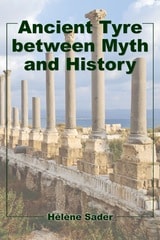
    cover of Ancient Tyre between Myth and History

    Ancient Tyre between Myth and History

    Hélène Sader

    SBL Press, 2026
    Hélène Sader gathers and synthesizes the archaeological and textual evidence from excavations conducted during the past fifty years at Tyre and its far-flung settlements. By incorporating the results obtained from western Tyrian sites rich in metals, Sader confirms that Tyre and its colonies, which stretched to the Atlantic coast of Spain, held incredible wealth. In addition to her analysis of the material remains, soundings, and surveys, Sader includes a thorough discussion of the main Tyrian gods and the practice of cremation introduced at the beginning of the Iron Age. More than seventy-five images and maps illuminate the development of Tyre and its cultural heritage. The result is a more complex picture of the history of Tyre than that known from its description in the Hebrew Bible, ancient Near Eastern sources, and classical histories. Tyre emerges from the shadows of myth as the main protagonist of the Phoenician maritime expansion.
    [more]
    cover of Apocalyptic Sheep and Goats in Matthew and 1 Enoch

    Apocalyptic Sheep and Goats in Matthew and 1 Enoch

    Elekosi F. Lafitaga

    SBL Press, 2022
    An alternative understanding of apocalyptic eschatology in the Gospel of Matthew

    Matthew’s eschatological imageries of judgment are often identified as apocalyptic and referred to as Matthew’s apocalyptic discourses. In this volume Elekosi F. Lafitaga reexamines Matthew’s vision of the sheep and goats in the judgment of the nations, which are often interpreted as metaphors for the saved and the condemned. Lafitaga views these images in the wider context of the rhetoric of apocalyptic communication stretching back to Matthew 3. This broader context reveals that the vision of Matthew 25 serves to exhort Israel in the here and now according to the torah, with salvation for Israel involving an indispensable responsibility to love and serve humanity. Central to Lafitaga’s analysis is the highly probable scenario that the material in Matthew is dependent on the Book of Dreams (1 Enoch 83–90).

    [more]
    cover of Apocalyptic Sheep and Goats in Matthew and 1 Enoch

    Apocalyptic Sheep and Goats in Matthew and 1 Enoch

    Elekosi F. Lafitaga

    SBL Press, 2022

    [more]
    cover of Aramaic Literature from Egypt and the Levant

    Aramaic Literature from Egypt and the Levant

    Tawny L. Holm

    SBL Press, 2026
    In this volume, Tawny L. Holm provides bilingual editions of the majority of Aramaic literary compositions written between the fifth century BCE and first century CE. Each text is presented in transliteration and accompanied by an introduction, notes, and an English translation. The section on Egypt includes, among others, the fascinating anthology found on Papyrus Amherst 63, an Aramaic text written in the Demotic Egyptian script, as well as the Story and Proverbs of Ahiqar. The Levant section includes a selection of texts from the Dead Sea Scrolls, such as Tales from the Persian Court. These compositions cover a broad array of themes, from insights into the human condition to unique portraits of kings, heroes, and deities. The book also addresses matters of history, language, genres, poetics, and scribalism, and it offers a comprehensive collection of primary sources for use in ancient Near Eastern studies courses as well as biblical studies.
    [more]
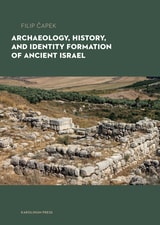
    cover of Archaeology, History, and Formation of Identity in Ancient Israel

    Archaeology, History, and Formation of Identity in Ancient Israel

    Filip Capek

    Karolinum Press, 2023

    A critical examination of the history of Israel.

    When did Israel begin? The origins of ancient Israel are shrouded in mystery, and those hoping to explore the issue must utilize resources from three different fields—archaeology, epigraphy, and biblical texts—and then examine their interrelations while keeping in mind that the name Israel was not used to describe just one state but referred to numerous entities at different times.

    Archaeology, History, and Formation of Identity in Ancient Israel provides a critical reading of Israel’s history. It is neither a harmonizing reading, which takes the picture painted by texts as a given fact, nor a reading supporting biblical texts with archaeological and epigraphic data; instead, it offers the reader multiple options to understand biblical narratives on a historical and theological level. In addition to presenting the main currents in the field, the book draws upon the latest discoveries from Czech-Israeli excavations to offer new hypotheses and reconstructions based on the interdisciplinary dialogue between biblical studies, archaeology, and history.
    [more]
    cover of Armenian Apocrypha Relating to Biblical Heroes

    Armenian Apocrypha Relating to Biblical Heroes

    Michael E. Stone

    SBL Press, 2019

    Explore richly embellished Armenian tales of biblical heroes

    This fifth book of Michael E. Stone's English translations of stories from medieval Armenian manuscripts illustrates how authors transmitted and transformed accounts of biblical heroes. Texts focus on important figures such as Adam, Noah, Abraham, Solomon, Daniel and Susanna, and more. This collection reflects not only the richness of Armenian creativity stimulated by piety and learning but also Michael E. Stone's career-long search for reworkings of biblical traditions, stories, and persons in the Armenian tradition.

    Features:

    • A rich tradition of biblical exegesis and commentary, much of it in genres of the older apocryphal and pseudepigraphical literature
    • Reflections on the roots of Armenian texts in ancient Judaism and earliest Christianity
    • Texts, translations, and a critical apparatus
    [more]
    cover of Armenian Apocrypha from Adam to Daniel

    Armenian Apocrypha from Adam to Daniel

    Michael E. Stone

    SBL Press, 2021
    In this collection of Armenian apocryphal texts, Michael E. Stone focuses on texts related to heaven and hell, angels and demons, and biblical figures from the Hebrew Bible and apocrypha. The texts, introductions, translations, annotations, and critical apparatus included in this volume make this collection a key resource for students and scholars of apocryphal and pseudepigraphical literature.

    [more]
    cover of Aseneth of Egypt: The Composition of a Jewish Narrative

    Aseneth of Egypt

    The Composition of a Jewish Narrative

    Patricia D. Ahearne-Kroll

    SBL Press, 2020

    An exploration of Aseneth's beginnings

    In Aseneth of Egypt: The Composition of a Jewish Narrative, Patricia D. Ahearne-Kroll challenges reliance on reconstructed texts in previous scholarship on the book of Joseph and Aseneth. After outlining the problems with previous prototypes of the Hellenistic narrative, she proposes a way to talk about the story in its initial setting without ignoring the manuscript evidence. Her thorough analysis of the evidence reveals how Joseph and Aseneth reflects the literary impulse of Greek-speaking Jewish writers to redescribe their identity in Egypt and Judean connections to the land of Egypt, while incorporating Ptolemaic strategies of legitimation of power. In the end, Ahearne-Kroll concludes that the base storyline preserved in all the copies of this story demonstrates that it was written for Jewish communities living in Hellenistic Egypt.

    Features:

    • A focus on Hellenistic stories of heroic ancestors
    • A discussion of the possible lives of Jews in Hellenistic Egypt drawn from the narrative of Aseneth
    • An examination of the complexities involved in dating the composition of literary texts

    [more]
    cover of Ask the Animals: Developing a Biblical Animal Hermeneutic

    Ask the Animals

    Developing a Biblical Animal Hermeneutic

    Arthur W. Walker-Jones

    SBL Press, 2024

    Ask the animals, and they will tell you.

    Birds, beasts, and creeping things swarm throughout the Bible’s pages. Despite their prevalence, most biblical scholars have viewed them merely as metaphors, passive objects, or background embellishment to the human experience. This collection seeks to move beyond this traditional view of biblical animals by engaging the growing interdisciplinary field of animal studies. Contributors Peter Joshua Atkins, Jared Beverly, William P. Brown, Margaret Cohen, Jacob R. Evers, Michael J. Gilmour, William “Chip” Gruen, Dong Hyeon Jeong, Brian Fiu Kolia, Anne Létourneau, Robert R. MacKay, Suzanna R. Millar, Timothy J. Sandoval, Robert Paul Seesengood, Ken Stone, Brian James Tipton, Arthur W. Walker-Jones, and Jaime L. Waters showcase the breadth and depth of inquiry that animal studies can foster in biblical studies as well as what animal studies can gain from a more rigorous engagement with biblical texts. Together the essays offer an animal hermeneutic that supports the flourishing of all creatures.

    [more]