Results by title
2 books match the query 'Biblical Themes'
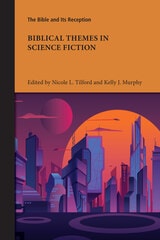
Biblical Themes in Science Fiction
Nicole L. Tilford
SBL Press, 2023
What does a first-generation female robot have in common with the biblical figure of Eve? Or an intergenerational spaceship with Noah’s ark? If a computer compiles a deceased person’s photographs and digital activities into a virtual avatar, is that a form of resurrection? Such seemingly unlikely scenarios are common in science fiction—and science fiction writers often draw on people, places, and events from biblical texts, assuming that audiences will understand the parallels. Biblical Themes in Science Fiction is a journey from creation to apocalypse where contributors Frank Bosman, Rhonda Burnette-Bletsch, Krista N. Dalton, Tom de Bruin, James F. McGrath, Kelly J. Murphy, Steven J. Schweitzer, Jason A. Staples, Nicole L. Tilford, Christine Wenderoth, and Jackie Wyse-Rhodes trace biblical themes as they appear in contemporary science fiction, including Doctor Who, Lilith’s Brood, The Handmaid’s Tale, Battlestar Galactica, and Fallout 3. Essays are supplemented by images and key science fiction sources for diving deeper into how the Bible influenced writers and creators. An afterword considers the imaginative impulses common to both science fiction and biblical texts.
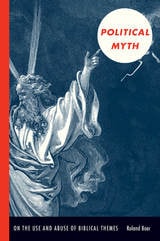
Political Myth
On the Use and Abuse of Biblical ThemesRoland Boer
Duke University Press, 2009
Boer elaborates a theory of political myth in dialogue with Ernst Bloch, Theodor Adorno, Alain Badiou, Jacques Lacan, and Slavoj Žižek. Through close readings of well-known biblical stories he then scrutinizes the nature of political myth in light of feminism, psychoanalysis, and Marxism. Turning to contemporary politics, he examines the statements of prominent American and Australian politicians to show how the stories of Creation, conquest, Paradise, and the Promised Land have been distorted into a fantasy of Israel as a perpetual state in the making and a land in need of protection. Boer explains how this fantasy of Israel shapes U.S. and Australian foreign and domestic policies, and he highlights the links between it and the fantasy of unfettered global capitalism. Contending that political myths have repressed dimensions which if exposed undermine the myths’ authority, Boer urges the Left to expose the weakness in the Right’s mythos. He suggests that the Left make clear what the world would look like were the dream of unconstrained capitalism to be realized.