Results by title
55 books match the query 'Bibliographies & Indexes' and 11 start with a
A Bibliography of East European Travel Writing on Europe
Wendy Bracewell
Central European University Press, 2008
The bibliography volume of the three-volume East Looks West: East European Travel Writing in Europe collates travel writing published in book form by east Europeans travelling in Europe from ca. 1550 to 2000. It is intended as a fundamental research tool, collecting together travel writings within each national/linguistic tradition, and enabling comparative analysis of such material. It fills an important gap in the existing reference literature, both in western and east European languages, and will be of use to those working in the growing fields of comparative travel writing, regional and national identities, and postcolonialism.
These texts exist in surprisingly large numbers, and include writings of high literary quality as well as of historical interest, but they have been relatively little studied as a genre. Much of this material is rare and difficult to find, even in national libraries. As a result, there are few bibliographical surveys of the literature of east European travel and self-representation, and none that are region-wide or comparative in scope.
This is the third volume of a three-part set of East Looks West.
Vol. 1. Orientations. An Anthology of East European Travel Writing on Europe.
Vol. 2. Undern Eastern Eyes. A Comparative Introduction to East European Travel Writing on Europe.

A Catalogue of the Everett D. Graff Collection of Western Americana
Compiled by Colton Storm
University of Chicago Press, 1968
Collectors, bibliographers, librarians, historians, and book dealers specializing in Americana will find the Graff Catalogue an interesting and essential tool. Detailed collations and binding descriptions are cited, and many of the more important works have been annotated by Mr. Graff and Mr. Storm. An extensive index of persons and subjects makes the book useful to the scholar as well as to the collector and dealer. The book is not a bibliography but rather a guide to rare or unique source materials now enriching The Newberry Library's outstanding holdings in American history.
A Catalogue of the Pre-1500 Western Manuscript Books at the Newberry Library
Paul Saenger
University of Chicago Press, 1989
Some of the books, such as those from the libraries of Philip the Good and Anne of Brittany, are beautifully illuminated. But the collection also includes an unusual array of "typical" medieval books, chosen not for their beauty but for their paleographical, codicological, and textual interest. Such codices include an eleventh-century Carthusian monk, and numerous books of hours adapted for feminine use. Paul Saenger has painstakingly identified the text, illumination, physical structure, and provenance for each of the more than 200 books in the collection to provide an exemplary guide to literate culture in the late Middle Ages.
This catalogue, carefully researched and handsomely illustrated, will be an invaluable resource for historians, art historians, paleographers, bibliographers, and collectors.
A Clown in a Grave
Complexities and Tensions in the Works of Gregory CorsoMichael Skau
Southern Illinois University Press, 1999
Using a number of critical approaches, Michael Skau examines Gregory Corso's complex imagination, his humor, and his poetic techniques in dealing with America, the Beat generation, and death.
Skau covers the complete works of Corso, one of the four major Beat Generation writers (with Jack Kerouac, Allen Ginsberg, and William S. Burroughs) who attempted to provide an alternative to what they saw as the academic forms of literature dominating American writing through the 1940s and 1950s. The Beat option focused on ordinary people, spurning the cultural pretensions of the intelligentsia and using common language as well as the rhythms of actual speech. Corso, abandoned as a child by his mother, subjected to a variety of foster homes, and imprisoned as an adolescent, became an authentic voice of America's neglected streetwise youth. He embodies much of the tension, confusion, and rebellion that emerged in America after World War II and eventually crested in the 1960s.
Corso emphasizes social issues, yet risks undermining this significance by using wit, wordplay, and humor. While conceding mortality, he is adamant in refusing to acknowledge death's power. Even as he rebels against conventional literature, he still is enchanted by classicism and romanticism, often borrowing their techniques and idioms. Skau examines these complexities and seeming contradictions throughout Corso's career, showing that Corso finds value in inconsistency and vacillation. For him, as illustrated in the poems "Hair" and "Marriage," contradiction and ambivalence suggest the foundations of freedom of imagination.
In spite of Corso's significance as an American poet, Skau's is the first extensive study of his work, including his fiction. Skau also provides the first complete bibliography of Corso's published work in more than thirty years.

A Guide to the Naval Records in the National Archives of the UK
Edited by Randolph Cock and N. A. M. Rodger
University of London Press, 2008
A Scholar's Guide to Geographical Writing on the American and Canadian Past
Edited by Michael P. Conzen, Thomas A. Rumney, and Graeme Wynn
University of Chicago Press, 1993
American Women Stage Directors of the Twentieth Century
Anne Fliotsos and Wendy Vierow
University of Illinois Press, 2007
Presenting a historical overview of female stage directors in the United States, this valuable reference tool focuses on fifty women who have made significant contributions to professional directing during the twentieth century. Anne Fliotsos and Wendy Vierow collect biographical details and important directing data on each woman, including information on training and career path, notable productions, critical reception, directing style, major awards, and bibliographic materials. Insightful commentary from the directors themselves also provides rich details on the theatre business and working process. This collection recognizes the much overlooked contributions of women directors and is an essential introductory tool for students and researchers of American theatre.
Annotated Bibliography of Southern American English
James B. McMillan
University of Alabama Press, 1989
The only book-length bibliography on the speech of the American South, this volume focuses on the pronunciation, vocabulary, grammar, naming practices, word play, and other aspects of language that have interested researchers and writers for two centuries. Compiled here are the works of linguists, historians, anthropologists, sociologists, and educators, as well as popular commentators.
With over 3,800 entries, this invaluable resource is a testament to the significance of Southern speech, long recognized as a distinguishing feature of the South, and the abiding interest of Southerners in their speech as a mark of their identity. The entries encompass Southern dialects in all their distinctive varieties—from Appalachian to African American, and sea islander to urbanite.
Annotated World List of Selected Current Geographical Serials
Chauncey D. Harris
University of Chicago Press, 1980

Associate Degree Nursing Education
An Historical Annotated Bibliography, 1942–1988Patricia T. Haase
Duke University Press, 1990
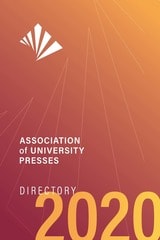
Association of University Presses Directory 2020
Association of University Presses
AUP, 2019
Authors, booksellers, librarians, instructors, and publishing professionals across the industry will find this an invaluable resource, featuring editorial programs and publishing details for all 140+ Association members and much more.