Results by title
4 books match the query 'Biculturalism'

Blood Mysteries
Dixie Salazar
University of Arizona Press, 2003
Through images brutally honest and disarmingly off-center, Dixie Salazar explores the hidden lives of everyday people, objects, and experiences—and their transformation in the hidden realms of the heart. Charting furious descents into the darkest crevices of our souls, Salazar paints for us a lost city that exists below our mundane consciousness. Blood Mysteries is a tribute to lost souls, from a suicidal mental patient who doesn't believe she exists—"melting out of a landscape spotted with shadows, washing her hands in an empty basin of light"—to Marilyn Monroe, victim even in the morgue. In finely tuned lyricism showing an uncanny grasp of frayed lives, she gives flesh and vitality to women normally encountered only as statistics. The incarcerated, the homeless, the hopeless. Missing young girls who turn up violated and murdered.
Salazar presents us with blood mysteries not only of women, but of family as well. In poems invoking her dual heritage, she explores the identity crises brought on by having a Spanish father and a mother from the deep South, leaving her a product of American meltdown with a predisposition to check "other" for race on applications. "Other can be a place," she reminds us, "a residence for those of us without / papers, where halos of lightning bugs / swarm the rickety family tree." Salazar writes with toughness and grit "for all the shipwrecked saints / and wretches among us." But beneath the surface of words sometimes gritty, sometimes playful, lies a testament to the power of empathy, giving voice to those whose voices have been stifled and offering hope for those who have found none. Blood Mysteries is a forceful prayer for the disenfranchised that offers not merely hope, but transcendence.

Inauthentic
The Anxiety over Culture and IdentityVincent J. Cheng
Rutgers University Press, 2004
Modern and contemporary cultures are increasingly marked by an anxiety over a perceived loss of authentic cultural identity. In this book, Vincent J. Cheng examines why we still cling to notions of authenticity in an increasingly globalized world that has exploded notions of authentic essences and absolute differences.
Who is “authentic” and who is “other” in a given culture? Who can speak for the “other?” What do we mean by authenticity? These are critical questions that today’s world––brought closer together and yet pulled farther apart by globalism and neocolonialism––has been unable to answer. Inauthentic compellingly probes these issues through revealing case studies on the pursuit of authenticity and identity.
Each chapter explores the ways in which we construct “authenticity” in order to replace seemingly vacated identities, including: the place of minorities in academia; mixed-race dynamics; the popularity of Irish culture in America; the Good Friday agreement in Northern Ireland; Jewish American identity; the status of Jewish America in relation to Israel and Palestine; the cultural problems of international adoptions; and the rapidly changing nature of the Asian American population in the United States.
Inauthentic combines the scholarly and the personal, informed argument and human interest. It will undoubtedly appeal to academic scholars, as well as to a broader reading audience.
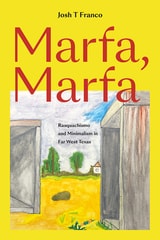
Marfa, Marfa
Rasquachismo and Minimalism in Far West TexasJosh T Franco
Duke University Press, 2026
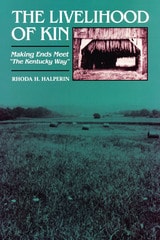
The Livelihood of Kin
Making Ends Meet "The Kentucky Way"By Rhoda H. Halperin
University of Texas Press, 1990
Rural Appalachians in Kentucky call it "The Kentucky Way"—making a living by doing many kinds of paid and unpaid work and sharing their resources within extended family networks. In fact, these strategies are practiced by rural people in many parts of the world, but they have not been studied extensively in the United States. In The Livelihood of Kin, Rhoda Halperin undertakes a detailed exploration of this complex, family-oriented economy, showing how it promotes economic well-being and a sense of identity for the people who follow it.
Using actual life and work histories, Halperin shows how people make a living "in between" the cash economy of the city and the agricultural subsistence economy of the country. In regionally based, three-generation kin networks, family members work individually and jointly at many tasks: small-scale agricultural production, food processing and storage, odd jobs, selling used and new goods in marketplaces, and wage labor, much of which is temporary. People can make ends meet even in the face of job layoffs and declining crop subsidies. With these strategies people win a considerable degree of autonomy and control over their lives.
Halperin also examines how such multiple livelihood strategies define individual identity by emphasizing a person’s role in the family network over an occupation. She reveals, through psychiatric case histories, what damage can result when individuals leave the family network for wage employment in the cities, as increasing urbanization has forced many people to do.
While certainly of interest to scholars of Appalachian studies, this lively and readable study will also be important for economic anthropologists and urban and rural sociologists.