Results by title
5 books match the query 'Big Cats'
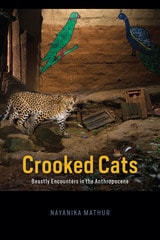
Crooked Cats
Beastly Encounters in the AnthropoceneNayanika Mathur
University of Chicago Press, 2021
There are many theories on why and how a big cat comes to prey on humans, with the ecological collapse emerging as a central explanatory factor. Yet, uncertainty over the precise cause of crookedness persists. Crooked Cats explores in vivid detail the many lived complexities that arise from this absence of certain knowledge to offer startling new insights into both the governance of nonhuman animals and their intimate entanglements with humans. Through creative ethnographic storytelling, Crooked Cats illuminates the Anthropocene in three critical ways: as method, as a way of reframing human-nonhuman relations on the planet, and as a political tool indicating the urgency of academic engagement. Weaving together “beastly tales” spun from encounters with big cats, Mathur deepens our understanding of the causes, consequences, and conceptualization of the climate crisis.
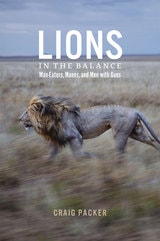
Lions in the Balance
Man-Eaters, Manes, and Men with GunsCraig Packer
University of Chicago Press, 2015
Monsters take many forms: from man-eating lions to the people who hunt them, from armed robbers to that midnight knock at the door of a cheap hotel room in Dar es Salaam. And celebrated biologist Craig Packer has faced them all. Head on.
With Lions in the Balance, Packer takes us back into the complex, tooth-and-claw world of the African lion, offering revealing insights into both the lives of one of the most iconic and dangerous animals on earth and the very real risks of protecting them. A sequel to his prize-winning Into Africa—which gave many readers their first experience of fieldwork in Africa, of cooperative lions on dusty savannas, and political kidnappings on the shores of Lake Tanganyika—this new diary-based chronicle of cutting-edge research and heartbreaking corruption will both alarm and entertain. Packer’s story offers a look into the future of the lion, one in which the politics of conservation will require survival strategies far more creative and powerful than those practiced anywhere in the world today.
Packer is sure to infuriate millionaires, politicians, aid agencies, and conservationists alike as he minces no words about the problems he encounters. But with a narrative stretching from far flung parts of Africa to the corridors of power in Washington, DC, and marked by Packer’s signature humor and incredible candor, Lions in the Balance is a tale of courage against impossible odds, a masterly blend of science, adventure, and storytelling, and an urgent call to action that will captivate a new generation of readers.
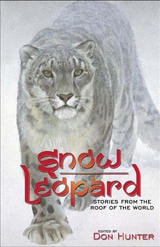
Snow Leopard
Stories from the Roof of the WorldDon Hunter
University Press of Colorado, 2012
-Robert Bateman, from the foreword.
Like no other large cat, the snow leopard evokes a sense of myth and mysticism, strength and spirit shrouded in a snowy veil, seldom seen but always present. Giving a voice to the snow leopard, this collection of powerful first person accounts from an impressive cadre of scientist-adventurers grants readers a rare glimpse of this elusive cat and the remarkable lives of those personally connected to its future. These Stories from the Roof of the World resonate with adventure, danger, discovery, and most importantly hope for this magnificent big cat.
Very little has been written about this mystical creature. Its remote and rugged habitat among the mightiest collection of mountains on Earth, proclaimed "The Roof of the World" by awe-struck explorers, make it one of the most difficult and expensive animals to study. After a millennia thriving in peaceful isolation, human encroachment, poaching and climate change threaten the snow leopards survival. Speaking on behalf of the snow leopard, these heart-felt stories will inform and inspire readers, creating the vital connection needed to move people toward action in saving this magnificent cat. Contributors include: Ali Abutalip Dahashof, Som B. Ale, Avaantseren Bayarjargal, Yash Veer Bhatnagar, Joseph L. Fox, Helen Freeman, Darla Hillard, Don Hunter, Shafqat Hussain, Rodney Jackson, Jan E. Janecka, Mitchell Kelly, Ashiq Ahmad Khan, Nasier A. Kitchloo, Evgeniy P. Kashkarov, Peter Matthiessen, Kyle McCarthy, Tom McCarthy, George B. Schaller, and Rinchen Wangchuk
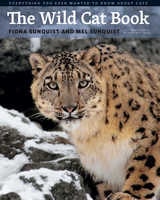
The Wild Cat Book
Everything You Ever Wanted to Know about CatsFiona Sunquist and Mel Sunquist
University of Chicago Press, 2014
Illustrated throughout with Terry Whittaker’s spectacular color photographs as well as unique photos from biologists in the field—some the highest quality images ever captured of exceptionally rare species—The Wild Cat Book not only tantalizes with the beauty of cats, but also serves as a valuable and accessible reference on cat behavior and conservation. Comprehensive entries for each of the thirty-seven cat species include color distribution maps and up-to-date information related to the species’ IUCN conservation and management statuses, while informative sidebars reveal why male lions have manes (and why dark manes are sexiest), how cats see with their whiskers, the truth behind our obsession with white lions and tigers, and why cats can’t be vegetarians. The Wild Cat Book also highlights the grave threats faced by the world’s wild cats—from habitat destruction to human persecution.
From the extraordinary acrobatics of the arboreal margay—able to cling to a tree branch by a single paw thanks to its unusually flexible ankles—to modern declines in African lion populations, The Wild Cat Book is an instructive and revealing ode to felines of every size and color. Combining science, behavioral observations, and stunning photography, this book will captivate cat fanciers the world over.
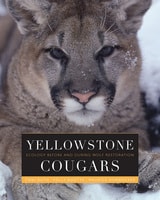
Yellowstone Cougars
Ecology before and during Wolf RestorationToni K. Ruth
University Press of Colorado, 2018
Of practical importance, Yellowstone Cougars addresses the management and conservation of multiple carnivores in increasingly human-dominated landscapes. The authors move beyond a single-species approach to cougar management and conservation to one that considers multiple species, which was impossible to untangle before wolf reestablishment in the Yellowstone area provided biologists with this research opportunity.
Yellowstone Cougars provides objective scientific data at the forefront of understanding cougars and large carnivore community structure and management issues in the Greater Yellowstone Ecosystem, as well as in other areas where wolves and cougars are reestablishing. Intended for an audience of scientists, wildlife managers, conservationists, and academics, the book also sets a theoretical precedent for writing about competition between carnivorous mammals.