Results by title
2 books match the query 'Big Pharma'
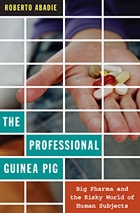
The Professional Guinea Pig
Big Pharma and the Risky World of Human SubjectsRoberto Abadie
Duke University Press, 2010
The Professional Guinea Pig documents the emergence of the professional research subject in Phase I clinical trials testing the safety of drugs in development. Until the mid-1970s Phase I trials were conducted on prisoners. After that practice was outlawed, the pharmaceutical industry needed a replacement population and began to aggressively recruit healthy, paid subjects, some of whom came to depend on the income, earning their living by continuously taking part in these trials. Drawing on ethnographic research among self-identified “professional guinea pigs” in Philadelphia, Roberto Abadie examines their experiences and views on the conduct of the trials and the risks they assume by participating. Some of the research subjects he met had taken part in more than eighty Phase I trials. While the professional guinea pigs tended to believe that most clinical trials pose only a moderate health risk, Abadie contends that the hazards presented by continuous participation, such as exposure to potentially dangerous drug interactions, are discounted or ignored by research subjects in need of money. The risks to professional guinea pigs are also disregarded by the pharmaceutical industry, which has become dependent on the routine participation of experienced research subjects. Arguing that financial incentives compromise the ethical imperative for informed consent to be freely given by clinical-trials subjects, Abadie confirms the need to reform policies regulating the participation of paid subjects in Phase I clinical trials.
[more]
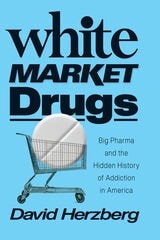
White Market Drugs
Big Pharma and the Hidden History of Addiction in AmericaDavid Herzberg
University of Chicago Press, 2020
The contemporary opioid crisis is widely seen as new and unprecedented. Not so. It is merely the latest in a long series of drug crises stretching back over a century. In White Market Drugs, David Herzberg explores these crises and the drugs that fueled them, from Bayer’s Heroin to Purdue’s OxyContin and all the drugs in between: barbiturate “goof balls,” amphetamine “thrill pills,” the “love drug” Quaalude, and more. As Herzberg argues, the vast majority of American experiences with drugs and addiction have taken place within what he calls “white markets,” where legal drugs called medicines are sold to a largely white clientele.
These markets are widely acknowledged but no one has explained how they became so central to the medical system in a nation famous for its “drug wars”—until now. Drawing from federal, state, industry, and medical archives alongside a wealth of published sources, Herzberg re-connects America’s divided drug history, telling the whole story for the first time. He reveals that the driving question for policymakers has never been how to prohibit the use of addictive drugs, but how to ensure their availability in medical contexts, where profitability often outweighs public safety. Access to white markets was thus a double-edged sword for socially privileged consumers, even as communities of color faced exclusion and punitive drug prohibition. To counter this no-win setup, Herzberg advocates for a consumer protection approach that robustly regulates all drug markets to minimize risks while maintaining safe, reliable access (and treatment) for people with addiction.
Accomplishing this requires rethinking a drug/medicine divide born a century ago that, unlike most policies of that racially segregated era, has somehow survived relatively unscathed into the twenty-first century.
By showing how the twenty-first-century opioid crisis is only the most recent in a long history of similar crises of addiction to pharmaceuticals, Herzberg forces us to rethink our most basic ideas about drug policy and addiction itself—ideas that have been failing us catastrophically for over a century.
[more]