Results by title
20 books match the query 'Big data'

Authentication Technologies for Cloud Computing, IoT and Big Data
Yasser M. Alginahi
The Institution of Engineering and Technology, 2019
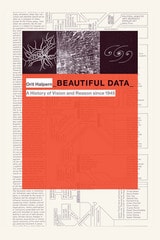
Beautiful Data
A History of Vision and Reason since 1945Orit Halpern
Duke University Press, 2015
Big Data Recommender Systems
Algorithms, Architectures, Big Data, Security and Trust, Volume 1Osman Khalid
The Institution of Engineering and Technology, 2019
Big Data Recommender Systems
Application Paradigms, Volume 2Osman Khalid
The Institution of Engineering and Technology, 2019
Big Data and Software Defined Networks
Javid Taheri
The Institution of Engineering and Technology, 2018
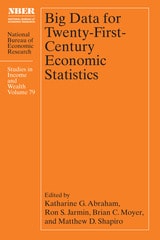
Big Data for Twenty-First-Century Economic Statistics
Edited by Katharine G. Abraham, Ron S. Jarmin, Brian C. Moyer, and Matthew D. Shapiro
University of Chicago Press, 2022
The existing infrastructure for the production of key economic statistics relies heavily on data collected through sample surveys and periodic censuses, together with administrative records generated in connection with tax administration. The increasing difficulty of obtaining survey and census responses threatens the viability of existing data collection approaches. The growing availability of new sources of Big Data—such as scanner data on purchases, credit card transaction records, payroll information, and prices of various goods scraped from the websites of online sellers—has changed the data landscape. These new sources of data hold the promise of allowing the statistical agencies to produce more accurate, more disaggregated, and more timely economic data to meet the needs of policymakers and other data users. This volume documents progress made toward that goal and the challenges to be overcome to realize the full potential of Big Data in the production of economic statistics. It describes the deployment of Big Data to solve both existing and novel challenges in economic measurement, and it will be of interest to statistical agency staff, academic researchers, and serious users of economic statistics.
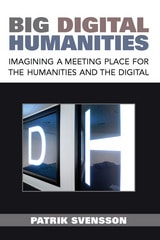
Big Digital Humanities
Imagining a Meeting Place for the Humanities and the DigitalPatrik Svensson
University of Michigan Press, 2016
Svensson’s own unique perspective and special stake in the Digital Humanities conversation comes from his role as director of the HUMlab at Umeå University. HUMlab is a unique collaborative space and Digital Humanities center, which officially opened its doors in 2000. According to its own official description, the HUMlab is an open, creative studio environment where “students, researchers, artists, entrepreneurs and international guests come together to engage in dialogue, experiment with technology, take on challenges and move scholarship forward.” It is this last element “moving scholarship forward” that Svensson argues is the real opportunity in what he terms the “big digital humanities,” or digital humanities as practiced in collaborative spaces like the HUMlab, and he is uniquely positioned to take an account of this evolving dimension of Digital Humanities practice.
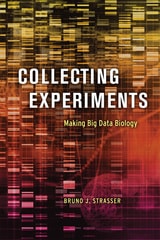
Collecting Experiments
Making Big Data BiologyBruno J. Strasser
University of Chicago Press, 2019
Every scientist working today draws on databases to produce scientific knowledge. Databases have become more common than microscopes, voltmeters, and test tubes, and the increasing amount of data has led to major changes in research practices and profound reflections on the proper professional roles of data producers, collectors, curators, and analysts.
Collecting Experiments traces the development and use of data collections, especially in the experimental life sciences, from the early twentieth century to the present. It shows that the current revolution is best understood as the coming together of two older ways of knowing—collecting and experimenting, the museum and the laboratory. Ultimately, Bruno J. Strasser argues that by serving as knowledge repositories, as well as indispensable tools for producing new knowledge, these databases function as digital museums for the twenty-first century.
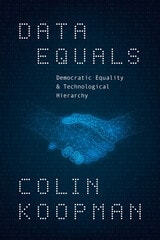
Data Equals
Democratic Equality and Technological HierarchyColin Koopman
University of Chicago Press, 2025
When we gave algorithms power over our world, we hoped that the apparent neutrality of machine thinking would create a more egalitarian age. Yet we are more divided than ever, staring down threats to democracy itself. In Data Equals, Colin Koopman argues that data technologies fail us so often because we built them around a deficient notion of equality.
It is not enough, Koopman explains, that algorithms engage everyone’s data with the same measuring stick. The data themselves are all too often structured in ways that obscure and exacerbate stratifying distinctions. Koopman contends that we must also work to ensure that those people subject to computational assessment enter data systems on equal terms. Part philosophical argument, part practical guide (replete with case studies from education technology), Data Equals offers novel methods for realizing democratic equality in a digital age.
Data Power
Radical Geographies of Control and ResistanceJim E. Thatcher
Pluto Press, 2021
In recent years, popular media has inundated audiences with sensationalized headlines recounting data breaches, new forms of surveillance and other dangers of our digital age. Despite their regularity, such accounts treat each case as unprecedented and unique. This book proposes a radical rethinking of the history, present and future of our relations with the digital, spatial technologies that increasingly mediate our everyday lives.
From smartphones to surveillance cameras, to navigational satellites, these new technologies offer visions of integrated, smooth and efficient societies, even as they directly conflict with the ways users experience them. Recognizing the potential for both control and liberation, the authors argue against both acquiescence to and rejection of these technologies.
Through intentional use of the very systems that monitor them, activists from Charlottesville to Hong Kong are subverting, resisting and repurposing geographic technologies. Using examples as varied as writings on the first telephones to the experiences of a feminist collective for migrant women in Spain, the authors present a revolution of everyday technologies. In the face of the seemingly inevitable circumstances, these technologies allow us to create new spaces of affinity, and a new politics of change.
Data
Now Bigger and Better!Edited by Tom Boellstorff and Bill Maurer
Prickly Paradigm Press, 2015
Digital Objects, Digital Subjects
Interdisciplinary Perspectives on Capitalism, Labour and Politics in the Age of Big DataDavid Chandler and Christian Fuchs
University of Westminster Press, 2019
This volume explores activism, research and critique in the age of digital subjects and objects and Big Data capitalism after a digital turn said to have radically transformed our political futures. Optimists assert that the ‘digital’ promises: new forms of community and ways of knowing and sensing, innovation, participatory culture, networked activism, and distributed democracy. Pessimists argue that digital technologies have extended domination via new forms of control, networked authoritarianism and exploitation, dehumanization and the surveillance society. Leading international scholars present varied interdisciplinary assessments of such claims – in theory and via dialogue – and of the digital’s impact on society and the potentials, pitfalls, limits and ideologies, of digital activism. They reflect on whether computational social science, digital humanities and ubiquitous datafication lead to digital positivism that threatens critical research or lead to new horizons in theory and society.
An electronic version of this book is freely available, thanks to the support of libraries working with Knowledge Unlatched. KU is a collaborative initiative designed to make high quality books Open Access for the public good. More information about the initiative and details about KU’s Open Access programme can be found at www.knowledgeunlatched.org.
Distant Readings of Disciplinarity
Knowing and Doing in Composition/Rhetoric Dissertationsby Benjamin Miller
Utah State University Press, 2022
Writing studies has long been marked by a multitude of methods and interlocking purposes, partaking of not just humanities approaches but also social scientific ones, with data drawn from interviews and surveys alongside historical and philosophical arguments and with corpus analytics in large-scale collections jostling against small-scale case studies of individuals. These areas of study aren’t always cleanly separable; shifting modes mark the discipline as open and welcoming to many different angles of research. The field needs to embrace that vantage point and generate new degrees of familiarity with methods beyond those of any individual scholar.
Not only a training genre and not only a knowledge-making genre, the dissertation is also a discipline-producing genre. Illustrating what the field has been studying, and how, Distant Readings of Disciplinarity supports more fruitful collaborations within and across research areas and methods.
Geography's Quantitative Revolutions
Edward A. Ackerman and the Cold War Origins of Big DataElvin Wyly
West Virginia University Press, 2019
Do you have a smartphone? Billions of people on the planet now navigate their daily lives with the kind of advanced Global Positioning System capabilities once reserved for the most secretive elements of America’s military-industrial complex. But when so many people have access to the most powerful technologies humanity has ever devised for the precise determination of geographical coordinates, do we still need a specialized field of knowledge called geography?
Just as big data and artificial intelligence promise to automate occupations ranging from customer service and truck driving to stock trading and financial analysis, our age of algorithmic efficiency seems to eliminate the need for humans who call themselves geographers—at the precise moment when engaging with information about the peoples, places, and environments of a diverse world is more popular than ever before. How did we get here? This book traces the recent history of geography, information, and technology through the biography of Edward A. Ackerman, an important but forgotten figure in geography’s “quantitative revolution.” It argues that Ackerman’s work helped encode the hidden logics of a distorted philosophical heritage—a dangerous, cybernetic form of thought known as militant neo-Kantianism—into the network architectures of today’s pervasive worlds of surveillance capitalism.
IoT Technologies in Smart-Cities
From sensors to big data, security and trustFadi Al-Turjman
The Institution of Engineering and Technology, 2020
Mapping Crisis
Participation, Datafication and Humanitarianism in the Age of Digital MappingEdited by Doug Specht
University of London Press, 2020
Monitored
Business and Surveillance in a Time of Big DataPeter Bloom
Pluto Press, 2019
What does this technocratic ideology and surveillance-heavy culture reveal about the deeper reality of modern society? Monitored investigates the history and implications of this modern accountability paradox. Peter Bloom reveals pervasive monitoring practices which mask how at its heart, the elite remains socially and ethically out of control.
Challenging their exploitive 'accounting power', Bloom demands that the systems that administer our lives are oriented to social liberation and new ways of being in the world.
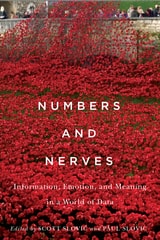
Numbers and Nerves
Information, Emotion, and Meaning in a World of DataScott Slovic
Oregon State University Press, 2015
The essays and interviews in Numbers and Nerves explore the quandary of our cognitive responses to quantitative information, while also offering compelling strategies for overcoming insensitivity to the meaning of such information. With contributions by journalists, literary critics, psychologists, naturalists, activists, and others, this book represents a unique convergence of psychological research, discourse analysis, and visual and narrative communication.
At a time of unprecedented access to information, our society is frequently stymied in its efforts to react to the world’s massive problems. Many of these problems are systemic, deeply rooted in seemingly intransigent cultural patterns and lifestyles. In order to sense the significance of these issues and begin to confront them, we must first understand the psychological tendencies that enable and restrict our processing of numerical information.
Numbers and Nerves explores a wide range of psychological phenomena and communication strategies—fast and slow thinking, psychic numbing, pseudoinefficacy, the prominence effect, the asymmetry of trust, contextualized anecdotes, multifaceted mosaics of prose, and experimental digital compositions, among others—and places these in real-world contexts. In the past two decades, cognitive science has increasingly come to understand that we, as a species, think best when we allow numbers and nerves, abstract information and experiential discourse, to work together. This book provides a roadmap to guide that collaboration. It will be invaluable to scholars, educators, professional communicators, and anyone who struggles to grasp the meaning behind the numbers.
The Big Data Agenda
Data Ethics and Critical Data StudiesAnnika Richterich
University of Westminster Press, 2018
This book highlights that the capacity for gathering, analysing, and utilising vast amounts of digital (user) data raises significant ethical issues. Annika Richterich provides a systematic contemporary overview of the field of critical data studies that reflects on practices of digital data collection and analysis. The book assesses in detail one big data research area: biomedical studies, focused on epidemiological surveillance. Specific case studies explore how big data have been used in academic work.
The Big Data Agenda concludes that the use of big data in research urgently needs to be considered from the vantage point of ethics and social justice. Drawing upon discourse ethics and critical data studies, Richterich argues that entanglements between big data research and technology/ internet corporations have emerged. In consequence, more opportunities for discussing and negotiating emerging research practices and their implications for societal values are needed.
An electronic version of this book is freely available, thanks to the support of libraries working with Knowledge Unlatched. KU is a collaborative initiative designed to make high quality books Open Access for the public good. More information about the initiative and details about KU's Open Access programme can be found at www.knowledgeunlatched.org.
The Poetics of Scale
From Apollinaire to Big DataConrad Steel
University of Iowa Press, 2024
The Poetics of Scale takes us back to the years before the First World War in Paris, where the poet Guillaume Apollinaire claimed to have invented a new mode of poetry large enough to take on the challenges of the coming twentieth century. This history follows Apollinaire’s ideas across the Atlantic and examines how and why his work became such a vital source of inspiration for American poets through the era of intensive American economic expansion and up to the present day. Threading together Apollinaire’s work in the 1910s with three of his American successors—Louis Zukofsky in the 1930s, Allen Ginsberg in the 1950s, and Alice Notley from the 1970s onward—it shows how poetry as a cultural technique became the crucial test case for the scale of our collective imagination.