Results by title
22 books match the query 'Bioethics'
A Catechism for Health Care
Insights from Catholic Teaching on Human Life, Medical Ethics, and Love of NeighborStephen Napier
Catholic University of America Press, 2024
Bioethics In Social Context
edited by Barry Hoffmaster
Temple University Press, 2001
The original essays in this volume use qualitative research methods to expose the multiple contexts within which the problems of bioethics arise, are defined and debated, and ultimately resolved. In a provocative concluding essay, one contributor asks his fellow ethnographers to reflect on the ethical problems of ethnography.

Bioethics in the Courts
Analyszing the Bioethical Jurisprudence of International and National CourtsJudit Sandor
Central European University Press, 2027

Bioethics
A Catholic PrimerThomas Cavanaugh
Catholic University of America Press, 2026

Biomedicen and Beatitude
An Introduction to Catholic Bioethics, Second EditionNicanor Pier Giorgio Austriaco
Catholic University of America Press, 2021
Biomedicine and Beatitude
An Introduction to Catholic BioethicsNicanor Pier Giorgio AUSTRIACO
Catholic University of America Press, 2011
Designing Human Practices
An Experiment with Synthetic BiologyPaul Rabinow and Gaymon Bennett
University of Chicago Press, 2012
In 2006 anthropologists Paul Rabinow and Gaymon Bennett set out to rethink the role that human sciences play in biological research, creating the Human Practices division of the Synthetic Biology Engineering Research Center—a facility established to create design standards for the engineering of new enzymes, genetic circuits, cells, and other biological entities—to formulate a new approach to the ethical, security, and philosophical considerations of controversial biological work. They sought not simply to act as watchdogs but to integrate the biosciences with their own discipline in a more fundamentally interdependent way, inventing a new, dynamic, and experimental anthropology that they could bring to bear on the center’s biological research.
Designing Human Practices is a detailed account of this anthropological experiment and, ultimately, its rejection. It provides new insights into the possibilities and limitations of collaboration, and diagnoses the micro-politics which effectively constrained the potential for mutual scientific flourishing. Synthesizing multiple disciplines, including biology, genetics, anthropology, and philosophy, alongside a thorough examination of funding entities such as the National Science Foundation, Designing Human Practices pushes the social study of science into new and provocative territory, utilizing a real-world experience as a springboard for timely reflections on how the human and life sciences can and should transform each other.

Ethics of Life
Contemporary Iberian DebatesKatarzyna Beilin
Vanderbilt University Press, 2016
• What are the different rhetorical strategies employed by writers, artists, filmmakers, and activists to react to the degradation of life and climate change?
• How are urban movements using environmental issues to resist corporate privatization of the commons?
• What is the shape of Spanish debates on reproductive rights and biotechnology?
• What is the symbolic significance of the bullfighting debate and other human/animal issues in today's political turmoil in Spain?
Hispanic Issues Series
Nicholas Spadaccini, Editor-in-Chief
Hispanic Issues Online
hispanicissues.umn.edu/online_main.html

Evangelical News
Politics, Gender, and Bioethics in Conservative Christian Magazines of the 1970s and 1980sAnja-Maria Bassimir
University of Alabama Press, 2022
A comprehensive study of evangelical magazine discourse during the 1970s and 1980s and how it navigated and sustained religious convictions in a time of dramatic social change
The 1970s and 1980s were a tumultuous period in US history. In tandem with a dramatic political shift to the right, evangelicalism also entered the public discourse as a distinct religious movement and was immediately besieged by cultural appropriations and internal fragmentations. Americans in general and evangelicals in particular grappled with issues and ideas such as feminism, abortion, birth control, and restructuring traditional roles for women and the family. During this time, there was a surge in readership for evangelical periodicals such as Christianity Today, Moody Monthly, Eternity, and Post-Americans/Sojourners as well as the feminist newsletter Daughters of Sarah.
While each of these magazines—and other publications and media—contributed to and participated in the overall dissemination of evangelical ideology, they also had their own outlooks and political leanings concerning hot-button issues. In Evangelical News: Politics, Gender, and Bioethics in Conservative Christian Magazines of the 1970s and 1980s, Anja-Maria Bassimir presents a nuanced view of evangelicalism in the late twentieth century through the lens of the movement’s own media.
Bassimir argues that community can be produced in discourse, especially when shared rhetoric, concepts, and perspectives signal belonging. To accomplish this, Evangelical News traces the emergence of evangelical social and political awareness in the 1970s to the height of its power as a political program. The chapters investigate such topics as how evangelicals reenvisioned gender norms and relations in light of the feminist movement, the use of childhood as a symbol of unspoiled innocence, and the place of evangelicals as political actors.
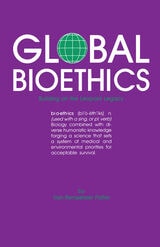
Global Bioethics
Building on the Leopold LegacyVan Rensselaer Potter
Michigan State University Press, 1988
Van Rensselaer Potter created and defined the term "bioethics" in 1970, to describe a new philosophy that sought to integrate biology, ecology, medicine, and human values. Bioethics is often linked to environmental ethics and stands in sharp contrast to biomedical ethics. Because of this confusion (and appropriation of the term in medicine), Potter chose to use the term "Global Bioethics" in 1988. Potter's definition of bioethics from Global Bioethics is, "Biology combined with diverse humanistic knowledge forging a science that sets a system of medical and environmental priorities for acceptable survival."

Law in the Laboratory
A Guide to the Ethics of Federally Funded Science ResearchRobert P. Charrow
University of Chicago Press, 2010
The National Institutes of Health and the National Science Foundation together fund more than $40 billon of research annually in the United States and around the globe. These large public expenditures come with strings, including a complex set of laws and guidelines that regulate how scientists may use NIH and NSF funds, how federally funded research may be conducted, and who may have access to or own the product of the research.
Until now, researchers have had little instruction on the nature of these laws and how they work. But now, with Robert P. Charrow’s Law in the Laboratory, they have a readable and entertaining introduction to the major ethical and legal considerations pertaining to research under the aegis of federal science funding. For any academic whose position is grant funded, or for any faculty involved in securing grants, this book will be an essential reference manual. And for those who want to learn how federal legislation and regulations affect laboratory research, Charrow’s primer will shed light on the often obscured intersection of government and science.
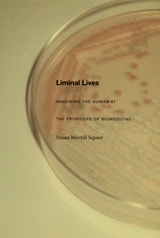
Liminal Lives
Imagining the Human at the Frontiers of BiomedicineSusan Merrill Squier
Duke University Press, 2004
Drawing on archival materials of twentieth-century biology; little-known works of fiction and science fiction; and twentieth- and twenty-first century U.S. and U.K. government reports by the National Institutes of Health, the Parliamentary Advisory Group on the Ethics of Xenotransplantation, and the President’s Council on Bioethics, she examines a number of biomedical changes as each was portrayed by scientists, social scientists, and authors of fiction and poetry. Among the scientific developments she considers are the cultured cell, the hybrid embryo, the engineered intrauterine fetus, the child treated with human growth hormone, the process of organ transplantation, and the elderly person rejuvenated by hormone replacement therapy or other artificial means. Squier shows that in the midst of new phenomena such as these, literature helps us imagine new ways of living. It allows us to reflect on the possibilities and perils of our liminal lives.

Patent Politics
Life Forms, Markets, and the Public Interest in the United States and EuropeShobita Parthasarathy
University of Chicago Press, 2017
To demonstrate this, Parthasarathy takes readers through a particularly fierce and prolonged set of controversies over patents on life forms linked to important advances in biology and agriculture and potentially life-saving medicines. Comparing battles over patents on animals, human embryonic stem cells, human genes, and plants in the United States and Europe, she shows how political culture, ideology, and history shape patent system politics. Clashes over whose voices and which values matter in the patent system, as well as what counts as knowledge and whose expertise is important, look quite different in these two places. And through these debates, the United States and Europe are developing very different approaches to patent and innovation governance. Not just the first comprehensive look at the controversies swirling around biotechnology patents, Patent Politics is also the first in-depth analysis of the political underpinnings and implications of modern patent systems, and provides a timely analysis of how we can reform these systems around the world to maximize the public interest.
Playing God?
Human Genetic Engineering and the Rationalization of Public Bioethical DebateJohn H. Evans
University of Chicago Press, 2001
Playing God? asks why and explores the social forces that have led to the thinning out of public debate over human genetic engineering. John H. Evans contends that the problem lies in the structure of the debate itself. Disputes over human genetic engineering concern the means for achieving assumed ends, rather than being a healthy discussion about the ends themselves. According to Evans, this change in focus occurred as the jurisdiction over the debate shifted from scientists to bioethicists, a change which itself was caused by the rise of the bureaucratic state as the authority in such matters. The implications of this timely study are twofold. Evans not only explores how decisions about the ethics of human genetic engineering are made, but also shows how the structure of the debate has led to the technological choices we now face.
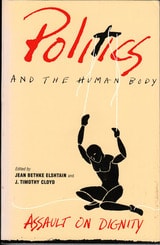
Politics and the Human Body
Assault on DignityJean Bethke Elshtain
Vanderbilt University Press, 1995
In this challenging new book, Jean Bethke Elshtain, a nationally recognized scholar in political science and philosophy, and J. Timothy Cloyd, a strong new voice in social and political science, have assembled a collection of thought-provoking essays on these issues written by some of the finest minds of our day.

Principles of Green Bioethics
Sustainability in Health CareCristina Richie
Michigan State University Press, 2019

Reasons of Conscience
The Bioethics Debate in GermanyStefan Sperling
University of Chicago Press, 2013

Slow Cures and Bad Philosophers
Essays on Wittgenstein, Medicine, and BioethicsCarl Elliott, ed.
Duke University Press, 2001
As Elliott explains in his introduction, Wittgenstein’s philosophy runs against the grain of most contemporary bioethics scholarship, which all too often ignores the context in which moral problems are situated and pays little attention to narrative, ethnography, and clinical case studies in rendering bioethical judgments. Such anonymous, impersonal, rule-writing directives in which health care workers are advised how to behave is what this volume intends to counteract. Instead, contributors stress the value of focusing on the concrete particulars of moral problems and write in the spirit of Wittgenstein’s belief that philosophy should be useful. Specific topics include the concept of “good dying,” the nature of clinical decision making, the treatment of neurologically damaged patients, the moral treatment of animals, and the challenges of moral particularism.
Inspired by a philosopher who deplored “professional philosophy,” this work brings some startling insights and clarifications to contemporary ethical problems posed by the realities of modern medicine.
Contributors. Larry Churchill, David DeGrazia, Cora Diamond, James Edwards, Carl Elliott, Grant Gillett, Paul Johnston, Margaret Olivia Little, James Lindemann Nelson, Knut Erik Tranoy

Surgical Consent
Bioethics and Cochlear ImplantationLinda Komesaroff
Gallaudet University Press, 2007
Drawing on current research, this volume presents the varying reactions around the globe to the high rate of implantation. These views contrast sharply with the medical perspective of deafness overwhelmingly promoted through the media and by the cochlear implantation industry. At the same time, the contributors aim to disrupt the binaries that have long dominated the field of deafness — speech versus sign, instruction through speech and sign systems versus bilingual education, and medical intervention versus cultural membership in the Deaf community.
Surgical Consent begins and ends with the voices of Deaf people. Their articulate and, at times, raw insights clearly delineate the issues of power, positioning, and minority-majority group relations that are inherent in the dominant hearing culture’s understanding of diversity and globalization.

The Next Social Contract
Animals, the Anthropocene, and BiopoliticsWayne Gabardi
Temple University Press, 2017
In his provocative book The Next Social Contract, Wayne Gabardi rigorously considers the fate of animals in the twenty-first century. He claims that if we are to address the challenges raised by the Anthropocene—the period where nonhuman beings tend to be mere extras, often subsumed under the umbrella notion of “nature”—we need to radically rethink our basic ethical outlook and develop a new, “more-than-human” social contract.
Gabardi’s wide-ranging and multidisciplinary analysis focuses on four principal battlegrounds of animal biopolitics in the twenty first century: the extinction of wild animals, the crisis of oceanic animals, industrialized farm animals and the future of industrial agribusiness, and the situation of contact-zone animals moving into human-occupied habitats.
In his recasting of the social contract, Gabardi envisions a culture shift in human-animal relations toward posthumanism that features the ethical and political prioritization of animal life so it is on par with that of human well-being.
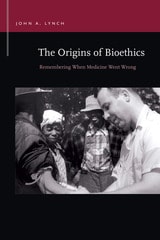
The Origins of Bioethics
Remembering When Medicine Went WrongJohn A. Lynch
Michigan State University Press, 2019

What Would You Do?
Juggling Bioethics and EthnographyCharles L. Bosk
University of Chicago Press, 2008
Renowned sociologist Charles L. Bosk has been observing medical care for thirty-five years. In What Would You Do? he brings his extensive experience to bear on these questions while reflecting on the ethical dilemmas that his own ethnographic research among surgeons and genetic counselors has provoked. Bosk considers whether the consent given to ethnographers by their subjects can ever be fully voluntary and informed. He questions whether promises of confidentiality and anonymity can or should be made. And he wonders if social scientists overestimate the benefits of their work while downplaying the risks.
Vital for practitioners of both the newly prominent field of bioethics and the long-established craft of ethnography, What Would You Do? will also engross anyone concerned with how our society addresses difficult health care issues.