Results by title
5 books match the query 'Biological'
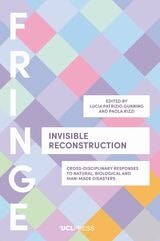
Invisible Reconstruction
Cross-Disciplinary Responses to Natural, Biological and Man-Made DisastersEdited by Lucia Patrizio Gunning and Paola Rizzi
University College London, 2022
What does it really mean to reconstruct a city after a disaster? Is the repair and reinstatement of buildings and infrastructure sufficient? This volume argues that the true measure of success should be societal. After all, a city without people is no city at all. The book brings together academics and practitioners from a wide variety of disciplines, comparing strategies and outcomes in different scenarios and cultures from South America, Europe, and Asia. From cultural heritage and public space to education and participation, contributors reflect on the interconnection of people, culture, and environment and constructive approaches to increasing resilience and reducing vulnerability. Bringing practical examples of how communities and individuals have reacted to or prepared for disaster, the publication proposes a shift in public policy to ensure that physical reinforcement and rebuilding are matched by attention to societal needs. Invisible Reconstruction is essential reading for policymakers, academics, and practitioners working to reduce the impact of disasters or to improve post-disaster recovery.

Rheumatic Fever in America and Britain
A Biological, Epidemiological, and Medical HistoryPeter C. English
Rutgers University Press, 1999
Rheumatic Fever in America and Britain is the first book to examine comprehensively a disease that has been a moving target for physicians and health care workers. A disease of skin, brain, heart, connective tissue, blood, tonsils, and joints bound to a member of the streptococcus family of bacteria, this illness has practically disappeared from the present-day scene. Yet in 1940 more than one million Americans suffered from the heart disease that followed the ravages of rheumatic fever. It struck nearly 2 percent of all school-aged children, filling hospitals, convalescent homes, and special schools.
Rheumatic fever rose in prevalence throughout the nineteenth century, reaching its peak in that century's last decades, and then steadily declined-both in occurrence and severity-throughout the twentieth century. In the nineteenth century, acute rheumatic fever was largely a disease of children and young adults. Another remarkable epidemiological change occurred during the twentieth century; rheumatic fever shifted its character, became milder, and in doing so allowed its victims to live longer, if disabled lives. As this disease so altered, adults increasingly became its victims.
Dr. Peter C. English explores both the shifting biological nature of this disease and the experiences of physicians and patients who fought its ravages. Using insights from biology, epidemiology, and social history, Dr. English-both a physician and medical historian-is uniquely suited to unravel this disease's epidemiological and cultural complexities.
The Biological and Social Analyses of a Mississippian Cemetery from Southeast Missouri
The Turner Site, 23BU21AThomas K. Black, III
University of Michigan Press, 1979
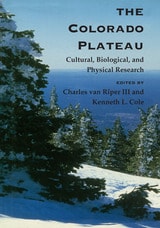
The Colorado Plateau
Cultural, Biological, and Physical ResearchCharles van Riper
University of Arizona Press, 2004
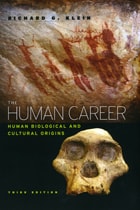
The Human Career
Human Biological and Cultural Origins, Third EditionRichard G. Klein
University of Chicago Press, 2009
Since its publication in 1989, The Human Career has proved to be an indispensable tool in teaching human origins. This substantially revised third edition retains Richard G. Klein’s innovative approach while showing how cumulative discoveries and analyses over the past ten years have significantly refined our knowledge of human evolution.
Klein chronicles the evolution of people from the earliest primates through the emergence of fully modern humans within the past 200,000 years. His comprehensive treatment stresses recent advances in knowledge, including, for example, ever more abundant evidence that fully modern humans originated in Africa and spread from there, replacing the Neanderthals in Europe and equally archaic people in Asia. With its coverage of both the fossil record and the archaeological record over the 2.5 million years for which both are available, The Human Career demonstrates that human morphology and behavior evolved together. Throughout the book, Klein presents evidence for alternative points of view, but does not hesitate to make his own position clear.
In addition to outlining the broad pattern of human evolution, The Human Career details the kinds of data that support it. For the third edition, Klein has added numerous tables and a fresh citation system designed to enhance readability, especially for students. He has also included more than fifty new illustrations to help lay readers grasp the fossils, artifacts, and other discoveries on which specialists rely. With abundant references and hundreds of images, charts, and diagrams, this new edition is unparalleled in its usefulness for teaching human evolution.