Results by title
9 books match the query 'Biological & Chemical Warfare'
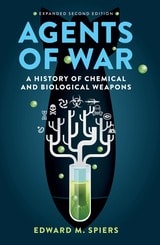
Agents of War
A History of Chemical and Biological Weapons, Second Expanded EditionEdward M. Spiers
Reaktion Books, 2021
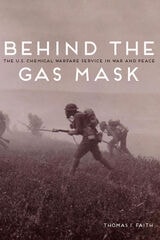
Behind the Gas Mask
The U.S. Chemical Warfare Service in War and PeaceThomas Faith
University of Illinois Press, 2014
As Faith shows, the believers in chemical weapons staffing the CWS allied with supporters in the military, government, and private industry to lobby to add chemical warfare to the country's permanent arsenal. Their argument: poison gas represented an advanced and even humane tool in modern war, while its applications for pest control and crowd control made a chemical capacity relevant in peacetime. But conflict with those aligned against chemical warfare forced the CWS to fight for its institutional life--and ultimately led to the U.S. military's rejection of battlefield chemical weapons.
Bio-Imperialism
Disease, Terror, and the Construction of National FragilityGwen Shuni D'Arcangelis
Rutgers University Press, 2021
Mutant Ecologies
Manufacturing Life in the Age of Genomic CapitalErica Borg
Pluto Press, 2022
How capitalism is reconfiguring the very texture of life
Mutant Ecologies traces the spinning of new synthetic threads into the web of life. It is a critical cartography of the shifting landscapes of capital accumulation conjured by recent developments in genomic science, genome editing, and the biotech industry.
CRISPR crops, fast-growing salmons, heat-resistant Slick™ cows, Friendly™ Mosquitoes, humanized mice, pigs growing human organs – these are but a few of the dazzling new life-forms that have recently emerged from corporate and university laboratories around the world, all promising to lubricate the circuits of capital accumulation in distinct ways. The deliberate induction of genetic mutations is increasingly central to business operations in a number of sectors, from agriculture to pharmaceuticals.
While the Nobel Committee recently proclaimed the life sciences to have entered 'a new epoch', the authors show how these technological innovations continue to operate within a socio-historical context defined by the iron rules of capitalist competition and exploitation. Capital no longer contents itself by simply appropriating the living bodies of plants and animals. It purposefully designs its internal metabolism, and in that way, it redesigns the countless living vectors that constitute the global biosphere. It is driving a biological revolution, which will ripple through the everyday lives of people everywhere.
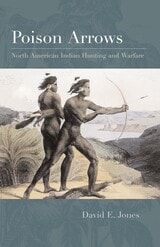
Poison Arrows
North American Indian Hunting and WarfareBy David E. Jones
University of Texas Press, 2007
Biological warfare is a menacing twenty-first-century issue, but its origins extend to antiquity. While the recorded use of toxins in warfare in some ancient populations is rarely disputed (the use of arsenical smoke in China, which dates to at least 1000 BC, for example) the use of "poison arrows" and other deadly substances by Native American groups has been fraught with contradiction. At last revealing clear documentation to support these theories, anthropologist David Jones transforms the realm of ethnobotany in Poison Arrows.
Examining evidence within the few extant descriptive accounts of Native American warfare, along with grooved arrowheads and clues from botanical knowledge, Jones builds a solid case to indicate widespread and very effective use of many types of toxins. He argues that various groups applied them to not only warfare but also to hunting, and even as an early form of insect extermination. Culling extensive ethnological, historical, and archaeological data, Jones provides a thoroughly comprehensive survey of the use of ethnobotanical and entomological compounds applied in wide-ranging ways, including homicide and suicide. Although many narratives from the contact period in North America deny such uses, Jones now offers conclusive documentation to prove otherwise.
A groundbreaking study of a subject that has been long overlooked, Poison Arrows imparts an extraordinary new perspective to the history of warfare, weaponry, and deadly human ingenuity.
Toxic Exposures
Mustard Gas and the Health Consequences of World War II in the United StatesSmith, Susan L.
Rutgers University Press, 2019
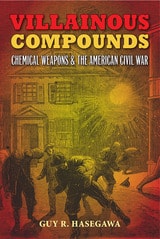
Villainous Compounds
Chemical Weapons and the American Civil WarGuy R. Hasegawa
Southern Illinois University Press, 2015
In chilling detail, Hasegawa describes the weapons proposed and prepared for use during the war and introduces the people behind the concepts. Although many of the ideas for chemical weapons had a historical precedent, most of the suggested agents were used in industry or medicine, and their toxicity was common knowledge. Proponents, including a surprisingly high number of civilian physicians, suggested a wide variety of potential chemical weapons—from liquid chlorine in artillery shells to cayenne pepper solution sprayed from fire engines. Some weapons advocates expressed ethical qualms, while others were silent on the matter or justified their suggestions as necessary under current circumstances.
As Hasegawa explains, bureaucrats in the war departments of both armies either delayed or rejected outright most of these unusual weapons, viewing them as unneeded or unworkable. Nevertheless, many of the proposed armaments presaged the widespread use of chemical weapons in the twentieth and twenty-first centuries. For example, while Civil War munitions technology was not advanced enough to deliver poison gas in artillery shells as some advocates suggested, the same idea saw extensive use during World War I. Similarly, forms of an ancient incendiary weapon, Greek fire, were used sparingly during the Civil War and appeared in later conflicts as napalm bombs and flamethrowers.
Especially timely with today’s increased chemical threats from terrorists and the alleged use of chemical agents in the Syrian Civil War, Villainous Compounds: Chemical Weapons and the American Civil War reveals the seldom-explored chemical side of Civil War armaments and illuminates an underappreciated stage in the origins of modern chemical warfare.

War No More
Eliminating Conflict in the Nuclear AgeRobert Hinde and Joseph Rotblat
Pluto Press, 2003
Written by Nobel Peace prize winner and former nuclear physicist Joseph Rotblat, who was involved in the creation of the first atom bomb, and biologist/ psychologist Robert Hinde, War No More provides expert insight into the nature of modern warfare - including weapons of mass destruction. Examining the key factors that contribute to conflict, the authors explain how best to approach a peaceful future.
If war is ever to be eliminated, we must address key issues such as the gap between rich and poor; have fully effective arms controls, and above all we must have better education. The authors emphasise the United Nations - as well as NGOs, religious groups, and grassroots movements - also have important parts to play.
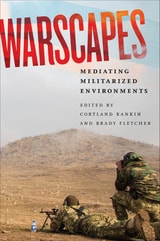
Warscapes
Mediating Militarized EnvironmentsCortland Rankin
Rutgers University Press, 2026
What do we see when we look at a battlefield? How do we come to understand environments as battlefields in the first place? What happens to our perception of war when we focus on the physical spaces of conflict? Warscapes is the first collection to pursue answers to such questions by considering the relationship between war, environment, and media along three lines: imagined geographies of control that prefigure environments as spaces of war; representations of resistance to occupation and ecocidal violence; and elemental reframings of archives and cultural memories of war. This book offers novel perspectives on historical conflict environments while also examining how hypothetical spaces of conflict are imagined. Deploying theoretical perspectives gleaned from film and media studies, ecocriticism, environmental history, urban studies, and postcolonial/decolonial studies, among others, authors highlight an international spectrum of 21st-century fiction films and television series, documentaries, and video installations that challenge how we look at war.