Results by title
6 books match the query 'Biomedicine'

Biomedicine and Alternative Healing Systems in America
Issues of Class, Race, and GenderHans A. Baer
University of Wisconsin Press, 2001
Examining medical pluralism in the United States from the Revolutionary War period through the end of the twentieth century, Hans Baer brings together in one convenient reference a vast array of information on healing systems as diverse as Christian Science, osteopathy, acupuncture, Santeria, southern Appalachian herbalism, evangelical faith healing, and Navajo healing.
In a country where the dominant paradigm of biomedicine (medical schools, research hospitals, clinics staffed by M.D.s and R.N.s) has been long established and supported by laws and regulations, the continuing appeal of other medical systems and subsystems bears careful consideration. Distinctions of class, Baer emphasizes, as well as differences in race, ethnicity, and gender, are fundamental to the diversity of beliefs, techniques, and social organizations represented in the phenomenon of medical pluralism.
Baer traces the simultaneous emergence in the nineteenth century of formalized biomedicine and of homeopathy, botanic medicine, hydropathy, Christian Science, osteopathy, and chiropractic. He examines present-day osteopathic medicine as a system parallel to biomedicine with an emphasis on primary care; chiropractic, naturopathy, and acupuncture as professionalized heterodox medical systems; homeopathy, herbalism, bodywork, and lay midwifery in the context of the holistic health movement; Anglo-American religious healing; and folk medical systems, particularly among racial and ethnic minorities. In closing he focuses on the persistence of folk medical systems among working-class Americans and considers the growing interest of biomedical physicians, pharmaceutical and healthcare corporations, and government in the holistic health movement
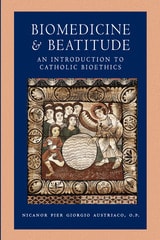
Biomedicine and Beatitude
An Introduction to Catholic BioethicsNicanor Pier Giorgio AUSTRIACO
Catholic University of America Press, 2011
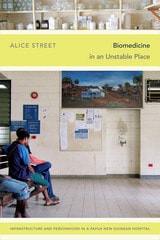
Biomedicine in an Unstable Place
Infrastructure and Personhood in a Papua New Guinean HospitalAlice Street
Duke University Press, 2014
In the hospital's clinics, biomedical practitioners struggle amid severe resource shortages to make the diseased body visible and knowable to the clinical gaze. That struggle is entangled with attempts by doctors, nurses, and patients to make themselves visible to external others—to kin, clinical experts, global scientists, politicians, and international development workers—as socially recognizable and valuable persons. Here hospital infrastructures emerge as relational technologies that are fundamentally fragile but also offer crucial opportunities for making people visible and knowable in new, unpredictable, and powerful ways.
Liminal Lives
Imagining the Human at the Frontiers of BiomedicineSusan Merrill Squier
Duke University Press, 2004
Drawing on archival materials of twentieth-century biology; little-known works of fiction and science fiction; and twentieth- and twenty-first century U.S. and U.K. government reports by the National Institutes of Health, the Parliamentary Advisory Group on the Ethics of Xenotransplantation, and the President’s Council on Bioethics, she examines a number of biomedical changes as each was portrayed by scientists, social scientists, and authors of fiction and poetry. Among the scientific developments she considers are the cultured cell, the hybrid embryo, the engineered intrauterine fetus, the child treated with human growth hormone, the process of organ transplantation, and the elderly person rejuvenated by hormone replacement therapy or other artificial means. Squier shows that in the midst of new phenomena such as these, literature helps us imagine new ways of living. It allows us to reflect on the possibilities and perils of our liminal lives.

Optical MEMS for Chemical Analysis and Biomedicine
Hongrui Jiang
The Institution of Engineering and Technology, 2016
The Social Medicine Reader, Volume I, Third Edition
Ethics and Cultures of BiomedicineJonathan Oberlander, Mara Buchbinder, Larry R. Churchill, Sue E. Estroff, Nancy M. King, Barry F. Saunders, Ronald P. Strauss, and Rebecca L. Walker, editors
Duke University Press, 2019
Volume 1, Ethics and Cultures of Biomedicine, contains essays, case studies, narratives, fiction, and poems that focus on the experiences of illness and of clinician-patient relationships. Among other topics the contributors examine the roles and training of professionals alongside the broader cultures of biomedicine; health care; experiences and decisions regarding death, dying, and struggling to live; and particular manifestations of injustice in the broader health system. The Reader is essential reading for all medical students, physicians, and health care providers.