Results by title

4 books match the query 'Bioterrorism'
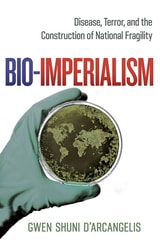
cover of Bio-Imperialism: Disease, Terror, and the Construction of National Fragility

Bio-Imperialism

Disease, Terror, and the Construction of National Fragility

Gwen Shuni D'Arcangelis

Rutgers University Press, 2021
Bio-Imperialism focuses on an understudied dimension of the war on terror: the fight against bioterrorism. This component of the war enlisted the biosciences and public health fields to build up the U.S. biodefense industry and U.S. global disease control. The book argues that U.S. imperial ambitions drove these shifts in focus, aided by gendered and racialized discourses on terrorism, disease, and science. These narratives helped rationalize American research expansion into dangerous germs and bioweapons in the name of biodefense and bolstered the U.S. rationale for increased interference in the disease control decisions of Global South nations. Bio-Imperialism is a sobering look at how the war on terror impacted the world in ways that we are only just starting to grapple with.
 
[more]
cover of Controversies in Science and Technology: From Maize to Menopause

Controversies in Science and Technology

From Maize to Menopause

Edited by Daniel Lee Kleinman, Abby J. Kinchy, and Jo Handelsman

University of Wisconsin Press, 2005

Written for general readers, teachers, journalists, and policymakers, this volume explores four controversial topics in science and technology, with commentaries from experts in such fields as sociology, religion, law, ethics, and politics:

* Antibiotics and Resistance: the science, the policy debates, and perspectives from a microbiologist, a veterinarian, and an M.D.

* Genetically Modified Maize and Gene Flow: the science of genetic modification, protecting genetic diversity, agricultural biotech vesus the environment, corporate patents versus farmers' rights

* Hormone Replacement Theory and Menopause: overview of the Women's Health Initiative, history of hormone replacement therapy, the medicalization of menopause, hormone replacement therapy and clinical trials

* Smallpox: historical and medical overview of smallpox, government policies for public health, the Emergency Health Powers Act, public resistance vs. cooperation.
[more]
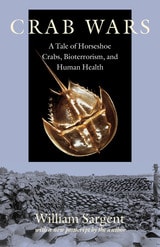
cover of Crab Wars: A Tale of Horseshoe Crabs, Bioterrorism, and Human Health

Crab Wars

A Tale of Horseshoe Crabs, Bioterrorism, and Human Health

William Sargent

University Press of New England, 2006

Surviving almost unmolested for 300 million years, the horseshoe crab is now the object of an intense legal and ethical struggle involving marine biologists, environmentalists, US government officials, biotechnologists, and international corporations. The source of this friction is the discovery 25 years ago that the blood of these ancient creatures serves as the basis for the most reliable test for the deadly and ubiquitous gram-negative bacteria. These bacteria are responsible for life-threatening diseases like menengitis, typhoid, E. coli, Legionnaire’s Disease and toxic shock syndrome. Because every drug certified by the FDA must be tested using the horseshoe crab derivative known as Limulus lysate, a multimillion dollar industry has emerged involving the license to “bleed” horseshoe crabs and the rights to their breeding grounds. Since his youthful fascination with these ancient creatures, William Sargent has spent much of his life observing, studying, and collecting horseshoe crabs. As a result, he presents a thoroughly accessible insider’s guide to the discovery of the lysate test, the exploitation of the crabs at the hands of multinational pharmaceutical conglomerates, local fishing interests, and the legal and governmental wrangling over the creatures’ ultimate fate. In the end, the story of the horseshoe crab is a sobering reflection on the unintended consequences of scientific progress and the danger of self-regulated industries controlling a limited natural resource.
[more]
cover of Ricin!: The Inside Story of the Terror Plot That Never Was

Ricin!

The Inside Story of the Terror Plot That Never Was

Lawrence Archer and Fiona Bawdon

Pluto Press, 2010

In January 2003, the British media splashed the news that anti-terror police had disrupted an Al-Qaeda cell, poised to unleash the deadly poison ricin on the capital. Police had reportedly found traces of ricin, as well as a panoply of bomb and poison-making equipment in the cell’s ‘factory of death’ – a shabby flat in north London. ‘This danger is present and real, and with us now’ announced prime minister Tony Blair.

But, when the ‘ricin plot’ came to trial at the Old Bailey, a very different story emerged: there was no ricin and no sophisticated plot. Rarely has a legal case been so shamelessly distorted by government, media and security forces to push their own ‘tough on terror’ agendas. In this meticulously researched and compellingly written book, Lawrence Archer, the jury foreman at the trial, and journalist Fiona Bawdon, give the definitive story of the ricin plot, the trial and its aftermath.

[more]