Results by title
4 books match the query 'Bismarck'
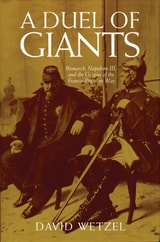
A Duel of Giants
Bismarck, Napoleon III, and the Origins of the Franco-Prussian WarDavid Wetzel
University of Wisconsin Press, 2001
Combining impeccable scholarship and literary elegance, David Wetzel depicts the drama of machinations and passions that exploded in a war that forever changed the face of European history.
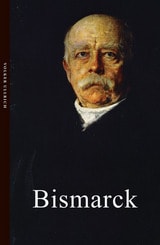
Bismarck
Volker Ullrich
Haus Publishing, 2015
A leading historian of nineteenth- and twentieth-century history, Ullrich demonstrates that the “Founder of the Reich” was in fact an opponent of liberal German nationalism. After the wars of 1866 and 1870, Bismarck spent the rest of his career working to preserve peace in Europe and protect the empire he had created. Despite his reputation as an enemy of socialism, he introduced comprehensive health and unemployment insurance for German workers. Far from being a “man of iron and blood,” Bismarck was in fact a complex statesman who was concerned with maintaining stability and harmony far beyond Germany’s newly unified borders.
Comprehensive and balanced, Bismarck shows us the post-reunification value of looking anew at this monumental figure’s role in European history.
Bismarck and His Times
George O. Kent
Southern Illinois University Press, 1978
A new account of the life and policies of the first German chancellor, Otto von Bismarck, this concise historical-biography reflects, for the first time in English, the historical shift in emphasis from the traditional political-economic approach to the more complex social-economic one of post—World War II scholarship.
Since the middle of the 1950s, much new material on Bismarck and nineteenth-century Germany and new interpretations of existing material have been published in Germany, Great Britain, and the United States. Professor George O. Kent’s brilliant synthesis, drawing on this mass of material, examines changes in emphasis in post—World War II scholarship. The book, particularly in the historiographical notes and bibliographical essay, provides the serious student with an invaluable guide to the intricacies of recent Bismarckian scholarship. For the general reader, the main text presents a picture of the man, the issues, and the age in the light of modern scholarship.
The major shift in historical emphasis described in this new account is the importance scholars give to the period 1877–79, the years of change from free trade to protectionism, rather than to 1870–71 the founding of the Reich. Bismarck’s political machinations, particularly his willingness to explore the possibilities of a coup d’état, are more fully discussed here than in any other book.
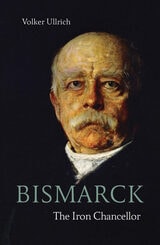
Bismarck
The Iron ChancellorVolker Ullrich
Haus Publishing, 2021
Otto von Bismarck (1815–1898) has gone down in history as the Iron Chancellor, a reactionary and militarist whose 1871 unification of Germany put Europe on a path of disaster leading up to World War I. But, as this new edition of his accessible biography shows, the real Bismarck was a far more complex character.
A leading historian of nineteenth- and twentieth-century history, Volker Ullrich demonstrates that Bismarck—the “Founder of the Reich”—was, in fact, an opponent of liberal German nationalism. After the wars of 1866 and 1870, Bismarck spent the rest of his career working to preserve peace in Europe and to protect the empire he had created. Despite his reputation as an enemy of socialism, he introduced comprehensive health and unemployment insurance for German workers, and he was concerned with maintaining stability and harmony far beyond Germany’s newly unified borders. Comprehensive and balanced, Bismarck shows us the value of looking anew at this monumental figure’s role in European history.