Results by title
9 books match the query 'Blaabjerg, Frede'
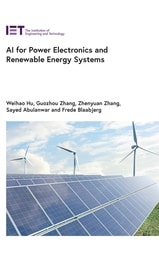
AI for Power Electronics and Renewable Energy Systems
Weihao Hu
The Institution of Engineering and Technology, 2024
Rising shares of renewable energy are needed to stave off catastrophic climate change, but also bring about the challenge of intermittency, jeopardizing power quality. Instead of large central generation units, many distributed generators and loads need to be managed in order to integrate renewable energy with power systems.
[more]
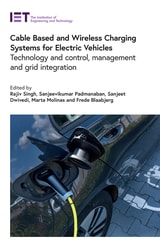
Cable Based and Wireless Charging Systems for Electric Vehicles
Technology and control, management and grid integrationRajiv Singh
The Institution of Engineering and Technology, 2021
Electric vehicles (EV), are being hailed as part of the solution to reducing urban air pollution and noise, and staving off climate change. Their success hinges on the availability and reliability of fast and efficient charging facilities, both stationary and in-motion. These in turn depend on appropriate integration with the grid, load and outage management, and on the mitigation of loads using renewable energy and storage. Charging management to preserve the battery will also play a key role.
[more]
Cyber Security for Microgrids
Subham Sahoo
The Institution of Engineering and Technology, 2022
Microgrids use ICT to intelligently deliver energy and integrate clean generation. They can operate independently from a larger grid and can help to strengthen grid resilience. Applications include remote as well as urban areas, hospitals, and manufacturing complexes. Cybersecurity challenges arise, exposing the microgrids to cyber-attacks, possibly resulting in harm to infrastructure and to people. Research has classified attacks based on confidentiality, integrity, and availability, and most countermeasures focus on specific attacks or on protecting specific components. A global approach is needed combining solutions that can secure the entire system and respond in milliseconds.
[more]
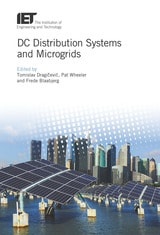
DC Distribution Systems and Microgrids
Tomislav Dragičević
The Institution of Engineering and Technology, 2018
DC electric power distribution systems have higher efficiency, better current carrying capacity and faster response when compared to conventional AC systems. They also provide a more natural interface with many types of renewable energy sources. Furthermore, there are fewer issues with reactive power flow, power quality and frequency regulation, resulting in a notably less complex control system. All these facts lead to increased applications of DC systems in modern power systems. Still, design and operation of these systems imposes a number of specific challenges, mostly related to lack of mature protection technology and operational experience, as well as very early development stage of standards regarding DC based power infrastructure.
[more]
Periodic Control of Power Electronic Converters
Keliang Zhou
The Institution of Engineering and Technology, 2017
A key issue for power electronic converters is the ability to tackle periodic signals in electrical power processing to precisely and flexibly convert and regulate electrical power.
[more]
Reliability of Power Electronic Converter Systems
Henry Shu-hung Chung
The Institution of Engineering and Technology, 2016
The main aims of power electronic converter systems (PECS) are to control, convert, and condition electrical power flow from one form to another through the use of solid state electronics. This book outlines current research into the scientific modeling, experimentation, and remedial measures for advancing the reliability, availability, system robustness, and maintainability of PECS at different levels of complexity.
[more]
Reliability of Power Electronic Converter Systems
Henry Shu-Hung Chung
The Institution of Engineering and Technology, 2025
The reliability of power electronic systems is a major concern because these systems are exposed to harsh environments, high stresses, and variable loads caused by the increasing proliferation of renewable power generation.
[more]
Reliability of Power Electronics Converters for Solar Photovoltaic Applications
Ahteshamul Haque
The Institution of Engineering and Technology, 2021
The importance of power electronic converters for electricity grid equipment is increasing due to the growing distribution-level penetration of renewable energy sources. The performance of the converters mostly depends on interactions between sources, loads, and their state of operation. These devices must be operated with safety and stability under normal conditions, fault conditions, overloads, as well as different operation modes. Therefore, enhanced control strategies of power electronic converters are necessary to improve system stability.
[more]
Variability, Scalability and Stability of Microgrids
S.M. Muyeen
The Institution of Engineering and Technology, 2019
A microgrid is a small network of electricity users with a local source of supply that is usually attached to a larger grid but can function independently. The interconnection of small scale generating units, such as PV and wind turbines, and energy storage systems, such as batteries, to a low voltage distribution grid involves three major challenges: variability, scalability, and stability. It must keep delivering reliable and stable power also when changing, or repairing, any component, or under varying wind and solar conditions. It also must be able to accept additional units, i.e. be scalable. This reference discusses these three challenges facing engineers and researchers in the field of power systems, covering topics such as demand side energy management, transactive energy, optimizing and sizing of microgrid components. Case studies and results provide illustrative examples in each chapter.
[more]