Results by title
12 books match the query 'Black, Jeremy'
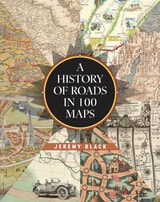
A History of Roads in 100 Maps
Jeremy Black
University of Chicago Press, 2026
A beautifully illustrated, first-of-its-kind chronicle of road maps through the ages.
Road maps are the most common form of map that most of us regularly interact with while we all seek to find our way from here to there. Today, the digital maps on our devices are just the latest in a series of cartographic innovations designed to make transportation of people and goods easier and more predictable. Whether traveling on foot, in a vehicle, or by animal, people have long created and relied on roads, and efforts to map these overland routes predate the invention of the printing press. Yet the vast majority of road maps have been produced only within the last five hundred years—and even more specifically within the last century.
Historian Jeremy Black is the first to chart the tale of road maps, beginning with the "Peutinger Map," which illustrated the roads famously connecting the Roman Empire. From the time of antiquity, Black guides the reader through the centuries all the way to the modern age, when the invention of the automobile spurred the creation of roads and road maps like nothing before. Over the course of this journey, Black illuminates the integral role maps played in the development of government infrastructures through time and across all the inhabited continents. And, arriving in the present day, Black shows how technology may soon make the paper road map obsolete even as it builds on the conventions of the preceding centuries.
Featuring a series of full-color maps from the British Library's collection and beyond, A History of Roads in 100 Maps is an eye-opening visual story of how modern civilizations traversed, constructed, and connected their worlds.
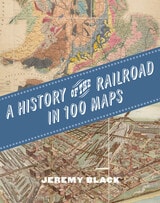
A History of the Railroad in 100 Maps
Jeremy Black
University of Chicago Press, 2024
The first international history of railroads and railroad infrastructure told through stunningly reproduced maps.
Since their origins in eighteenth-century England, railroads have spread across the globe, changing everything in their path, from where and how people grew and made things to where and how they lived and moved. Railroads rewrote not only world geography but also the history of maps and mapping. Today, the needs of train companies and their users continue to shape the maps we consume and consult.
Featuring full-color maps primarily from the British Library's distinguished collection—many of them never before published—A History of the Railroad in 100 Maps is the first international history of railroads and railroad infrastructure told through maps. Jeremy Black includes examples from six continents, spanning a variety of uses from railroad planning and operations to guides for passengers, shippers, and tourists.
Arranged chronologically, the maps are accompanied by explanatory text that sheds light on the political, military, and urban development histories associated with the spread of railroads. A final chapter considers railroad maps from games, books, and other cultural artifacts. For anyone interested in the history of railroads or maps, A History of the Railroad in 100 Maps will offer new and unexpected insights into their intertwined global history.
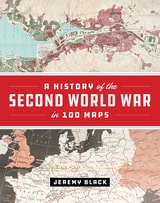
A History of the Second World War in 100 Maps
Jeremy Black
University of Chicago Press, 2020
The First World War was marked by an exceptional expansion in the use and production of military cartography. But World War II took things even further, employing maps, charts, reconnaissance, and the systematic recording and processing of geographical and topographical information on an unprecedented scale. As Jeremy Black—one of the world’s leading military and cartographic historians—convincingly shows in this lavish full-color book, it is impossible to understand the events and outcomes of the Second World War without deep reference to mapping at all levels. In World War II, maps themselves became the weapons.
A History of the Second World War in 100 Maps traces how military cartography developed from simply recording and reflecting history to having a decisive impact on events of a global scale. Drawing on one hundred key maps from the unparalleled collections of the British Library and other sources—many of which have never been published in book form before--Jeremy Black takes us from the prewar mapping programs undertaken by both Germany and the United Kingdom in the mid-1930s through the conflict’s end a decade later. Black shows how the development of maps led directly to the planning of the complex and fluid maneuvers that defined the European theater in World War II: for example, aerial reconnaissance photography allowed for the charting of beach gradients and ocean depths in the runup to the D-Day landings, and the subsequent troop movements at Normandy would have been impossible without the help of situation maps and photos. In the course of the conflict, both in Europe and the Pacific, the realities of climate, terrain, and logistics—recorded on maps—overcame the Axis powers. Maps also became propaganda tools as the pages of Time outlined the directions of the campaigns and the Allies dropped maps from their aircraft.
In this thrilling and unique book, Jeremy Black blends his singular cartographic and military expertise into a captivating overview of World War II from the air, sea, and sky, making clear how fundamental maps were to every aspect of this unforgettable global conflict.
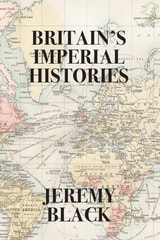
Britain's Imperial Histories
Jeremy black
St. Augustine's Press, 2025
Military historian Jeremy Black continues his review of the global context of martial conflict and spatial conquest into the modern era (16th–20th centuries), focusing on the British empire and its lasting effect on this landscape. Black offers a representation of the "imperial experience" that is eye-opening for a generation of readers who associate this with a strictly negative connotation. But the notion of an empire is not understood at all if this is true. Indeed, not only is there "no one type of empire, no prototype," the basis of empire is much more 'order' than it is 'invasion.' Furthermore, reflecting on the unavoidable cultural and sociological symbiosis and transfer, Black makes the case that in all instances of influence and encounter, sameness between peoples never results. But how does one distinguish influence from control? What are the long-term benefits among peoples? "To many today, empire might seem obvious: governors with ostrich-feathers in their colonial garb ruling non-White peoples; but this scarcely describes the situation across time and place."
Why did the European empires ultimately fall? When approaching this question, Britain's Imperial Histories proposes that the perspective of "making and remaking of the international system" be made distinct from the "rational pursuit of power and wealth and the use of technology." As seen in earlier work, Black's brilliance is centered in his capacity to incorporate the complexity of war and its battles in his assessments, while never neglecting the fact that wars themselves have specific and broad contexts that must be read thoroughly.
Another highlight of the present work includes more insight into the British-American relationship and American political identity. "If the British empire is blamed for many of the aspects of modernization and globalization, is also serves as a way of offering historical depth to a critique of American power." Yet he is also adept at drawing in Asia into the study and does so with uncommon acumen. This book provides an approach to history that has been neglected, especially in the New World, and connects the present to the past with a kind of hermeneutical responsibility that has been of late abandoned.
Defoe's Britain
jeremy black
St. Augustine's Press, 2023
Defoe was an outsider, a man of many interests whom Black asserts evades too precise a portrait or coherent description of character and career. But he is a traveler, in the literal and imaginative senses, and in his engagement with life and its issues and willingness to associate with 'low-life' prefigures later literary giants like Smollett and Fielding. More than the establishment of genre, Defoe created the writer "whose business is observation." Black's account of this parcel of the British past is impeccable because it is in fact an account that the past, in Defoe, gives of itself. "As a writer, Defoe brought together a reality usually presented as, and endorsed by, history, with the imaginative focus of storytelling, and the direction of, variously, propaganda, analysis, and exemplary tale."
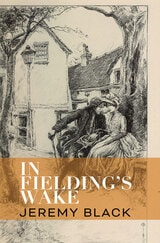
In Fielding’s Wake
Jeremy Black
St. Augustine's Press, 2022
Fielding's epic comic novel, Tom Jones, is unforgettable for many reasons, but the author must be credited with an aptitude for documenting contemporary cultural history and his contribution to a new species of writing. Black's treatment of Fielding draws to the fore a man who was of his time but not confined to it. "Philosophy in practice encompassed his stance as a man of action as well as a reflective writer of genius." Fielding is shown to provide across the breadth of his work extensive and invaluable commentary on issues as diverse as law and order, marriage, women, and the interplay of urban and rural life. Black, an historian, is here a student of storytelling and recovers Fielding's rich descriptions of the human heart and call to defy the vices with which circumstances might taunt it.
Black has done a service along many fronts at once: the science of the novel and genre, the history of a people and the figure of a memorable writer.
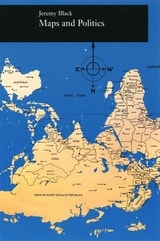
Maps and Politics
Jeremy Black
University of Chicago Press, 1997
Smollett's Britain
Jeremy Black
St. Augustine's Press, 2022
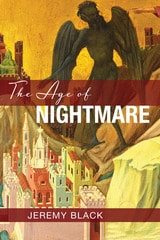
The Age of Nightmare
The Gothic and British Culture, 1750–1900Jeremy Black
St. Augustine's Press, 2022
Black's understanding of the Gothic writer is a remarkable contribution to the legacy of British literature and the novel at large. Once again, in Black thoroughness meets fidelity and the reader is overcome with his own insights into the period on the merit of Black's efforts.
In The Weight of Words Series, Black is devoted to the preservation of the memory of British literary genius, and in so doing he is carving out a niche for himself. As in the Gothic novel where landscapes give quarter to influences that seem to interact with the human fates that freely wander in, reading Black is an experience of suddenly finding oneself in possession of an education, and his allure takes a cue from the horrific Gothic tempt.
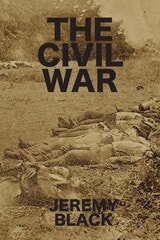
The Civil War
Jeremy Black
St. Augustine's Press, 2025
European military historian Jeremy Black reorients readers to see what was extraordinary in the civil war of 'the American colonies' and why this was warfare unlike anything that could be properly understood on the world stage at that time. He also examines with expertise the role of foreign powers (or lack thereof).
Black's treatment might be the doom of civil war counterfactuals. Was the south destined to fail? Was it weaker motive, faulty strategy, or lack of European support? Was the north just lucky, or possessed of foresight and providential endowment? Black dispels romanticism and sentimentalist hindsight––the American Civil War is unparalleled in many respects, but it is not without clear lessons in warcraft, diplomacy, and cultural–economic impasse.
Furthermore, Black's Civil War is a new resource that teaches, reaffirms, and reminds readers of the intensity of the American past––in both error and idealistic impulse––that might continue to guide us to the best future and avoid the lose-lose circumstances of a civil war. Black's acumen for historical review in this case renders a kind of warning: May the leaders of men in the future come to a better way of self-realization than give way to the internal conflict that pits father against son, and sister against brother. But if he must engage, at least understand the distinction between war and politics.
Black's objective and concise account is a treasure for students and experts alike who need clarity and insight without too much of an investment. The take-away is an appreciation for the American spirit that civil strife petrified and an understanding of the tactical progression of this conflict and the context of combat of that era.
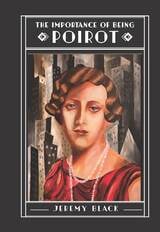
The Importance of Being Poirot
Jeremy Black
St. Augustine's Press, 2021
Hercule Poirot as a character is masterfully imagined, but Black shows us how he is inseparable from Christie’s turbulent and changing world. He also illuminates significant social commentary in Christie’s fiction, and in so doing Black often uses his authority to vindicate Christie’s work from hastily, at times stupidly, applied labels and interpretations. He is especially magnificent in his chapters, “Xenophobia” and “The Sixties.” Black nevertheless gives due recognition to Christie’s critics when they have something relevant and reasonable to say, and hence the reader finds yet another service in Black’s comprehensive review of the reviewers over the expanse of Christie’s writing career.
For all this, Black proves himself to be a worthy history-teller because he can aptly ‘detect’ the meaning of stories that seeks to answer the past and guide the present. His erudition runs much deeper than his ability to navigate the stores of resources available on the subject, and the reader gets a glimpse of this early on when in the introduction he proffers his own defense for writing about the importance of a Hercule Poirot. Black writes, “the notion of crime had a moral component from the outset, and notably so in terms of the struggle between Good and Evil, and in the detection of the latter. Indeed, it is this detection that is the basis of the most powerful strand of detection story, because Evil disguises its purposes. It has to do so in a world and humanity made fundamentally benign and moral by God.” The Golden Age of detective novels represents much more than a triumph of a literary genre. It is in its own right a story of how the challenge to address the problem of evil was accepted. Its convergence with the plot-rich narrative of the twentieth century in the modern age renders Black’s account a thrilling masterpiece, seducing historians to read fiction and crime junkies to read more history.
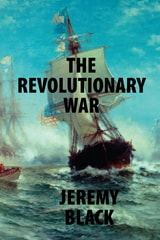
The Revolutionary War
Jeremy Black
St. Augustine's Press, 2025
Military historian Jeremy Black follows his engagement with the American Civil War (St. Augustine's Press, 2025) with a review of the Revolutionary War in North America and the strategic asymmetry it presents. This was a key episode for global affairs and formative for the United States, but also fascinating for military history as a whole. Black's earlier treatment of this war (1991) remains operational, but he thought it "necessary to revisit the subject and reconsider not only the specifics of assessment, but also the more general ways of analyzing and presenting the struggle."
Black's rendering of the war is accurate, well researched, and successfully hits his target without undue speculation. Identifying all the factors at play is one of Black's strengths, as is his sober restraint in applying hindsight while evaluating leadership and campaigns throughout. His field of vision is expansive and refers to the global theatre when offering any kind of final statements––for example, in his claim that the Revolution was largely lost long after the conclusion of battles, and that Canada in British hands underlined the failure of revolutionary efforts and the embodiment of continued threats.
The Revolutionary War is a masterful treatment of an historical event and also the very nature of revolutionary warfare. Black is a fair-handed assessor of 'American' interests and strategic politics, and likewise observant in explaining that Britain was not entirely bested by the revolution even in losing the war. His discussion of the aftermath is as critical as his illustration of the beginning of hostilities, as in his chapter dedicated to "heritages, lessons, and retrospectives." Black is one of the most important and prolific historians of his generation, a writer whose concise and thorough manner renders readers in the United States a refreshing service of understanding their history more deeply.