Results by title

22 books match the query 'Black Arts movement'
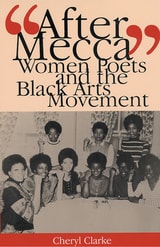
cover of "After Mecca": Women Poets and the Black Arts Movement

"After Mecca"

Women Poets and the Black Arts Movement

Clarke, Cheryl

Rutgers University Press, 2004

The politics and music of the sixties and early seventies have been the subject of scholarship for many years, but it is only very recently that attention has turned to the cultural production of African American poets. 

In "After Mecca," Cheryl Clarke explores the relationship between the Black Arts Movement and black women writers of the period. Poems by Gwendolyn Brooks, Ntozake Shange, Audre Lorde, Nikki Giovanni, Sonia Sanchez, Jayne Cortez, Alice Walker, and others chart the emergence of a new and distinct black poetry and its relationship to the black community's struggle for rights and liberation. Clarke also traces the contributions of these poets to the development of feminism and lesbian-feminism, and the legacy they left for others to build on. 

She argues that whether black women poets of the time were writing from within the movement or writing against it, virtually all were responding to it. Using the trope of "Mecca," she explores the ways in which these writers were turning away from white, western society to create a new literacy of blackness.
 
Provocatively written, this book is an important contribution to the fields of African American literary studies and feminist theory. 
[more]
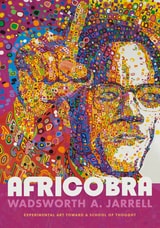
cover of AFRICOBRA: Experimental Art toward a School of Thought

AFRICOBRA

Experimental Art toward a School of Thought

Wadsworth A. Jarrell

Duke University Press, 2020
Formed on the South Side of Chicago in 1968 at the height of the civil rights, Black power, and Black arts movements, the AFRICOBRA collective created a new artistic visual language rooted in the culture of Chicago's Black neighborhoods. The collective's aesthetics, especially the use of vibrant color, capture the rhythmic dynamism of Black culture and social life. In AFRICOBRA, painter, photographer, and collective cofounder Wadsworth A. Jarrell tells the definitive story of the group's creation, history, and artistic and political principles. From accounts of the painting of the groundbreaking Wall of Respect mural and conversations among group members to documentation of AFRICOBRA's exhibits in Chicago, New York, and Boston, Jarrell outlines how the collective challenged white conceptions of art by developing an artistic philosophy and approach wholly divested of Western practices. Featuring nearly one hundred color images of artworks, exhibition ephemera, and photographs, this book is at once a sourcebook history of AFRICOBRA and the story of visionary artists who rejected the white art establishment in order to create uplifting art for all Black people.
[more]
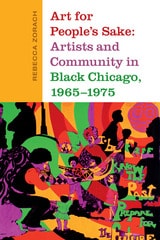
cover of Art for People's Sake: Artists and Community in Black Chicago, 1965-1975

Art for People's Sake

Artists and Community in Black Chicago, 1965-1975

Rebecca Zorach

Duke University Press, 2019

In the 1960s and early 1970s, Chicago witnessed a remarkable flourishing of visual arts associated with the Black Arts Movement. From the painting of murals as a way to reclaim public space and the establishment of independent community art centers to the work of the AFRICOBRA collective and Black filmmakers, artists on Chicago's South and West Sides built a vision of art as service to the people. In Art for People's Sake Rebecca Zorach traces the little-told story of the visual arts of the Black Arts Movement in Chicago, showing how artistic innovations responded to decades of racist urban planning that left Black neighborhoods sites of economic depression, infrastructural decay, and violence. Working with community leaders, children, activists, gang members, and everyday people, artists developed a way of using art to help empower and represent themselves. Showcasing the depth and sophistication of the visual arts in Chicago at this time, Zorach demonstrates the crucial role of aesthetics and artistic practice in the mobilization of Black radical politics during the Black Power era.
[more]
cover of Avant-Garde Performance and the Limits of Criticism: Approaching the Living Theatre, Happenings/Fluxus, and the Black Arts Movement

Avant-Garde Performance and the Limits of Criticism

Approaching the Living Theatre, Happenings/Fluxus, and the Black Arts Movement

Mike Sell

University of Michigan Press, 2005

Avant-Garde Performance and the Limits of Criticism looks at the American avant-garde during the Cold War period, focusing on the interrelated questions of performance practices, cultural resistance, and the politics of criticism and scholarship in the U.S. counterculture. It develops three case studies: the Living Theatre's influential production of Jack Gelber's The Connection, which subverted the historical and political assumptions of the War on Drugs, utilized cutting-edge jazz both formally and thematically, and inspired a generation of artists and activists to rethink the nature of community and communication; the earliest American performance art, namely the Happenings and Fluxus events, which responded in astounding ways to the avaricious movements of Cold War capitalism; and the Black Arts Movement, which brought about practical and theoretical innovations that effectively evade the conceptual categories of Euro-American philosophy and historiography.

Mike Sell's study is groundbreaking in its consideration of the avant-garde in relationship to a crucial but rarely considered agent: the scholar and critic. The book examines the role of the scholar and critic in the cultural struggles of radical artists and activists and reveals how avant-garde performance identifies the very limits of critical consideration. The book also explores the popularization of the avant-garde: how formerly subversive art is eventually discovered by the mass media, is gobbled up by the marketplace, and eventually finds its way onto the syllabi of college and university courses. Avant-Garde Performance and the Limits of Criticism is a timely and significant book that will become a standard reference for scholars in the fields of avant-garde literary criticism, theater history, critical theory, and performance studies.

"A provocative exploration of relations between the historical avant-garde and Cold War vanguard art and theatre. Sell's compelling historical and cultural narrative shows how the connections between the two exist at a very deep level of radical politics and aesthetics--an amazing concoction of rigorous scholarship, interdisciplinary learning, and progressive theorizing."
--Michael Vanden Heuvel, University of Wisconsin, Madison

"One of the most sophisticated, engaged, and engaging studies of the avant-garde in the United States that I've read-an important study that will raise the bar not only on scholarship of the Black Arts Movement, but on U.S. avant-gardism generally."
--James Smethurst, University of Massachusetts

A volume in the series Theater: Theory/Text/Performance. A list of recent titles in the series appears at the front of this volume.
[more]
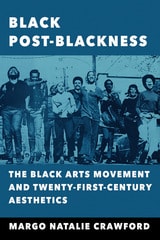
cover of Black Post-Blackness: The Black Arts Movement and Twenty-First-Century Aesthetics

Black Post-Blackness

The Black Arts Movement and Twenty-First-Century Aesthetics

Margo Natalie Crawford

University of Illinois Press, 2017
A 2008 cover of The New Yorker featured a much-discussed Black Power parody of Michelle and Barack Obama. The image put a spotlight on how easy it is to flatten the Black Power movement as we imagine new types of blackness. Margo Natalie Crawford argues that we have misread the Black Arts Movement's call for blackness. We have failed to see the movement's anticipation of the "new black" and "post-black." Black Post-Blackness compares the black avant-garde of the 1960s and 1970s Black Arts Movement with the most innovative spins of twenty-first century black aesthetics. Crawford zooms in on the 1970s second wave of the Black Arts Movement and shows the connections between this final wave of the Black Arts movement and the early years of twenty-first century black aesthetics. She uncovers the circle of black post-blackness that pivots on the power of anticipation, abstraction, mixed media, the global South, satire, public interiority, and the fantastic.
[more]
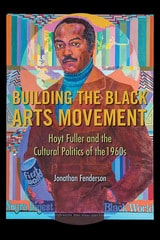
cover of Building the Black Arts Movement: Hoyt Fuller and the Cultural Politics of the 1960s

Building the Black Arts Movement

Hoyt Fuller and the Cultural Politics of the 1960s

Jonathan Fenderson

University of Illinois Press, 2019

As both an activist and the dynamic editor of Negro Digest, Hoyt W. Fuller stood at the nexus of the Black Arts Movement and the broader black cultural politics of his time. Jonathan Fenderson uses historical snapshots of Fuller's life and achievements to rethink the period and establish Fuller's important role in laying the foundation for the movement. In telling Fuller's story, Fenderson provides provocative new insights into the movement's international dimensions, the ways the movement took shape at the local level, the impact of race and other factors, and the challenges--corporate, political, and personal--that Fuller and others faced in trying to build black institutions. An innovative study that approaches the movement from a historical perspective, Building the Black Arts Movement is a much-needed reassessment of the trajectory of African American culture over two explosive decades.
[more]
cover of Death's Futurity: The Visual Life of Black Power

Death's Futurity

The Visual Life of Black Power

Sampada Aranke

Duke University Press, 2023
In Death’s Futurity Sampada Aranke examines the importance of representations of death to Black liberation. Aranke analyzes posters, photographs, journalism, and films that focus on the murders of Black Panther Party members Lil’ Bobby Hutton, Fred Hampton, and George Jackson to construct a visual history of the 1960s and 1970s Black Power era. She shows how Black radicals used these murders to engage in political action that imagined Black futurity from the position of death. Photographs of Hutton that appeared on flyers and posters called attention to the condition of his death while the 1971 documentary The Murder of Fred Hampton enabled the consideration of Hampton’s afterlife through visual meditations on his murder. Printmaking and political posters surrounding Jackson’s murder marked the transition from Black Power to the prison abolition movement in ways that highlighted the relationship between surveillance, policing, incarceration, and anti-Black violence. By foregrounding the photographed, collaged, filmed, and drawn Black body, Aranke demonstrates that corporeality and corpses are crucial to the efforts to shape visions of a Black future free from white supremacy.
[more]
cover of Dissonant Voices: Race, Jazz, and Innovative Poetics in Midcentury America

Dissonant Voices

Race, Jazz, and Innovative Poetics in Midcentury America

Joseph Pizza

University of Iowa Press, 2023

Dissonant Voices uncovers the interracial collaboration at the heart of the postwar avant-garde. While previous studies have explored the writings of individual authors and groups, this work is among the first to trace the cross-cultural debate that inspired and energized midcentury literature in America and beyond. By reading a range of poets in the full context of the friendships and romantic relationships that animated their writing, this study offers new perspectives on key textual moments in the foundation and development of postmodern literature in the U.S. Ultimately, these readings aim to integrate our understanding of New American Poetry, the Black Arts Movement, and the various contemporary approaches to poetry and poetics that have been inspired by their examples.
 
[more]
cover of Don't Deny My Name: Words and Music and the Black Intellectual Tradition

Don't Deny My Name

Words and Music and the Black Intellectual Tradition

Lorenzo Thomas; Edited and with an Introduction by Aldon Lynn Nielsen

University of Michigan Press, 2008
Black musical forms profoundly influenced the work of American poet and leading literary figure Lorenzo Thomas, and he wrote about them with keen insight---and obvious pleasure. This book, begun by Thomas before his death in 2005, collects more than a dozen of his savvy yet engagingly personal essays that probe the links between African American music, literature, and popular culture, from the Harlem Renaissance to the present. Don't Deny My Name (which takes its title from a blues song by Jelly Roll Morton) begins by laying out the case that the blues is a body of literature that captured the experience of African American migrants to the urban North and newer territories to the West. The essays that follow collectively provide a tour of the movement through classic jazz, bop, and the explosions of the free jazz era, followed by a section on R&B and soul. The penultimate essay is a meditation on rap music that attempts to bring together the extremes of emotion that hip hop elicits, and the collection ends with an unfinished preface to the volume.
[more]
cover of Futuring Black Lives: Independent Black Institutions and the Literary Imagination

Futuring Black Lives

Independent Black Institutions and the Literary Imagination

Maisha T. Winn

Vanderbilt University Press, 2025

Futuring Black Lives is a historical ethnography examining Black institution builders in the late 1960s and early 1970s and their work to leverage the power of publications and the literary imagination to engage “concerned men and women” in conversations about the educational journeys and futures of Black children. While many began as reactions to anti-Blackness and American public schooling failing Black children, Independent Black Institutions (IBIs) came to be viable ecosystems anchored in a shared Black value system preparing Black children in three areas: identity, purpose, and direction.

The rationale for establishing and valuing IBIs remains highly relevant, given the sociopolitical landscape of education today. In addition to persistent racial disparities in academic achievement and Black students’ highly disproportionate experiences of punishment and “discipline,” friction and legislation against critical examination of race, racism, and racist ideas in school settings are front and center, and children’s and young adult literature are under attack through censorship and outright book bans. Yet Black institution builders left useful maps of and for the educational future/s of Black children that remain available in journals, newspapers, pamphlets, and other ephemera. Author Maisha T. Winn demonstrates how and why the historiography-grounded futuring of Black education can and should inform current pursuits of equity, justice, and liberation through education.
[more]
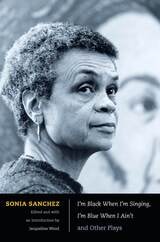
cover of I'm Black When I'm Singing, I'm Blue When I Ain't and Other Plays

I'm Black When I'm Singing, I'm Blue When I Ain't and Other Plays

Sonia Sanchez

Duke University Press, 2010
Sonia Sanchez is a prolific, award-winning poet and one of the most prominent writers in the Black Arts movement. This collection brings her plays together in one volume for the first time. Like her poetry, Sanchez’s plays voice her critique of the racism and sexism that she encountered as a young female writer in the black militant community in the late 1960s and early 1970s, her ongoing concern with the well-being of the black community, and her commitment to social justice. In addition to The Bronx Is Next (1968), Sister Son/ji (1969), Dirty Hearts (1971), Malcolm/Man Don’t Live Here No Mo (1972), and Uh, Uh; But How Do It Free Us? (1974), this collection includes the never-before-published dramas I’m Black When I’m Singing, I’m Blue When I Ain’t (1982) and 2 X 2 (2009), as well as three essays in which Sanchez reflects on her art and activism. Jacqueline Wood’s introduction illuminates Sanchez’s stagecraft in relation to her poetry and advocacy for social change, and the feminist dramatic voice in black revolutionary art.
[more]
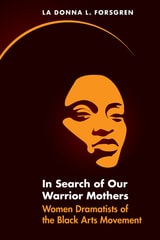
cover of In Search of Our Warrior Mothers: Women Dramatists of the Black Arts Movement

In Search of Our Warrior Mothers

Women Dramatists of the Black Arts Movement

La Donna L. Forsgren

Northwestern University Press, 2018

The Black Arts Movement (1965–76) consisted of artists across the United States deeply concerned with the relationship between politics and the black aesthetic. In Search of Our Warrior Mothers examines the ways in which black women playwrights in the movement advanced feminist and womanist perspectives from within black nationalist discourses. La Donna L. Forsgren recuperates the careers, artistic theories, and dramatic contributions of four leading playwrights: Martie Evans-Charles, J.e. Franklin, Sonia Sanchez, and Barbara Ann Teer. Using original interviews, production recordings, playbills, and unpublished manuscripts, she investigates how these women, despite operating within a context that equated the collective well-being of black people with black male agency, created works that validated black women's aspirations for autonomy and explored women's roles in the struggle for black liberation.

In Search of Our Warrior Mothers demonstrates the powerful contributions of women to the creation, interpretation, and dissemination of black aesthetic theory, thus opening an interdisciplinary conversation at the intersections of theater, performance, feminist, and African American studies and identifying and critiquing the gaps and silences within these fields.
[more]
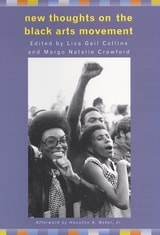
cover of New Thoughts on the Black Arts Movement

New Thoughts on the Black Arts Movement

Edited by Lisa Gail Collins and Margo Natalie Crawford

Rutgers University Press, 2006
During the 1960s and 1970s, a cadre of poets, playwrights, visual artists, musicians, and other visionaries came together to create a renaissance in African American literature and art. This charged chapter in the history of African American culture—which came to be known as the Black Arts Movement—has remained largely neglected by subsequent generations of critics. New Thoughts on the Black Arts Movement includes essays that reexamine well-known figures such as Amiri Baraka, Larry Neal, Gwendolyn Brooks, Sonia Sanchez, Betye Saar, Jeff Donaldson, and Haki Madhubuti. In addition, the anthology expands the scope of the movement by offering essays that explore the racial and sexual politics of the era, links with other period cultural movements, the arts in prison, the role of Black colleges and universities, gender politics and the rise of feminism, color fetishism, photography, music, and more. An invigorating look at a movement that has long begged for reexamination, this collection lucidly interprets the complex debates that surround this tumultuous era and demonstrates that the celebration of this movement need not be separated from its critique.
[more]
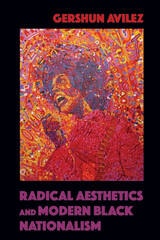
cover of Radical Aesthetics and Modern Black Nationalism

Radical Aesthetics and Modern Black Nationalism

GerShun Avilez

University of Illinois Press, 2016

Radical Aesthetics and Modern Black Nationalism explores the long-overlooked links between black nationalist activism and the renaissance of artistic experimentation emerging from recent African American literature, visual art, and film. GerShun Avilez charts a new genealogy of contemporary African American artistic production that illuminates how questions of gender and sexuality guided artistic experimentation in the Black Arts Movement from the mid-1960s to the mid-1970s. As Avilez shows, the artistic production of the Black Arts era provides a set of critical methodologies and paradigms rooted in the disidentification with black nationalist discourses. Avilez's close readings study how this emerging subjectivity, termed aesthetic radicalism, critiqued nationalist rhetoric in the past. It also continues to offer novel means for expressing black intimacy and embodiment via experimental works of art and innovative artistic methods.

A bold addition to an advancing field, Radical Aesthetics and Modern Black Nationalism rewrites recent black cultural production even as it uncovers unexpected ways of locating black radicalism.
[more]
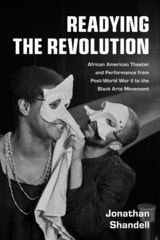
cover of Readying the Revolution: African American Theater and Performance from Post-World War II to the Black Arts Movement

Readying the Revolution

African American Theater and Performance from Post-World War II to the Black Arts Movement

Jonathan Shandell

University of Michigan Press, 2025

2026 American Theatre and Drama Society John W. Frick Book Award Winner

Starting in 1966, African American activist Stokely Carmichael and other political leaders adopted the phrase "Black Power!" The slogan captured a militant, revolutionary spirit that was already emerging in the work of playwrights, poets, musicians, and visual artists throughout the Black Arts movement of the mid-1960s. But the story of those theater artists and performers whose work helped bring about the Black Arts revolution has not fully been told. Readying the Revolution: African American Theater and Performance from Post-World War II to the Black Arts Movement explores the dynamic era of Black culture between the end of World War II and the start of the Black Arts Movement (1946-1964) by illuminating how artists and innovators such as Jackie Robinson, Lorraine Hansberry, Ossie Davis, Nina Simone, and others helped radicalize Black culture and Black political thought. In doing so, these artists defied white cultural hegemony in the United States, and built the foundation for the revolutionary movement in Black theater that followed in the mid 1960s. Through archival research, close textual reading, and an analysis of performance artifacts, Shandell demonstrates how these artists negotiated a space on the public stage for cultivating radical Black aesthetics and built the foundation for the revolutionary movement in Black theater that followed in the mid-1960s.

[more]
cover of SOS-Calling All Black People: A Black Arts Movement Reader

SOS-Calling All Black People

A Black Arts Movement Reader

Bracey John H.

University of Massachusetts Press, 0
[more]
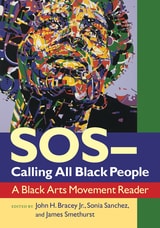
cover of SOS—Calling All Black People: A Black Arts Movement Reader

SOS—Calling All Black People

A Black Arts Movement Reader

John H. Bracey

University of Massachusetts Press, 2014

This volume brings together a broad range of key writings from the Black Arts Movement of the 1960s and 1970s, among the most significant cultural movements in American history. The aesthetic counterpart of the Black Power movement, it burst onto the scene in the form of artists' circles, writers' workshops, drama groups, dance troupes, new publishing ventures, bookstores, and cultural centers and had a presence in practically every community and college campus with an appreciable African American population. Black Arts activists extended its reach even further through magazines such as Ebony and Jet, on television shows such as Soul! and Like It Is, and on radio programs.

Many of the movement's leading artists, including Ed Bullins, Nikki Giovanni, Woodie King, Haki Madhubuti, Sonia Sanchez, Askia Touré, and Val Gray Ward remain artistically productive today. Its influence can also be seen in the work of later artists, from the writers Toni Morrison, John Edgar Wideman, and August Wilson to actors Avery Brooks, Danny Glover, and Samuel L. Jackson, to hip hop artists Mos Def, Talib Kweli, and Chuck D.

SOS—Calling All Black People includes works of fiction, poetry, and drama in addition to critical writings on issues of politics, aesthetics, and gender. It covers topics ranging from the legacy of Malcolm X and the impact of John Coltrane's jazz to the tenets of the Black Panther Party and the music of Motown. The editors have provided a substantial introduction outlining the nature, history, and legacy of the Black Arts Movement as well as the principles by which the anthology was assembled.
[more]
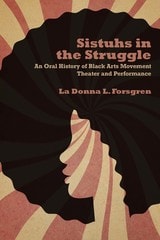
cover of Sistuhs in the Struggle: An Oral History of Black Arts Movement Theater and Performance

Sistuhs in the Struggle

An Oral History of Black Arts Movement Theater and Performance

La Donna L. Forsgren

Northwestern University Press, 2021

Outstanding Academic Title, CHOICE

The first oral history to fully explore the contributions of black women intellectuals to the Black Arts Movement, Sistuhs in the Struggle reclaims a vital yet under-researched chapter in African American, women’s, and theater history. This groundbreaking study documents how black women theater artists and activists—many of whom worked behind the scenes as directors, designers, producers, stage managers, and artistic directors—disseminated the black aesthetic and emboldened their communities.

Drawing on nearly thirty original interviews with well-known artists such as Ntozake Shange and Sonia Sanchez as well as less-studied figures including distinguished lighting designer Shirley Prendergast, dancer and choreographer Halifu Osumare, and three-time Tony-nominated writer and composer Micki Grant, La Donna L. Forsgren centers black women’s cultural work as a crucial component of civil rights and black power activism. Sistuhs in the Struggle is an essential collection for theater scholars, historians, and students interested in learning how black women’s art and activism both advanced and critiqued the ethos of the Black Arts and Black Power movements.
[more]
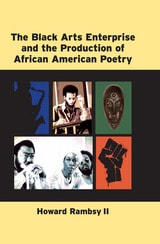
cover of The Black Arts Enterprise and the Production of African American Poetry

The Black Arts Enterprise and the Production of African American Poetry

Howard Rambsy II

University of Michigan Press, 2013

The outpouring of creative expression known as the Black Arts Movement of the 1960s and 1970s spawned a burgeoning number of black-owned cultural outlets, including publishing houses, performance spaces, and galleries. Central to the movement were its poets, who in concert with editors, visual artists, critics, and fellow writers published a wide range of black verse and advanced new theories and critical approaches for understanding African American literary art. 

The Black Arts Enterprise and the Production of African American Poetry offers a close examination of the literary culture in which BAM's poets (including Amiri Baraka, Nikki Giovanni, Sonia Sanchez, Larry Neal, Haki Madhubuti, Carolyn Rodgers, and others) operated and of the small presses and literary anthologies that first published the movement's authors. The book also describes the role of the Black Arts Movement in reintroducing readers to poets such as Langston Hughes, Robert Hayden, Margaret Walker, and Phillis Wheatley.

Focusing on the material production of Black Arts poetry, the book combines genetic criticism with cultural history to shed new light on the period, its publishing culture, and the writing and editing practices of its participants. Howard Rambsy II demonstrates how significant circulation and format of black poetic texts—not simply their content—were to the formation of an artistic movement. The book goes on to examine other significant influences on the formation of Black Arts discourse, including such factors as an emerging nationalist ideology and figures such as John Coltrane and Malcolm X.
[more]
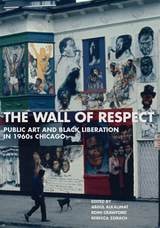
cover of The Wall of Respect: Public Art and Black Liberation in 1960s Chicago

The Wall of Respect

Public Art and Black Liberation in 1960s Chicago

Edited by Abdul Alkalimat, Romi Crawford, and Rebecca Zorach

Northwestern University Press, 2017

The Wall of Respect: Public Art and Black Liberation in 1960s Chicago is the first in-depth, illustrated history of a lost Chicago monument. The Wall of Respect was a revolutionary mural created by fourteen members of the Organization of Black American Culture (OBAC) on the South Side of Chicago in 1967. This book includes photographs by Darryl Cowherd, Bob Crawford, Roy Lewis, and Robert A. Sengstacke, and gathers historic essays, poetry, and previously unpublished primary documents from the movement’s founders that provide a guide to the work’s creation and evolution.

The Wall of Respect received national critical acclaim when it was unveiled on the side of a building at Forty-Third and Langley in Chicago’s Bronzeville neighborhood. Painters and photographers worked side by side on the mural's seven themed sections, which featured portraits of Black heroes and sheroes, among them John Coltrane, Nina Simone, Billie Holiday, Malcolm X, Muhammad Ali, and W. E. B. Du Bois. The Wall became a platform for music, poetry, and political rallies. Over time it changed, reflecting painful controversies among the artists as well as broader shifts in the Civil Rights and Black Liberation Movements.

At the intersection of African American culture, politics, and Chicago art history, The Wall of Respect offers, in one keepsake-quality work, an unsurpassed collection of images and essays that illuminate a powerful monument that continues to fascinate artists, scholars, and readers in Chicago and across the United States.
[more]
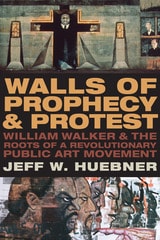
cover of Walls of Prophecy and Protest: William Walker and the Roots of a Revolutionary Public Art Movement

Walls of Prophecy and Protest

William Walker and the Roots of a Revolutionary Public Art Movement

Jeff W. Huebner

Northwestern University Press, 2019

Chicago is home to more intact African American street murals from the 1970s and ’80s than any other U.S. city. Among Chicago’s greatest muralists is the legendary William “Bill” Walker (1927–2011), compared by art historians to Diego Rivera and called the most accomplished contemporary practitioner of the classical mural tradition.

Though his art could not have been more public, Walker maintained a low profile during his working life and virtually withdrew from the public eye after his retirement in 1989. Author Jeff W. Huebner met Walker in 1990 and embarked on a series of insightful interviews that stretched over the next two decades. Those meetings and years of research form the basis of Walls of Prophecy and Protest, the story of Walker’s remarkable life and the movement that he inspired.

Featuring forty-three color images of Walker’s work, most long since destroyed or painted over, this handsome edition reveals the artist who was the primary figure behind Chicago’s famed Wall of Respect and who created numerous murals that depicted African American historical figures, protested social injustice, and promoted love, respect, racial unity, and community change.
[more]
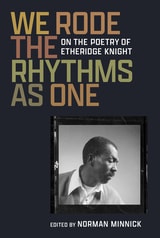
cover of We Rode the Rhythms as One: On the Poetry of Etheridge Knight

We Rode the Rhythms as One

On the Poetry of Etheridge Knight

Edited by Norman Minnick

University of Michigan Press, 2026

We Rode the Rhythms as One offers readers an immersive journey into the life and legacy of one of America’s most unorthodox and inspiring poets. More than just a literary analysis, this book captures the pulse of Etheridge Knight’s life, weaving together interviews, personal essays, letters, and critical pieces to form a vivid and multifaceted portrait. Through the voices of poets, scholars, students, and Knight himself, the book underscores the profound intersections of race, art, politics, and personal survival, revealing how Knight forged poetry from his struggles and shaped a community of voices from diverse backgrounds.

Knight’s story is one of transformation—an odyssey from hardship and incarceration to artistic prominence—anchored by his unwavering belief in the power of poetry to unite and heal. This comprehensive volume is also a historical and cultural exploration, situating Knight’s work amid the Black Arts Movement, the Civil Rights Movement, and the ongoing fight for social justice. Readers will find themselves drawn to Knight’s unfiltered voice, his reflections on Black identity, and his insistence on making poetry accessible to all—whether through intimate letters or reflections on the sociopolitical climate that shaped his art. Suitable for poetry enthusiasts, scholars, and general readers alike, We Rode the Rhythms as One invites us to reconsider Knight’s enduring impact and the vital role of poetry in reflecting and reshaping human experience.
[more]