Results by title
2 books match the query 'Black Belt'

Twenty-Five Years in the Black Belt
William J. Edwards
University of Alabama Press, 1993
A pioneering educator's firsthand account of building opportunity and hope in Alabama's Black Belt.
Twenty-Five Years in the Black Belt is one of the most important firsthand accounts of African American educational leadership and community development in the post-Reconstruction South. Originally published in 1918, this memoir by educator and institution-builder William J. Edwards documents his extraordinary efforts to create educational opportunities for Black citizens in Alabama's Black Belt during a period marked by segregation, economic hardship, and limited access to public resources.
Born in Snow Hill, Alabama, in 1869, Edwards rose from humble beginnings to attend the Tuskegee Institute under the leadership of Booker T. Washington. Inspired by Tuskegee's philosophy of education, self-reliance, and community advancement, he returned to rural Alabama determined to establish an institution that could provide both academic and practical instruction to African American students. His efforts led to the founding of the Snow Hill Institute in 1893, a school that became a vital center of learning and leadership for generations of Black Alabamians.
The memoir also offers valuable insight into the educational philosophies that shaped African American advancement in the late nineteenth and early twentieth centuries. Edwards reflects on the influence of Booker T. Washington, the role of industrial and vocational education, fundraising efforts in the North, the Jeanes Fund, public-school reform, and the broader movement for racial uplift through education. His account illuminates the networks of educators, supporters, and community leaders who worked to expand opportunities for African Americans throughout the South.
At once inspirational and historically significant, Twenty-Five Years in the Black Belt remains an essential source for understanding African American education, Southern race relations, and the determination of Black communities to create institutions that fostered dignity, opportunity, and progress. It stands as both a personal testament and a crucial historical document chronicling a transformative era in American history.
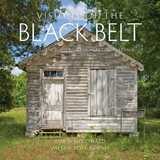
Visions of the Black Belt
A Cultural Survey of the Heart of AlabamaRobin McDonald and Valerie Pope Burnes
University of Alabama Press, 2015
Capturing the soul of the South’s Black Belt.
In Visions of the Black Belt, Robin McDonald and Valerie Pope Burnes offer a richly illustrated tour of the Black Belt, the fertile arc that represents the cultural efflorescence of Alabama’s heartland. Like knowledgeable friends, McDonald and Burnes guide readers through the Black Belt’s towns and architecture and introduce the region’s great panoply of citizens, farmers, craftspeople, cooks, writers, and musicians.
A constellation of Black Belt towns arose during Alabama’s territorial decades, communities like Selma, Camden, Eutaw, Tuskegee, Greenville, and many more. Visions of the Black Belt recounts their stories and others, such as Demopolis’s founding by exiles from Napoleon’s France. As an escarpment of clouds scuds across an indigo sky, the ruins of Alabama’s lost capital of Cahaba reveal the secrets of its lost squares. Also on this picturesque tour are the Black Belt’s homes, from artless cabins wreathed in fern to ozymandian manses wrapped by stately columns, such as Kirkwood and Reverie.
Among the emblematic houses of worship lovingly photographed in Visions of the Black Belt is Prairieville’s St. Andrew’s Episcopal Church, noted for its “carpenter gothic” style. Also reflecting the region’s history of faith are poignant graveyards such as Greenville’s Pioneer Cemetery with its homespun memorials of seashell-and-concrete and the elegant marbles clad in ebon lichen of Selma's Live Oak Cemetery.
In photos and text, McDonald and Burnes bring to life the layers of history that shaped the Black Belt’s tastes, sounds, and colors. Their gastronomic discoveries include the picant crawfish of the Faunsdale Bar & Grill and GainesRidge Dining Club’s famed Black Bottom pie. They bring the sounds of the Black Belt to life by presenting a wide range of musicians and musical events, from bona fide blues and soul masters to Eutaw’s Black Belt Roots Festival.
Including two maps and more than 370 full-color photographs, Visions of the Black Belt offers a timeless message of faith, determination, and the rich simplicity of living in harmony with the rhythms of the land and nature.
Published in Cooperation with the Black Belt Treasures Cultural Arts Center, Camden, Alabama.