Results by title
3 books match the query 'Black Girls'

Downed by Friendly Fire
Black Girls, White Girls, and Suburban SchoolingSignithia Fordham
University of Minnesota Press, 2016
Most Americans would never willingly revisit their high school experiences; the nation’s school systems reflect the broader society’s hierarchical emphasis on race, class, and gender. While schools purport to provide equal opportunities for all students, this rarely happens in actuality—particularly for girls.
In Downed by Friendly Fire, Signithia Fordham unmasks and examines female-centered bullying in schools, arguing that it is essential to unmask female aggression, bullying, and competition, all of which directly relate to the structural violence embedded in the racialized and gendered social order. For two and a half years, Fordham conducted field research at “Underground Railroad High School,” a suburban high school in upstate New York. Through a series of composite student profiles, she examines the girls’ relationships to academic achievement, social competition, and aggression toward one another. Fordham argues that girls academically “compete to lose,” which only perpetuates their subordination through the misrecognition of their own competitive behaviors. She goes further to expand the meaning of violence to include what is seen as normal, including suffering, humiliation, and social and economic abuse.
Using the concept “symbolic violence,” Fordham theorizes the psychological and social damage suffered especially by black girls in schools. The five narratives in Downed by Friendly Fire ultimately highlight the pain and suffering this violence produces as well as the ways in which it promotes inequality, exclusion, and marginalization among girls.
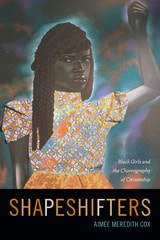
Shapeshifters
Black Girls and the Choreography of CitizenshipAimee Meredith Cox
Duke University Press, 2015

The Global History of Black Girlhood
Edited by Corinne T. Field and LaKisha Michelle Simmons
University of Illinois Press, 2022
Thought-provoking and original, The Global History of Black Girlhood opens up new possibilities for understanding Black girls in the past while offering useful tools for present-day Black girls eager to explore the histories of those who came before them.
Contributors: Janaé E. Bonsu, Ruth Nicole Brown, Tara Bynum, Casidy Campbell, Katherine Capshaw, Bev Palesa Ditsie, Sarah Duff, Cynthia Greenlee, Claudrena Harold, Anasa Hicks, Lindsey Jones, Phindile Kunene, Denise Oliver-Velez, Jennifer Palmer, Vanessa Plumly, Shani Roper, SA Smythe, Nastassja Swift, Dara Walker, Najya Williams, and Nazera Wright