Results by title
2 books match the query 'Black Mountain College (Black Mountain, N.C.)'
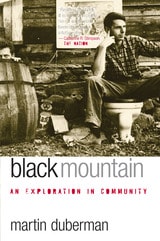
Black Mountain
An Exploration in CommunityMartin Duberman
Northwestern University Press, 2009
With faculty and alumni that included John Cage, Robert Creeley, Merce Cunningham, Buckminster Fuller, Charles Olson, Josef and Anni Albers, Paul Goodman, and Robert Rauschenberg, Black Mountain College ranked among the most important artistic and intellectual communities of the twentieth century. In his groundbreaking history, Martin Duberman uses interviews, anecdotes, and research to depict the relationships that made Black Mountain College what it was. Black Mountain documents the college’s twenty-three-year tenure, from its most brilliant moments of self-reinvention to its lowest moments of petty infighting. It records the financial difficulties that beleaguered the community throughout its existence and the determination it took to keep the college in operation. Duberman creates a nuanced portrait of this community so essential to the development of American arts and counterculture.
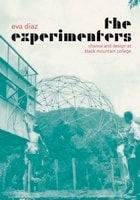
The Experimenters
Chance and Design at Black Mountain CollegeEva Díaz
University of Chicago Press, 2014
Díaz’s focus is on experimentation. Albers, Cage, and Fuller, she shows, taught new models of art making that favored testing procedures rather than personal expression. These methodologies represented incipient directions for postwar art practice, elements of which would be sampled, and often wholly adopted, by Black Mountain students and subsequent practitioners. The resulting works, which interrelate art and life in a way that imbues these projects with crucial relevance, not only reconfigured the relationships among chance, order, and design—they helped redefine what artistic practice was, and could be, for future generations.
Offering a bold, compelling new angle on some of the most widely studied creative figures of modern times, The Experimenters does nothing less than rewrite the story of art in the mid-twentieth century.