Results by title
12 books match the query 'Black Panther Party'
Black Power White Blood
Lori Andrews
Temple University Press, 1999
At six years old, already the target of name-calling children and threatening adults, he could not attend school with his older brother. Only decades later would he be told why the Armstrongs sent him to live with a black family in Los Angeles. As Johnny came of age, he thought of himself as having been rejected by his white family as well as by his black peers. His erratic, destructive behavior put him on a collision course with the penal system; he was only seventeen when convicted of murder and sent to Soledad.
Drawn into the black power movement and the Black Panther Party by fellow inmate, the charismatic George Jackson, Spain became a dynamic force for uniting prisoners once divided by racial hatred. He committed himself to the cause of prisoners' rights, impressing inmates, prison officials, and politicians with his intelligence and passion. Nevertheless, among the San Quentin Six, only he was convicted of conspiracy after Jackson's failed escape attempt.
Lori Andrews, a professor of law, vividly portrays the dehumanizing conditions in the prisons, the pervasive abuses in the criminal justice system, and the case for overturning Spain's conspiracy conviction. Spain's personal transformation is the heart of the book, but Andrews frames it within an indictment of intolerance and injustice that gives this individual's story broad significance.
Black Power in the Belly of the Beast
Edited by Judson L. Jeffries
University of Illinois Press, 2006
The volume’s twelve contributors include well-known scholars such as James A. Geschwender and Douglas Glasgow as well as prominent community activists Akbar Muhammad Ahmad, Floyd W. Hayes III, and Komozi Woodard. Each of their chapters explores a single Black Power organization including Us, the Black Panther Party, and the Deacons for Defense and Justice. Important but lesser-known Black Power organizations such as the Republic of New Afrika and Sons of Watts are paid equal attention, as contributors address issues including self-defense, Black identity, and the politics of class and gender. Throughout, authors emphasize the primary role that Black institutions and charismatic leaders played in the rise, development, and eventual decline of the overall movement.
Body and Soul
The Black Panther Party and the Fight against Medical DiscriminationAlondra Nelson
University of Minnesota Press, 2013
Between its founding in 1966 and its formal end in 1980, the Black Panther Party blazed a distinctive trail in American political culture. The Black Panthers are most often remembered for their revolutionary rhetoric and militant action. Here Alondra Nelson deftly recovers an indispensable but lesser-known aspect of the organization’s broader struggle for social justice: health care. The Black Panther Party’s health activism—its network of free health clinics, its campaign to raise awareness about genetic disease, and its challenges to medical discrimination—was an expression of its founding political philosophy and also a recognition that poor blacks were both underserved by mainstream medicine and overexposed to its harms.
Drawing on extensive historical research as well as interviews with former members of the Black Panther Party, Nelson argues that the Party’s focus on health care was both practical and ideological. Building on a long tradition of medical self-sufficiency among African Americans, the Panthers’ People’s Free Medical Clinics administered basic preventive care, tested for lead poisoning and hypertension, and helped with housing, employment, and social services. In 1971, the party launched a campaign to address sickle-cell anemia. In addition to establishing screening programs and educational outreach efforts, it exposed the racial biases of the medical system that had largely ignored sickle-cell anemia, a disease that predominantly affected people of African descent.
The Black Panther Party’s understanding of health as a basic human right and its engagement with the social implications of genetics anticipated current debates about the politics of health and race. That legacy—and that struggle—continues today in the commitment of health activists and the fight for universal health care.

Death's Futurity
The Visual Life of Black PowerSampada Aranke
Duke University Press, 2023
Framing the Black Panthers
The Spectacular Rise of a Black Power IconJane Rhodes
University of Illinois Press, 2017
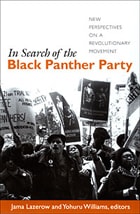
In Search of the Black Panther Party
New Perspectives on a Revolutionary MovementJama Lazerow and Yohuru Williams, eds.
Duke University Press, 2006
One contributor evaluates the legal basis of the Panthers’ revolutionary struggle, explaining how they utilized and critiqued the language of the Constitution. Others explore the roles of individuals, looking at a one-time Panther imprisoned for a murder he did not commit and an FBI agent who monitored the activities of the Panthers’ Oakland branch. Contributors assess the Panthers’ relations with Students for a Democratic Society, the Young Lords, the Brown Berets, and the Peace and Freedom Party. They discuss the Party’s use of revolutionary aesthetics, and they show how the Panthers manipulated and were manipulated by the media. Illuminating some of the complexities involved in placing the Panthers in historical context, this collection demonstrates that the scholarly search for the Black Panthers has only just begun.
Contributors. Bridgette Baldwin, Davarian L. Baldwin, David Barber, Rod Bush, James T. Campbell, Tim Lake, Jama Lazerow, Edward P. Morgan, Jeffrey O. G. Ogbar, Roz Payne, Robert O. Self, Yohuru Williams, Joel Wilson
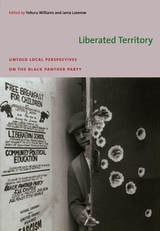
Liberated Territory
Untold Local Perspectives on the Black Panther PartyYohuru Williams and Jama Lazerow, eds.
Duke University Press, 2008
The histories and character of the party branches vary as widely as their locations. The Cape Verdeans of New Bedford, Massachusetts, were initially viewed as a particular challenge for the local Panthers but later became the mainstay of the Boston-area party. In the early 1970s, the Winston-Salem, North Carolina, chapter excelled at implementing the national Black Panther Party’s strategic shift from revolutionary confrontation to mainstream electoral politics. In Detroit, the Panthers were defined by a complex relationship between their above-ground activities and an underground wing dedicated to armed struggle. While the Milwaukee chapter was born out of a rising tide of black militancy, it ultimately proved more committed to promoting literacy and health care and redressing hunger than to violence. The Alabama Black Liberation Front did not have the official imprimatur of the national party, but it drew heavily on the Panthers’ ideas and organizing strategies, and its activism demonstrates the broad resonance of many of the concerns articulated by the national party: the need for jobs, for decent food and housing, for black self-determination, and for sustained opposition to police brutality against black people. Liberated Territory reveals how the Black Panther Party’s ideologies, goals, and strategies were taken up and adapted throughout the United States.
Contributors: Devin Fergus, Jama Lazerow, Ahmad A. Rahman, Robert W. Widell Jr., Yohuru Williams
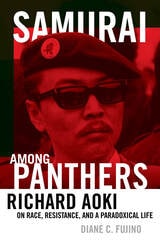
Samurai among Panthers
Richard Aoki on Race, Resistance, and a Paradoxical LifeDiane C. Fujino
University of Minnesota Press, 2012
An iconic figure of the Asian American movement, Richard Aoki (1938–2009) was also, as the most prominent non-Black member of the Black Panther Party, a key architect of Afro-Asian solidarity in the 1960s and ’70s. His life story exposes the personal side of political activism as it illuminates the history of ethnic nationalism and radical internationalism in America.
A reflection of this interconnection, Samurai among Panthers weaves together two narratives: Aoki’s dramatic first-person chronicle and an interpretive history by a leading scholar of the Asian American movement, Diane C. Fujino. Aoki’s candid account of himself takes us from his early years in Japanese American internment camps to his political education on the streets of Oakland, to his emergence in the Black Panther Party. As his story unfolds, we see how his parents’ separation inside the camps and his father’s illegal activities shaped the development of Aoki’s politics. Fujino situates his life within the context of twentieth-century history—World War II, the Cold War, and the protests of the 1960s. She demonstrates how activism is both an accidental and an intentional endeavor and how a militant activist practice can also promote participatory democracy and social service.
The result of these parallel voices and analysis in Samurai among Panthers is a complex—and sometimes contradictory—portrait of a singularly extraordinary activist and an expansion and deepening of our understanding of the history he lived.

Showdown in Desire
The Black Panthers Take a Stand in New OrleansOrissa Arend
University of Arkansas Press, 2009

Survival Pending Revolution
The History of the Black Panther PartyPaul Alkebulan
University of Alabama Press, 2007
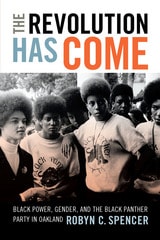
The Revolution Has Come
Black Power, Gender, and the Black Panther Party in OaklandRobyn C. Spencer
Duke University Press, 2016
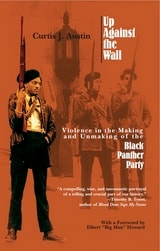
Up Against the Wall
Violence in the Making and Unmaking of the Black Panther PartyCurtis J. Austin
University of Arkansas Press, 2008