Results by title

3 books match the query 'Black Space'

cover of Black Space: Imagining Race in Science Fiction Film

Black Space

Imagining Race in Science Fiction Film

By Adilifu Nama

University of Texas Press, 2008

Winner, Rollins Book Award, Southwest Texas Popular Culture Association/American Culture Association, 2008

Science fiction film offers its viewers many pleasures, not least of which is the possibility of imagining other worlds in which very different forms of society exist. Not surprisingly, however, these alternative worlds often become spaces in which filmmakers and film audiences can explore issues of concern in our own society. Through an analysis of over thirty canonic science fiction (SF) films, including Logan's Run, Star Wars, Blade Runner, Back to the Future, Gattaca, and Minority Report, Black Space offers a thorough-going investigation of how SF film since the 1950s has dealt with the issue of race and specifically with the representation of blackness.

Setting his study against the backdrop of America's ongoing racial struggles and complex socioeconomic histories, Adilifu Nama pursues a number of themes in Black Space. They include the structured absence/token presence of blacks in SF film; racial contamination and racial paranoia; the traumatized black body as the ultimate signifier of difference, alienness, and "otherness"; the use of class and economic issues to subsume race as an issue; the racially subversive pleasures and allegories encoded in some mainstream SF films; and the ways in which independent and extra-filmic productions are subverting the SF genre of Hollywood filmmaking.

The first book-length study of African American representation in science fiction film, Black Space demonstrates that SF cinema has become an important field of racial analysis, a site where definitions of race can be contested and post-civil rights race relations (re)imagined.

[more]
cover of Black Space: Negotiating Race, Diversity, and Belonging in the Ivory Tower

Black Space

Negotiating Race, Diversity, and Belonging in the Ivory Tower

Sherry L. Deckman

Rutgers University Press, 2022
Protests against racial injustice and anti-Blackness have swept across elite colleges and universities in recent years, exposing systemic racism and raising questions about what it means for Black students to belong at these institutions. In Black Space, Sherry L. Deckman takes us into the lives of the members of the Kuumba Singers, a Black student organization at Harvard with racially diverse members, and a self-proclaimed safe space for anyone but particularly Black students. Uniquely focusing on Black students in an elite space where they are the majority, Deckman provides a case study in how colleges and universities might reimagine safe spaces. Through rich description and sharing moments in students’ everyday lives, Deckman demonstrates the possibilities and challenges Black students face as they navigate campus culture and the refuge they find in this organization. This work illuminates ways administrators, faculty, student affairs staff, and indeed, students themselves, might productively address issues of difference and anti-Blackness for the purpose of fostering critically inclusive campus environments.
 
[more]
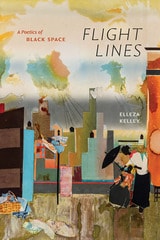
cover of Flight Lines: A Poetics of Black Space

Flight Lines

A Poetics of Black Space

Elleza Kelley

Duke University Press, 2026

In Flight Lines, Elleza Kelley argues that African American art and writing make visible the unmappable dimensions of black space, not simply by depicting black worlds but by registering how black spatial praxis takes form under conditions of racial enclosure. Reading across literature and visual art, from W. E. B. Du Bois and Zora Neale Hurston to Faith Ringgold, Romare Bearden, and Gwendolyn Brooks, Kelley tracks spatial knowledge across media and contends that where mediums meet, black aesthetic form emerges as a crucial site for conceptualizing black space in the United States. Moving from Southern landscapes shaped by racialized property to the postmigration geographies of Harlem and Chicago, Flight Lines follows fences, railroads, blocks, apartments, and rooftops as sites where enclosure is contested, improvised on, and transformed. Proposing that black space and black form are mutually constitutive, Kelley shows how black aesthetics illuminate the racial operations of enclosure while preserving alternative ways of inhabiting, sensing, and remaking racialized worlds.
[more]