Results by title
36 books match the query 'Black Women'
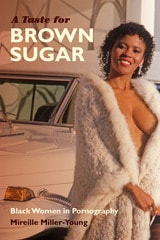
A Taste for Brown Sugar
Black Women in PornographyMireille Miller-Young
Duke University Press, 2014
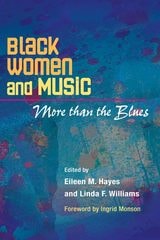
Black Women and Music
More Than the BluesEdited by Eileen M. Hayes and Linda F. Williams
University of Illinois Press, 2006
Individual essays concern the experiences of black women in classical music and in contemporary blues, the history of black female gospel-inflected voices in the Broadway musical, and "hip-hop feminism" and its complications. Focusing on under-examined contexts, authors introduce readers to the work of a prominent gospel announcer, women’s music festivals (predominantly lesbian), and to women’s involvement in an early avant-garde black music collective. In contradistinction to a compilation of biographies, this volume critically illuminates themes of black authenticity, sexual politics, access, racial uplift through music, and the challenges of writing (black) feminist biography. Black Women and Music is a strong reminder that black women have been and are both social actors and artists contributing to African American thought.
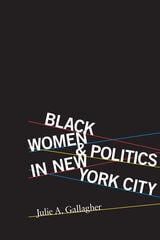
Black Women and Politics in New York City
Julie A. Gallagher
University of Illinois Press, 2014
Historian and human rights activist Julie A. Gallagher deftly examines how race, gender, and the structure of the state itself shape outcomes, and exposes the layers of power and discrimination at work in American society. She combines her analysis with a look at the career of Shirley Chisholm, the first black woman elected to Congress and the first to run for president on a national party ticket. In so doing, she rewrites twentieth-century women's history and the dominant narrative arcs of feminist history that hitherto ignored African American women and their accomplishments.
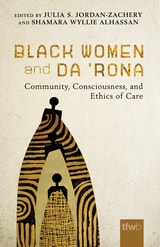
Black Women and da ’Rona
Community, Consciousness, and Ethics of CareEdited by Julia S. Jordan-Zachery and Shamara Wyllie Alhassan
University of Arizona Press, 2023
Recognizing that Black women have been living in pandemics as far back as colonialism and enslavement, this volume acknowledges that records of the past—from the 1918 flu pandemic to the onset of the HIV/AIDS epidemic—often erase the existence and experiences of Black women as a whole. Writing against this archival erasure, this collection consciously recenters the real-time experiences and perspectives of care, policy concerns, grief, and joy of Black women throughout the COVID-19 pandemic.
Nineteen contributors from interdisciplinary fields and diverse backgrounds explore Black feminine community, consciousness, ethics of care, spirituality, and social critique. They situate Black women’s multidimensional experiences with COVID-19 and other violences that affect their lives. The stories they tell are connected and interwoven, bound together by anti-Black gendered COVID necropolitics and commitments to creating new spaces for breathing, healing, and wellness.
Ultimately, this time-warping analysis shows how Black women imagine a more just society, rapidly adapt to changing experiences, and innovate ethics of care even in the midst of physical distancing, which can be instructive for thinking of new ways of living both during and beyond the era of COVID-19.
Contributors
Shamara Wyllie Alhassan
Sharnnia Artis
Keisha L. Bentley-Edwards
Candace S. Brown
Jenny Douglas
Kaja Dunn
Onisha Etkins
Rhonda M. Gonzales
Endia Hayes
Ashley E. Hollingshead
Kendra Jason
Julia S. Jordan-Zachery
Stacie LeSure
Janaka B. Lewis
Michelle Meggs
Nitya Mehrotra
Sherine Andreine Powerful
Marjorie Shavers
Breauna Marie Spencer
Tehia Starker Glass
Amber Walker
Black Women in America
Social Science PerspectivesEdited by Micheline R. Malson, Elisabeth Mudimbe-Boyi, Jean F. O'Barr, and Mary
University of Chicago Press, 1990
An eloquent introduction to the development of Black feminist thought, Black Women in America encourages the discussion of broader issues, such as the treatment of cultural diversity in American higher education.
Black Women in Latin America and the Caribbean
Critical Research and PerspectivesMelanie A. Medeiros
Rutgers University Press, 2023
Black Women, Identity, and Cultural Theory
(Un)Becoming the SubjectKevin Everod Quashie
Rutgers University Press, 2004
In Black Women, Identity, and Cultural Theory, Kevin Everod Quashie explores the metaphor of the “girlfriend” as a new way of understanding three central concepts of cultural studies: self, memory, and language. He considers how the work of writers such as Toni Morrison, Ama Ata Aidoo, Dionne Brand, photographer Lorna Simpson, and many others, inform debates over the concept of identity. Quashie argues that these authors and artists replace the notion of a stable, singular identity with the concept of the self developing in a process both communal and perpetually fluid, a relationship that functions in much the same way that an adult woman negotiates with her girlfriend(s). He suggests that memory itself is corporeal, a literal body that is crucial to the process of becoming. Quashie also explores the problem language poses for the black woman artist and her commitment to a mastery that neither colonizes nor excludes.
The analysis throughout interacts with schools of thought such as psychoanalysis, postmodernism, and post-colonialism, but ultimately moves beyond these to propose a new cultural aesthetic, one that ultimately aims to center black women and their philosophies.
Blues Mamas and Broadway Belters
Black Women, Voice, and the Musical StageMasi Asare
Duke University Press, 2024
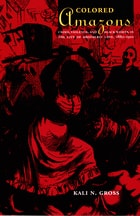
Colored Amazons
Crime, Violence, and Black Women in the City of Brotherly Love, 1880–1910Kali N. Gross
Duke University Press, 2006
Gross draws on prison records, trial transcripts, news accounts, and rare mug shot photographs. Providing an overview of Philadelphia’s black women criminals, she describes the women’s work, housing, and leisure activities and their social position in relation to the city’s native-born whites, European immigrants, and elite and middle-class African Americans. She relates how news accounts exaggerated black female crime, trading in sensationalistic portraits of threatening “colored Amazons,” and she considers criminologists’ interpretations of the women’s criminal acts, interpretations largely based on notions of hereditary criminality. Ultimately, Gross contends that the history of black female criminals is in many ways a history of the rift between the political rhetoric of democracy and the legal and social realities of those marginalized by its shortcomings.
Continually Working
Black Women, Community Intellectualism, and Economic Justice in Postwar MilwaukeeCrystal Marie Moten
Vanderbilt University Press, 2023
Moten emphasizes the ways in which Black women transformed the urban landscape by simultaneously occupying spaces from which they had been historically excluded and creating their own spaces. Black women refused to be marginalized within the historically white and middle‑class Milwaukee Young Women's Christian Association (MYWCA), an association whose mission centered on supporting women in urban areas. Black women forged interracial relationships within this organization and made it, not without much conflict and struggle, one of the most socially progressive organizations in the city. When Black women could not integrate historically white institutions, they created their own. They established financial and educational institutions, such as Pressley School of Beauty Culture, which beautician Mattie Pressley DeWese opened in 1946 as a result of segregation in the beauty training industry. This school served economic, educational, and community development purposes as well as created economic opportunities for Black women. Historically and contemporarily, Milwaukee has been and is still known as one of the most segregated cities in the nation. Black women have always contested urban inequality, by making space for themselves and others on the margins. In so doing, they have transformed both the urban landscape and urban history.
Demonic Grounds
Black Women And The Cartographies Of StruggleKatherine McKittrick
University of Minnesota Press, 2006
Demonic Grounds moves between past and present, archives and fiction, theory and everyday, to focus on places negotiated by black women during and after the transatlantic slave trade. Specifically, the author addresses the geographic implications of slave auction blocks, Harriet Jacobs’s attic, black Canada and New France, as well as the conceptual spaces of feminism and Sylvia Wynter’s philosophies.
Central to McKittrick’s argument are the ways in which black women are not passive recipients of their surroundings and how a sense of place relates to the struggle against domination. Ultimately, McKittrick argues, these complex black geographies are alterable and may provide the opportunity for social and cultural change.
Katherine McKittrick is assistant professor of women’s studies at Queen’s University.

Demonic Grounds
Black Women and the Cartographies of Struggle (20th Anniversary Edition)Katherine McKittrick
University of Minnesota Press, 2026
The field-defining text for black geographies—now with a new foreword and afterword
The initial publication of Demonic Grounds in 2006 marked a watershed for the field of geography: revealing how human geographies are a result of racialized connections and black placemaking practices, this book opened the discipline to feminist, interdisciplinary, and black perspectives. Katherine McKittrick traces the geographies of black women across the diaspora, arguing that the spaces they inhabit are marked by legacies of violence and slavery while also being sites of unacknowledged political power. Making a forceful claim, she identifies rich opportunities within black geographies for social and cultural change and rebellion. With a new foreword by Simone Browne and comments from Sylvia Wynter on the original edition as an afterword, this twentieth-anniversary edition celebrates Demonic Grounds and its ongoing influence on twenty-first century geography.
Retail e-book files for this title are screen-reader friendly.

Divas on Screen
Black Women in American FilmMia Mask
University of Illinois Press, 2008
This insightful study places African American women's stardom in historical and industrial contexts by examining the star personae of five African American women: Dorothy Dandridge, Pam Grier, Whoopi Goldberg, Oprah Winfrey, and Halle Berry. Interpreting each woman's celebrity as predicated on a brand of charismatic authority, Mia Mask shows how these female stars have ultimately complicated the conventional discursive practices through which blackness and womanhood have been represented in commercial cinema, independent film, and network television.
Mask examines the function of these stars in seminal yet underanalyzed films. She considers Dandridge's status as a sexual commodity in films such as Tamango, revealing the contradictory discourses regarding race and sexuality in segregation-era American culture. Grier's feminist-camp performances in sexploitation pictures Women in Cages and The Big Doll House and her subsequent blaxploitation vehicles Coffy and Foxy Brown highlight a similar tension between representing African American women as both objectified stereotypes and powerful, self-defining icons. Mask reads Goldberg's transforming habits in Sister Act and The Associate as representative of her unruly comedic routines, while Winfrey's daily television performance as self-made, self-help guru echoes Horatio Alger narratives of success. Finally, Mask analyzes Berry's meteoric success by acknowledging the ways in which Dandridge's career made Berry's possible.
Fighting Words
Black Women and the Search for JusticePatricia Hill Collins
University of Minnesota Press, 1998
Further To Fly
Black Women and the Politics of EmpowermentSheila Radford-Hill
University of Minnesota Press, 2000
How feminism has failed African American women and why they must fight back.
Amid the longest-running economic boom in American history and despite the emergence of a significant black middle class, the lot of low-income black people in general-and black women in particular-seems more troubling than ever. Their plight, Sheila Radford-Hill argues in this book, is directly related to the diminution of black women’s traditional power as culture bearers and community builders. A cogent critique of feminist theory and practice, Further to Fly identifies the failure of feminism to connect with the social realities it should seek to explain, in particular the decline of black women’s empowerment.
Further to Fly searches out the causes and effects of this decline, describing the ways in which, since the 1960s, black women have been stripped of their traditional status as agents of change in the community-and how, as a result, the black community has faltered. Radford-Hill explores the shortcomings of second-wave black and white feminism, revealing how their theoretical underpinnings have had unintended (and often unacknowledged) negative consequences for black women’s lives and their communities.While acknowledging that African American women have made significant contributions to the black struggle for justice in America, Radford-Hill argues that more needs to be done. She combines social criticism and critical analysis to argue that black women must revive their legacy of activism and reclaim the tradition of nurturing in the black community, proposing specific tactics that can be used to revive the support networks that help determine the obligations of community members and guide how people interact on an everyday level. As a deft account of genesis and effects of black women’s diminishing power, and as a sobering analysis of the devastating blunders of feminist theory and practice, this work makes a compelling argument for an "authentic feminism," one that aggressively connects the realities of women’s experiences, needs, aspirations, and responsibilities.
Hiding in Plain Sight
Black Women, the Law, and the Making of a White Argentine RepublicErika Denise Edwards
University of Alabama Press, 2020
WINNER OF THE ASSOCIATION OF BLACK WOMEN HISTORIANS 2020 LETITIA WOODS-BROWN AWARD FOR THE BEST BOOK IN AFRICAN AMERICAN WOMEN'S HISTORY
WINNER OF THE WESTERN ASSOCIATION OF WOMEN HISTORIAN'S BARBARA “PENNY” KANNER AWARD
2021 FINALIST FOR THE HARRIET TUBMAN BOOK PRIZE
2020 FINALIST BERSHIRE CONFERENCE OF WOMEN HISTORIANS BOOK PRIZE
Uncovering the Afro-Argentine women behind the myth of a white nation.
Argentina promotes itself as a country of European immigrants. This makes it an exception to other Latin American countries, which embrace a more mixed—African, Indian, European—heritage. Hiding in Plain Sight: Black Women, the Law, and the Making of a White Argentine Republic traces the origins of what some white Argentines mischaracterize as a “black disappearance” by delving into the intimate lives of black women and explaining how they contributed to the making of a “white” Argentina. Erika Denise Edwards has produced the first comprehensive study in English of the history of African descendants outside of Buenos Aires in the late colonial and early republican periods, with a focus on how these women sought whiteness to better their lives and that of their children.
Edwards argues that attempts by black women to escape the stigma of blackness by recategorizing themselves and their descendants as white began as early as the late eighteenth century, challenging scholars who assert that the black population drastically declined at the end of the nineteenth century because of the whitening or modernization process. She further contends that in Córdoba, Argentina, women of African descent (such as wives, mothers, daughters, and concubines) were instrumental in shaping their own racial reclassifications and destinies.
This volume makes use of a wealth of sources to relate these women’s choices. The sources consulted include city censuses and notarial and probate records that deal with free and enslaved African descendants; criminal, ecclesiastical, and civil court cases; marriages and baptisms records and newsletters. These varied sources provide information about the day-to-day activities of cordobés society and how women of African descent lived, formed relationships, thrived, and partook in the transformation of racial identities in Argentina.
In Praise of Black Women, Volume 1
Ancient African QueensSimone Schwarz-Bart with Andre Schwarz-Bart
University of Wisconsin Press, 2001
Volume 1: Ancient African Queens weaves together oral tradition, folk legends and stories, songs and poems, historical accounts, and travelers’ tales from Egypt to southern Africa, from prehistory to the nineteenth century. These women rulers, warriors, and heroines include Amanirenas, the queen of Kush who battled Roman armies and defeated them at Aswan; Daurama, mother of the seven Hausa kingdoms; Amina Kulibali, founder of the Gabu dynasty in Senegal; Ana de Sousa Nzinga, who resisted the Portuguese conquest of Angola; Beatrice Kimpa Vita, a Kongo prophet burned at the stake by Christian missionaries; Nanda, mother of the famous warrior-king Shaka Zulu; and many others.
These extraordinary women's stories, narrated in the style of African oral tradition, are absorbing, informative, and accessible. The abundant illustrations, many of them rare archival images, depict the diversity among Black women and make this volume a unique treasure for every art lover, every school, and every family.
Materia Medica
Black Women, White Doctors, and Spectacular GynecologyNicole N. Ivy
Duke University Press, 2026
Pitfalls of Prestige
Black Women and Literary RecognitionLaura Elizabeth Vrana
The Ohio State University Press, 2024
Winner, 2025 College Language Association Book Award
From 1987, when Rita Dove won the Pulitzer Prize for Poetry, to 2021, when Amanda Gorman skyrocketed to celebrity status after performing during Biden’s inauguration and the Super Bowl, Black women have seemingly attained secure, stable positions at the forefront of American poetry. But this prominence comes at a price. As figures like Dove and Elizabeth Alexander have become well known, receiving endorsements and gaining visible platforms from major prizes, academic institutions, and publishing houses, the underlying terms of evaluation that greet Black women’s poetics often remain superficial, reflecting efforts to co-opt and contain rather than meaningfully consider new voices and styles. In Pitfalls of Prestige, Laura Elizabeth Vrana surveys how developments in American literary institutions since 1980 have shaped—and been shaped by—Black women poets. Grappling with the refulgent works of the most acclaimed contemporary figures alongside those of lesser-known poets, Vrana both elucidates how seeming gestures of inclusion can actually result in constraining Black women poets’ works and also celebrates how these writers draw on a rich lineage and forge alternative communities in order to craft continually innovative modes of transgressing such limits, on the page and in life.
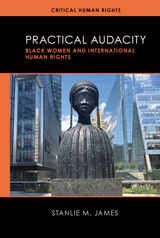
Practical Audacity
Black Women and International Human RightsStanlie James
University of Wisconsin Press, 2022
Stanlie M. James weaves narratives by and about these women throughout the history of the field, illustrating how they conceptualize, develop, and implement human rights. By centering the courage and innovative interventions of capable and visionary Black women, she places them rightfully alongside such figures as Thurgood Marshall and Charles Hamilton Houston. This volume fundamentally shifts the frame through which human rights struggles are understood, illuminating how those who witness and experience oppression have made some of the biggest contributions to building a better world.
Real Sister
Stereotypes, Respectability, and Black Women in Reality TVWard, Jervette R
Rutgers University Press, 2015
The first book of scholarship devoted to the issue of how black women are depicted on reality television, Real Sister offers an even-handed consideration of the genre. The book’s ten contributors—black female scholars from a variety of disciplines—provide a wide range of perspectives, while considering everything from Basketball Wives to Say Yes to the Dress. As regular viewers of reality television, these scholars are able to note ways in which the genre presents positive images of black womanhood, even as they catalog a litany of stereotypes about race, class, and gender that it tends to reinforce.
Rather than simply dismissing reality television as “trash,” this collection takes the genre seriously, as an important touchstone in ongoing cultural debates about what constitutes “trashiness” and “respectability.” Written in an accessible style that will appeal to reality TV fans both inside and outside of academia, Real Sister thus seeks to inspire a more nuanced, thoughtful conversation about the genre’s representations and their effects on the black community.

Sex Workers, Psychics, and Numbers Runners
Black Women in New York City's Underground EconomyLaShawn Harris
University of Illinois Press, 2016
Shadow Bodies
Black Women, Ideology, Representation, and PoliticsJordan-Zachery, Julia S.
Rutgers University Press, 2018
Grounded in Black feminist thought, Julia S. Jordan-Zachery looks at the functioning of scripts ascribed to Black women’s bodies in the framing of HIV/AIDS, domestic abuse, and mental illness and how such functioning renders some bodies invisible in Black politics in general and Black women’s politics specifically.
Sister Circle
Black Women and WorkHarley, Sharon
Rutgers University Press, 2002
Although black women’s labor was essential to the development of the United States, studies of these workers have lagged far behind those of working black men and white women. Adding insult to injury, a stream of images in film, television, magazines, and music continues to portray the work of black women in a negative light.
Sister Circle offers an innovative approach to representing work in the lives of black women. Contributors from many fields explore an array of lives and activities, allowing us to see for the first time the importance of black women’s labor in the aftermath of slavery. A brand new light is shed on black women’s roles in the tourism industry, as nineteenth-century social activists, as labor leaders, as working single mothers, as visual artists, as authors and media figures, as church workers, and in many other fields. A unique feature of the book is that each contributor provides an autobiographical statement, connecting her own life history to the subject she surveys.
The first group of essays, “Work It Sista!” identifies the sites of black women’s paid and unpaid work. In “Foremothers: The Shoulders on Which We Stand,” contributors look to the past for the different kinds of work that black women have performed over the last two centuries. Essays in “Women’s Work through the Artist’s Eyes” highlight black women’s work in literature, drama, and the visual arts. The collection concludes with “Detours on the Road to Work: Blessings in Disguise,” writings surveying connections between black women’s personal and professional lives.
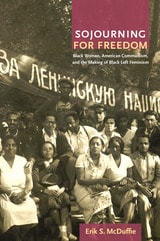
Sojourning for Freedom
Black Women, American Communism, and the Making of Black Left FeminismErik S. McDuffie
Duke University Press, 2011
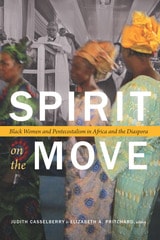
Spirit on the Move
Black Women and Pentecostalism in Africa and the DiasporaJudith Casselberry and Elizabeth Pritchard, editors
Duke University Press, 2019
Contributors. Paula Aymer, John Burdick, Judith Casselberry, Deidre Helen Crumbley, Elizabeth McAlister, Laura Premack, Elizabeth A. Pritchard, Jane Soothill, Linda van de Kamp
Stepping Forward
Black Women in Africa and the AmericasCatherine Higgs
Ohio University Press, 2002
A unique and important study, Stepping Forward examines the experiences of nineteenth- and twentieth-century black women in Africa and African diaspora communities from a variety of perspectives in a number of different settings.
This wide-ranging collection designed for classroom use explores the broad themes that have shaped black women’s goals, options, and responses: religion, education, political activism, migration, and cultural transformation. Essays by leading scholars in the field examine the lives of black women in the United States and the Caribbean Basin; in the white settler societies of Kenya, Zimbabwe, and South Africa; and in the black settler societies of Liberia and Sierra Leone.
Among the contributors to this volume are historians, political scientists, and scholars of literature, music, and law. What emerges from their work is an image of black women’s agency, self-reliance, and resiliency. Despite cultural differences and geographical variations, black women have provided foundations on which black communities have not only survived, but also thrived. Stepping Forward is a valuable addition to our understanding of women’s roles in these diverse communities.
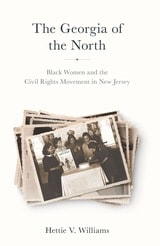
The Georgia of the North
Black Women and the Civil Rights Movement in New JerseyHettie V. Williams
Rutgers University Press, 2024
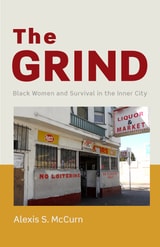
The Grind
Black Women and Survival in the Inner CityMcCurn, Alexis S
Rutgers University Press, 2018
Alexis S. McCurn draws on nearly two years of naturalistic field research among adolescents and adults in Oakland, California to provide an ethnographic account of how black women accomplish the routine tasks necessary for basic survival in poor inner-city neighborhoods and how the intersections of race, gender, and class shape how black women interact with others in public. This book makes the case that the daily consequences of racialized poverty in the lives of African Americans cannot be fully understood without accounting for the personal and collective experiences of poor black women.

The Healing Stage
Black Women, Incarceration, and the Art of TransformationLisa Biggs
The Ohio State University Press, 2022
The Legacy of Black Women in Librarianship
When They Dared to Be PowerfulEdited by Nicole A. Cooke
American Library Association, 2025
- span the entire 20th Century, stretching from rural South Carolina and Florida to urban centers like New York and Los Angeles;
- profile better known figures such as Augusta Baker and Eliza Atkins Gleason as well as many who have yet to receive their due;
- grapple with the toxic legacy of segregation in library education, universities, public libraries, schools, and other institutions, showing how these persevering Black women dared to strive and work towards more equitable futures;
- include an inspiring Afterword by Dr. Aisha Johnson-Jones, an educator and revelator of Southern intellectual history;
- will encourage LIS students and newer librarians of all backgrounds to see themselves reflected in the profession’s long and rich heritage; and
- shed light on how librarianship can become ever more diverse and community centered.
The Pursuit of Happiness
Black Women, Diasporic Dreams, and the Politics of Emotional TransnationalismBianca C. Williams
Duke University Press, 2018
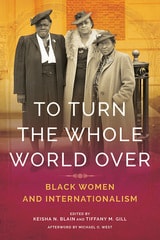
To Turn the Whole World Over
Black Women and InternationalismEdited by Keisha N. Blain and Tiffany M. Gill
University of Illinois Press, 2019

What the Mirror Said
The Necessity of Black Women in PoetryAshley M. Jones
University of Michigan Press, 2026
Part critical essay, part personal essay collection, What the Mirror Said traces the influence of nine Black women poets in Jones’s writing and life. She brings together historical biographical information, personal reflection, and close readings as she explores personal connections to poets from Phillis Wheatley to Patricia Smith. This book is expansive in its study, from classical metrical scansion to metaphorical explication. In offering new ways to interpret poems by important contemporary poets, What the Mirror Said makes the case for the need to study and celebrate Black women poets.
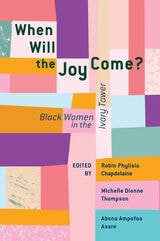
When Will the Joy Come?
Black Women in the Ivory TowerEdited by Robin Phylisia Chapdelaine, Michelle Dionne Thompson, and Abena Ampofoa Asare
University of Massachusetts Press, 2023
How do Black women in higher education create, experience, and understand joy? What sustains them? While scholars have long documented sexism, racism, and classism in the academy, one topic has been conspicuously absent from the literature—how Black women academics have found joy in the midst of adversity. Moving beyond questions of resilience, labor for others, and coping, When Will the Joy Come? focuses on the journeys of over thirty Black women at various stages of their careers.
Joy is a mixture of well-being, pleasure, alignment, and purpose that can be elusive for Black women scholars. With racial reckoning and a global pandemic as context, this volume brings together honest and vital essays that ponder how Black women balance fatigue and frustrations in the halls of the ivory tower, and explore where, when, and if joy enters their lives. By carefully contemplating the emotional, physical, and material consequences of their labor, this collection demonstrates that joy is a tactical and strategic component of Black women’s struggle.

You're Dead—So What?
Media, Police, and the Invisibility of Black Women as Victims of HomicideCheryl L. Neely
Michigan State University Press, 2015