Results by title
2 books match the query 'Black people in the motion picture industry'
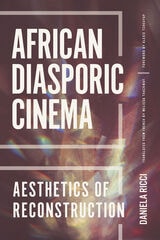
African Diasporic Cinema
Aesthetics of ReconstructionDaniela Ricci
Michigan State University Press, 2020
African Diasporic Cinema: Aesthetics of Reconstruction analyzes the aesthetic strategies adopted by contemporary African diasporic filmmakers to express the reconstruction of identity. Having left the continent, these filmmakers see Africa as a site of representation and cultural circulation. The diasporic experience displaces the center and forges new syncretic identities. Through migratory movement, people become foreigners, Others—and in this instance, black. The African diasporic condition in the Western world is characterized by the intersection of various factors: being African and bearing the historical memory of the continent; belonging to a black minority in majority-white societies; and finally, having historically been the object of negative, stereotyped representation. As a result, quests for the self and self-reconstruction are frequent themes in the films of the African diaspora, and yet the filmmakers refuse to remain trapped in the confines of an assigned, rigid identity. Reflecting these complex circumstances, this book analyzes the contemporary diaspora through the prism of cultural hybridization and the processes of recomposing fragmented identities, out of which new identities emerge.
[more]
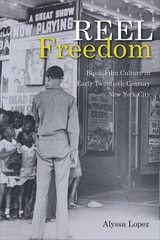
Reel Freedom
Black Film Culture in Early Twentieth-Century New York CityAlyssa Lopez
Temple University Press, 2025
Reel Freedom intimately captures the relationship between Black film culture and space in New York City. Alyssa Lopez argues that Black film culture, from its origins in the early twentieth century to its firm establishment in the 1930s, was necessarily both entertainment and resistance, connected as it was to Black New Yorkers’ demands for access and equality in the city.
Lopez investigates how ordinary people, labor activists, journalists, filmmakers, theater managers, and owners all shaped Black film culture. Black girls and women used moviegoing as a means of independence and control over their lives. Race filmmaker Oscar Micheaux fought with New York State’s censorship board to get his films screened with limited edits in local theaters. And Harlem’s Black projectionists battled for unionization and fair pay, while journalists linked cinema to Black New Yorkers’ lived experiences.
In Reel Freedom, Lopez chronicles the wide-ranging and remarkable pervasiveness of Black film culture in New York City, redefining a period and place most associated with the Harlem Renaissance. In doing so, she illustrates how Black New Yorkers leveraged cinema to make the city their own and to enjoy urban living to its fullest.
In the series Urban Life, Landscape, and Policy
[more]