Results by title
4 books match the query 'Black theology'
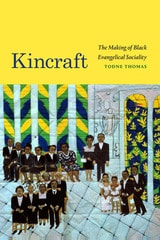
Kincraft
The Making of Black Evangelical SocialityTodne Thomas
Duke University Press, 2021
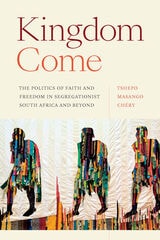
Kingdom Come
The Politics of Faith and Freedom in Segregationist South Africa and BeyondTshepo Masango Chéry
Duke University Press, 2023
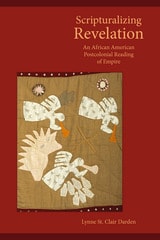
Scripturalizing Revelation
An African American Postcolonial Reading of EmpireLynne St. Clair Darden
SBL Press, 2015
A fresh contribution to the growing body of New Testament scholarship on empire, both ancient and modern
Darden’s reading of Revelation examines John the Seer’s rhetorical strategy, in general, and imperial cult imagery in chapters 4 and 5, in particular, through the lens of an African American scripturalization supplemented by postcolonial theory. The scripturalization proposes that John the Seer’s signifyin(g) on empire demonstrated that he was well aware of the oppressive nature of Roman imperialism on the lives of provincial Asian Christians. Yet, ironically, John reinscribed imperial processes and practices. Darden argues that African American biblical scholarship must now attend adequately to these complex cultural negotiations lest it find itself inadvertently feeding the imperial beast.
Features:
- Relates the potential for African American cooption by the U.S. Empire to the cooption by the Roman Empire both thematized and performed in Revelation
- Book-length study on postcolonial African American biblical hermeneutics
- A reading supplemented by postcolonial theory that better addresses the hybridity of African American identity
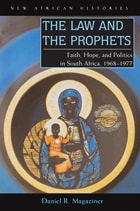
The Law and the Prophets
Black Consciousness in South Africa, 1968–1977Daniel Magaziner
Ohio University Press, 2010
“No nation can win a battle without faith,” Steve Biko wrote, and as Daniel R. Magaziner demonstrates in The Law and the Prophets, the combination of ideological and theological exploration proved a potent force.
The 1970s are a decade virtually lost to South African historiography. This span of years bridged the banning and exile of the country’s best-known antiapartheid leaders in the early 1960s and the furious protests that erupted after the Soweto uprisings of June 16, 1976. Scholars thus know that something happened—yet they have only recently begun to explore how and why.
The Law and the Prophets is an intellectual history of the resistance movement between 1968 and 1977; it follows the formation, early trials, and ultimate dissolution of the Black Consciousness movement. It differs from previous antiapartheid historiography, however, in that it focuses more on ideas than on people and organizations. Its singular contribution is an exploration of the theological turn that South African politics took during this time. Magaziner argues that only by understanding how ideas about race, faith, and selfhood developed and were transformed in this period might we begin to understand the dramatic changes that took place.