Results by title

4 books match the query 'Blacks in motion pictures'
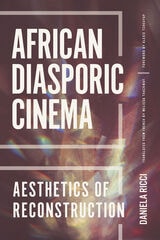
cover of African Diasporic Cinema: Aesthetics of Reconstruction

African Diasporic Cinema

Aesthetics of Reconstruction

Daniela Ricci

Michigan State University Press, 2020

African Diasporic Cinema: Aesthetics of Reconstruction analyzes the aesthetic strategies adopted by contemporary African diasporic filmmakers to express the reconstruction of identity. Having left the continent, these filmmakers see Africa as a site of representation and cultural circulation. The diasporic experience displaces the center and forges new syncretic identities. Through migratory movement, people become foreigners, Others—and in this instance, black. The African diasporic condition in the Western world is characterized by the intersection of various factors: being African and bearing the historical memory of the continent; belonging to a black minority in majority-white societies; and finally, having historically been the object of negative, stereotyped representation. As a result, quests for the self and self-reconstruction are frequent themes in the films of the African diaspora, and yet the filmmakers refuse to remain trapped in the confines of an assigned, rigid identity. Reflecting these complex circumstances, this book analyzes the contemporary diaspora through the prism of cultural hybridization and the processes of recomposing fragmented identities, out of which new identities emerge.
[more]
cover of Black Space: Imagining Race in Science Fiction Film

Black Space

Imagining Race in Science Fiction Film

By Adilifu Nama

University of Texas Press, 2008

Winner, Rollins Book Award, Southwest Texas Popular Culture Association/American Culture Association, 2008

Science fiction film offers its viewers many pleasures, not least of which is the possibility of imagining other worlds in which very different forms of society exist. Not surprisingly, however, these alternative worlds often become spaces in which filmmakers and film audiences can explore issues of concern in our own society. Through an analysis of over thirty canonic science fiction (SF) films, including Logan's Run, Star Wars, Blade Runner, Back to the Future, Gattaca, and Minority Report, Black Space offers a thorough-going investigation of how SF film since the 1950s has dealt with the issue of race and specifically with the representation of blackness.

Setting his study against the backdrop of America's ongoing racial struggles and complex socioeconomic histories, Adilifu Nama pursues a number of themes in Black Space. They include the structured absence/token presence of blacks in SF film; racial contamination and racial paranoia; the traumatized black body as the ultimate signifier of difference, alienness, and "otherness"; the use of class and economic issues to subsume race as an issue; the racially subversive pleasures and allegories encoded in some mainstream SF films; and the ways in which independent and extra-filmic productions are subverting the SF genre of Hollywood filmmaking.

The first book-length study of African American representation in science fiction film, Black Space demonstrates that SF cinema has become an important field of racial analysis, a site where definitions of race can be contested and post-civil rights race relations (re)imagined.
[more]
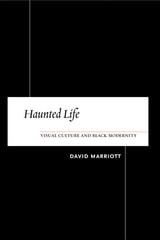
cover of Haunted Life: Visual Culture and Black Modernity

Haunted Life

Visual Culture and Black Modernity

Marriott, David

Rutgers University Press, 2007

In Haunted Life, David Marriott examines the complex interplay between racial fears and anxieties and the political-visual cultures of suspicion and state terror. He compels readers to consider how media technologies are "haunted" by the phantom of racial slavery. Through examples from film and television, modernist literature, and philosophy, he shows how the ideological image of a brutal African past is endlessly recycled and how this perpetuation of historical catastrophe stokes our nation's race-conscious paranoia.

Drawing on a range of comparative readings by writers, theorists, and filmmakers, including John Edgar Wideman, Frantz Fanon, Richard Wright, Issac Julien, Alain Locke, and Sidney Poitier, Haunted Life is a bold and original exploration of the legacies of black visual culture and the political, deeply sexualized violence that lies buried beneath it.
[more]
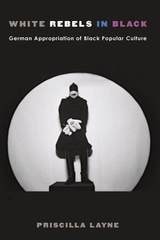
cover of White Rebels in Black: German Appropriation of Black Popular Culture

White Rebels in Black

German Appropriation of Black Popular Culture

Priscilla Layne

University of Michigan Press, 2018

Analyzing literary texts and films, White Rebels in Black shows how German authors have since the 1950s appropriated black popular culture, particularly music, to distance themselves from the legacy of Nazi Germany, authoritarianism, and racism, and how such appropriation changes over time. Priscilla Layne offers a critique of how blackness came to symbolize a positive escape from the hegemonic masculinity of postwar Germany, and how black identities have been represented as separate from, and in opposition to, German identity, foreclosing the possibility of being both black and German. Citing four autobiographies published by black German authors Hans Jürgen Massaquo, Theodor Michael, Günter Kaufmann, and Charly Graf, Layne considers how black German men have related to hegemonic masculinity since Nazi Germany, and concludes with a discussion on the work of black German poet, Philipp Khabo Köpsell.
[more]