Results by title

14 books match the query 'Bluegrass musicians'

cover of Bill Clifton: America's Bluegrass Ambassador to the World

Bill Clifton

America's Bluegrass Ambassador to the World

Bill C Malone

University of Illinois Press, 2016
The most atypical of bluegrass artists, Bill Clifton has enjoyed a long career as a recording artist, performer, and champion of old-time music. Bill C. Malone pens the story of Clifton's eclectic life and influential career. Born into a prominent Maryland family, Clifton connected with old-time music as a boy. Clifton made records around earning a Master's degree, fifteen years in the British folk scene, and stints in the Peace Corps and Marines. Yet that was just the beginning. Closely allied with the Carter Family, Woody Guthrie, Mike Seeger, and others, Clifton altered our very perceptions of the music--organizing one of the first outdoor bluegrass festivals, publishing a book of folk and gospel standards that became a cornerstone of the folk revival, and introducing both traditional and progressive bluegrass around the world. As Malone shows, Clifton clothed the music of working-class people in the vestments of romance, celebrating the log cabin as a refuge from modernism that rang with the timeless music of Appalachia. An entertaining account by an eminent music historian, Bill Clifton clarifies the myths and illuminates the paradoxes of an amazing musical life.
[more]
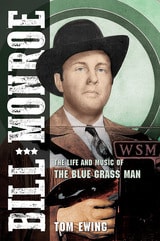
cover of Bill Monroe: The Life and Music of the Blue Grass Man

Bill Monroe

The Life and Music of the Blue Grass Man

Tom Ewing

University of Illinois Press, 2021

From cradle to great, the comprehensive real story of Bill Monroe

The Father of Bluegrass Music, Bill Monroe was a major star of the Grand Ole Opry for over fifty years; a member of the Country Music, Songwriters, and Rock and Roll Halls of Fame; and a legendary figure in American music. This authoritative biography sets out to examine his life in careful detail--to move beyond hearsay and sensationalism to explain how and why he accomplished so much.

Former Blue Grass Boy and longtime music journalist Tom Ewing draws on hundreds of interviews, his personal relationship with Monroe, and an immense personal archive of materials to separate the truth from longstanding myth. Ewing tells the story of the Monroe family's musical household and Bill's early career in the Monroe Brothers duo. He brings to life Monroe's 1940s heyday with the Classic Bluegrass Band, the renewed fervor for his music sparked by the folk revival of the 1960s, and his declining fortunes in the years that followed. Throughout, Ewing deftly captures Monroe's relationships and the personalities of an ever-shifting roster of band members while shedding light on his business dealings and his pioneering work with Bean Blossom and other music festivals.

Filled with a wealth of previously unknown details, Bill Monroe offers even the most devoted fan a deeper understanding of Monroe's towering achievements and timeless music.

[more]
cover of Bluegrass Ambassadors: The McLain Family Band in Appalachia and the World

Bluegrass Ambassadors

The McLain Family Band in Appalachia and the World

Paul O. Jenkins

West Virginia University Press, 2020

Bluegrass Ambassadors is the first book-length study of the McLain Family Band, which has spread the gospel of bluegrass for more than fifty years. Rooted in bluegrass but also collaborating with classical composers and performing folk, jazz, gospel, and even marches, the band traveled to sixty-two foreign countries in the 1970s under the auspices of the State Department. The band’s verve and joyful approach to its art perfectly suited its ambassadorial role. After retiring as full-time performers, most members of the group became educators, with patriarch Raymond K. McLain’s work at Berea College playing a particularly important role in bringing bluegrass to the higher education curriculum.

Interpreting the band’s diverse repertoire as both a source of its popularity and a reason for its exclusion from the bluegrass pantheon, Paul Jenkins advances subtle arguments about genre, criticism, and audience. Bluegrass Ambassadors analyzes the McLains’ compositions, recordings, and performances, and features a complete discography.
[more]
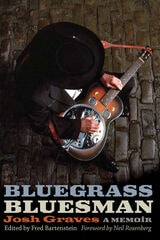
cover of Bluegrass Bluesman: A Memoir

Bluegrass Bluesman

A Memoir

Josh Graves; Edited by Fred Bartenstein; Foreword by Neil Rosenberg

University of Illinois Press, 2012
A pivotal member of the hugely successful bluegrass band Flatt and Scruggs and the Foggy Mountain Boys, Dobro pioneer Josh Graves (1927-2006) was a living link between bluegrass music and the blues. In Bluegrass Bluesman, this influential performer shares the story of his lifelong career in music.
 
In lively anecdotes, Graves describes his upbringing in East Tennessee and the climate in which bluegrass music emerged during the 1940s. Deeply influenced by the blues, he adapted Earl Scruggs's revolutionary banjo style to the Dobro resonator slide guitar and gave the Foggy Mountain Boys their distinctive sound. Graves' accounts of daily life on the road through the 1950s and 1960s reveal the band's dedication to musical excellence, Scruggs' leadership, and an often grueling life on the road. He also comments on his later career when he played in Lester Flatt's Nashville Grass and the Earl Scruggs Revue and collaborated with the likes of Boz Scaggs, Charlie McCoy, Kenny Baker, Eddie Adcock, Jesse McReynolds, Marty Stuart, Jerry Douglas, Alison Krauss, and his three musical sons. A colorful storyteller, Graves brings to life the world of an American troubadour and the mountain culture that he never left behind.
 
Born in Tellico Plains, Tennessee, Josh Graves (1927-2006) is universally acknowledged as the father of the bluegrass Dobro. In 1997 he was inducted into the Bluegrass Hall of Fame.
[more]
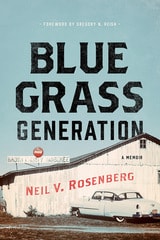
cover of Bluegrass Generation: A Memoir

Bluegrass Generation

A Memoir

Neil V Rosenberg

University of Illinois Press, 2018

Neil V. Rosenberg met the legendary Bill Monroe at the Brown County Jamboree. Rosenberg's subsequent experiences in Bean Blossom put his feet on the intertwined musical and scholarly paths that made him a preeminent scholar of bluegrass music.

Rosenberg's memoir shines a light on the changing bluegrass scene of the early 1960s. Already a fan and aspiring musician, his appetite for banjo music quickly put him on the Jamboree stage. Rosenberg eventually played with Monroe and spent four months managing the Jamboree. Those heights gave him an eyewitness view of nothing less than bluegrass's emergence from the shadow of country music into its own distinct art form. As the likes of Bill Keith and Del McCoury played, Rosenberg watched Monroe begin to share a personal link to the music that tied audiences to its history and his life--and helped turn him into bluegrass's foundational figure.

An intimate look at a transformative time, Bluegrass Generation tells the inside story of how an American musical tradition came to be.
[more]
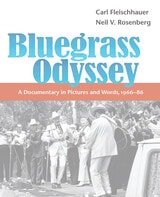
cover of Bluegrass Odyssey: A Documentary in Pictures and Words, 1966-86

Bluegrass Odyssey

A Documentary in Pictures and Words, 1966-86

Carl Fleischhauer and Neil V. Rosenberg

University of Illinois Press, 2006
The fruit of four decades of collaboration between bluegrass music’s premier photographer and premier historian, Bluegrass Odyssey is a satisfying and visually alluring journey into the heart of a truly American music. Combining more than two hundred of Carl Fleischhauer’s photographs with Neil V. Rosenberg’s expert commentary, this elegant visual documentary captures the music-making with the culture and community that foster it.
[more]
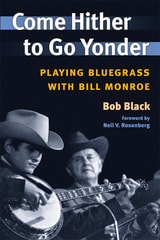
cover of Come Hither to Go Yonder: Playing Bluegrass with Bill Monroe

Come Hither to Go Yonder

Playing Bluegrass with Bill Monroe

Bob Black

University of Illinois Press, 2005

Bob Black was a member of Bill Monroe's Blue Grass Boys in the 1970s. Black's memoir of his time with the man he called the Chief offers the unique vantage point of a man who traveled and performed extensively with the Father of Bluegrass at a time when the music had opened up to new audiences--and Monroe had become a living legend. 

Both role model and taskmaster, Monroe exerted a profound influence on Black and the musicians who have carried on the bluegrass tradition. In addition to Black's one-of-a-kind story, Come Hither to Go Yonder includes complete listing of Black's appearances with Monroe, recollections of the memorable experiences they shared while working together, descriptions of other important musicians and bands, and suggestions for further reading and listening. 

Offering a rare perspective on the creative forces that drove one of America's greatest composers and musical innovators, Come Hither to Go Yonder rewards fans of Bill Monroe and bluegrass while offering an insider's view of a crucial time in the music's history.

[more]
cover of Don't Give Your Heart to a Rambler: My Life with Jimmy Martin, the King of Bluegrass

Don't Give Your Heart to a Rambler

My Life with Jimmy Martin, the King of Bluegrass

Barbara Stephens

University of Illinois Press, 2017

As charismatic and gifted as he was volatile, Jimmy Martin recorded dozens of bluegrass classics and co-invented the high lonesome sound. Barbara Martin Stephens became involved with the King of Bluegrass at age seventeen. Don't Give your Heart to a Rambler tells the story of their often tumultuous life together.

Barbara bore his children and took on a crucial job as his booking agent when the agent he was using failed to obtain show dates for the group. Female booking agents were non-existent at that time but she persevered and went on to become the first female booking agent on Music Row. She also endured years of physical and emotional abuse at Martin's hands. With courage and candor, Barbara tells of the suffering and traces the hard-won personal growth she found inside motherhood and her work. Her vivid account of Martin's explosive personality and torment over his exclusion from the Grand Ole Opry fill in the missing details on a career renowned for being stormy. Barbara also shares her own journey, one of good humor and proud achievements, and filled with fond and funny recollections of the music legends and ordinary people she met, befriended, and represented along the way.

Straightforward and honest, Don't Give your Heart to a Rambler is a woman's story of the world of bluegrass and one of its most colorful, conflicted artists.
[more]
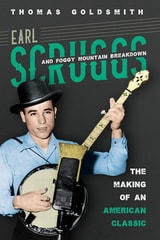
cover of Earl Scruggs and Foggy Mountain Breakdown: The Making of an American Classic

Earl Scruggs and Foggy Mountain Breakdown

The Making of an American Classic

Thomas Goldsmith

University of Illinois Press, 2019

Recorded in 1949, "Foggy Mountain Breakdown" changed the face of American music. Earl Scruggs's instrumental essentially transformed the folk culture that came before it while helping to energize bluegrass's entry into the mainstream in the 1960s. The song has become a gateway to bluegrass for musicians and fans alike as well as a happily inescapable track in film and television. Thomas Goldsmith explores the origins and influence of "Foggy Mountain Breakdown" against the backdrop of Scruggs's legendary career. Interviews with Scruggs, his wife Louise, disciple Bela Fleck, and sidemen like Curly Seckler, Mac Wiseman, and Jerry Douglas shed light on topics like Scruggs's musical evolution and his working relationship with Bill Monroe. As Goldsmith shows, the captivating sound of "Foggy Mountain Breakdown" helped bring back the banjo from obscurity and distinguished the low-key Scruggs as a principal figure in American acoustic music.Passionate and long overdue, Earl Scruggs and Foggy Mountain Breakdown takes readers on an ear-opening journey into two minutes and forty-three seconds of heaven.
[more]
cover of Foggy Mountain Troubadour: The Life and Music of Curly Seckler

Foggy Mountain Troubadour

The Life and Music of Curly Seckler

Penny Parsons

University of Illinois Press, 2016

With his trademark mandolin style and unequaled tenor harmonies, Curly Seckler has carved out a seventy-seven-year career in bluegrass and country music. His foundational work in Flatt and Scruggs's Foggy Mountain Boys secured him a place in bluegrass history, while his role in The Nashville Grass made him an essential part of the music's triumphant 1970s revival.

Written in close collaboration with Mr. Seckler and those who know him, Foggy Mountain Troubadour is the first full-length biography of an American original. Penny Parsons follows a journey from North Carolina schoolhouses to the Grand Ole Opry stage and the Bluegrass Hall of Fame, from boarding houses to radio studios and traveling five to a car on two-lane roads to make the next show. Throughout, she captures the warm humor, hard choices, and vivid details of a brilliant artist's life as he criss-crosses a nation and a century making music.
[more]
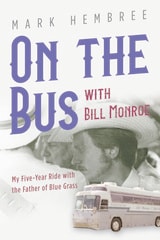
cover of On the Bus with Bill Monroe: My Five-Year Ride with the Father of Blue Grass

On the Bus with Bill Monroe

My Five-Year Ride with the Father of Blue Grass

Mark Hembree

University of Illinois Press, 2022

A backstage audition led Mark Hembree into a five-year stint (1979–1984) as the bassist for Bill Monroe's Blue Grass Boys. Hembree’s journey included playing at the White House and on the acclaimed album Master of Bluegrass. But it also put him on a collision course with the rigors of touring, the mysteries of Southern culture, and the complex personality of bandleader-legend Bill Monroe. Whether it’s figuring out the best time for breakfast (early) or for beating the boss at poker (never), Hembree gives readers an up-close look at the occasionally exalting, often unglamorous life of a touring musician in the sometimes baffling, always colorful company of a bluegrass icon.

The amusing story of a Yankee fish out of water, On the Bus with Bill Monroe mixes memoir with storytelling to recount the adventures of a Northerner learning new ways and the Old South.

[more]
cover of Pretty Good for a Girl: Women in Bluegrass

Pretty Good for a Girl

Women in Bluegrass

Murphy Henry

University of Illinois Press, 2013

The first book devoted entirely to women in bluegrass, Pretty Good for a Girl documents the lives of more than seventy women whose vibrant contributions to the development of bluegrass have been, for the most part, overlooked. Accessibly written and organized by decade, the book begins with Sally Ann Forrester, who played accordion and sang with Bill Monroe's Blue Grass Boys from 1943 to 1946, and continues into the present with artists such as Alison Krauss, Rhonda Vincent, and the Dixie Chicks. Drawing from extensive interviews, well-known banjoist Murphy Hicks Henry gives voice to women performers and innovators throughout bluegrass's history, including such pioneers as Bessie Lee Mauldin, Wilma Lee Cooper, and Roni and Donna Stoneman; family bands including the Lewises, Whites, and McLains; and later pathbreaking performers such as the Buffalo Gals and other all-girl bands, Laurie Lewis, Lynn Morris, Missy Raines, and many others.

[more]
cover of The Music of the Stanley Brothers

The Music of the Stanley Brothers

Gary B. Reid

University of Illinois Press, 2015

The Music of the Stanley Brothers brings together forty years of passionate research by scholar and record label owner Gary B. Reid. A leading authority on Carter and Ralph Stanley, Reid augments his own vast knowledge of their music with interviews, documents ranging from books to folios sold by the brothers at shows, and the words of Ralph Stanley, former band members, guest musicians, session producers, songwriters, and bluegrass experts. The result is a reference that illuminates the Stanleys' art and history. It is all here: dates and locations; the roster of players on well-known and obscure sessions alike; master/matrix and catalog/release numbers, with reissue information; a full discography sorting out the Stanleys' complex recording history; the stories behind the music; and exquisitely informed biographical notes that place events in the context of the brothers' careers and lives.

Monumental and indispensable, The Music of the Stanley Brothers provides fans and scholars alike with a guide for immersion in the long career and breathtaking repertoire of two legendary American musicians.

[more]
cover of Traveling the High Way Home: Ralph Stanley and the World of Traditional Bluegrass Music

Traveling the High Way Home

Ralph Stanley and the World of Traditional Bluegrass Music

John Wright

University of Illinois Press, 1993

John Wright's collection of interviews and stories about Ralph Stanley puts readers around a campfire at a bluegrass festival while old-timers weave yarns far into the night. Told by those who create, produce, stage, love, and virtually live for old-time mountain music, these tales come from the longtime coworkers, sidemen, promoters, friends, and others in the orbit of the music legend. The storytellers include a scholar who knew Stanley from the early days, the housewife who ran the Stanley Brothers Fan Club, and a souvenir seller for whom the discovery of Stanley's music was almost a religious experience.

Wright also uses these invaluable oral histories as a foundation to describe and evaluate Stanley's long career with the Clinch Mountain Boys and the development of his music after the death of his brother Carter. An appendix covers Ralph's prolific recording activity through the mid-1990s, including a breathtaking forty-five albums compromising more than 550 songs and tunes.

[more]