Results by title
4 books match the query 'Boarding schools'

Be Faithful Unto Death
Zsigmond Móricz
Central European University Press, 1996
Be Faithful unto Death is the moving story of a bright and sensitive schoolboy growing up in an old-established boarding school in the city of Debrecen in eastern Hungary. Misi, a dreamer and would-be writer, is falsely accused of stealing a winning lottery ticket. The torments through which he goes – and grows – are superbly described.
The novel is brimming with vivid detail from the provincial life that Móricz knew so well and shot through with a sense of the tragic fate of a newly truncated Hungary.
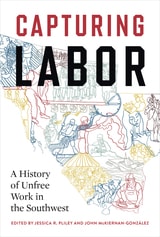
Capturing Labor
A History of Unfree Work in the SouthwestEdited by Jessica R. Pliley and John Mckiernan-González
University of Texas Press, 2026
A collection of essays grappling with the many, often overlooked, forms of unfree labor in the West.
When Americans think of unfree labor—coerced, extracted from workers unable to freely enter and exit contracts—what comes to mind is Black slavery and peonage in the South. But other forms of unfree labor also built the United States. Collecting a diverse range of sharply argued historical essays, Capturing Labor shares the story of unfree labor in the Southwest, affecting mainly Indigenous people, Mexican Americans, and people of color.
In Texas and elsewhere, state agents developed various methods for directing the movement of workers, seizing their time, and controlling the products of their efforts. Case studies highlight the detention during World War I of Indigenous children and unaccompanied women, who were placed in boarding schools, fined, and obligated to work off the resulting debt. Other essays expose authorities forcing workers to break strikes and jailing Americans who supported labor uprisings in rural Mexico and the United States. Prisons and asylums supplied coerced agricultural workers and musicians who were never compensated for their labor or by the labels that took their recordings.
Editors Jessica Pliley and John Mckiernan-González contend that unfree labor continues to shape American life, and is all around us today. Understanding its history aids us in recognizing and bringing attention to the grim realities of the present.
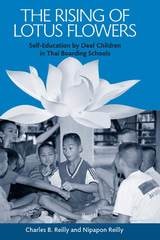
The Rising of Lotus Flowers
Self-Education by Deaf Children in Thai Boarding SchoolsCharles B. Reilly
Gallaudet University Press, 2005
In developed nations around the world, residential schools for deaf students are giving way to the trend of inclusion in regular classrooms. Nonetheless, deaf education continues to lag as the students struggle to communicate. In the Bua School in Thailand, however, 400 residential deaf students ranging in age from 6 to 19 have met with great success in teaching each other Thai Sign Language (TSL) and a world of knowledge once thought to be lost to them. The Rising of Lotus Flowers: Self-Education by Deaf Children in Thai Boarding Schools reveals how their institutionalization allowed them to foster a unique incubator of communication and education.
Charles B. Reilly, a teacher and community organizer in Thailand for eight years, and Nipapon Reilly, a Deaf Thai citizen, studied the students in the Bua School for 14 years, with periodic follow-ups thereafter. They found that the students learned little from their formal instructors, but that they were able to educate each other in time spent away from the classroom. Older students who had learned TSL in the dorms and on the playground successfully passed it on to six-year-olds who had virtually no language at all. The Reillys’ study uncovers an elaborate hierarchy of education among these students, with each group using games and other activities to teach and bring other classmates up to their level. Named for the much admired aquatic plant that blooms in Thailand’s bogs, the Bua School epitomizes the ideal of The Rising of Lotus Flowers, which also offers analytical evidence of the continuing value of residential schools in deaf education.
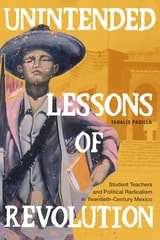
Unintended Lessons of Revolution
Student Teachers and Political Radicalism in Twentieth-Century MexicoTanalís Padilla
Duke University Press, 2021