Results by title
6 books match the query 'Boardinghouses'

Arrogant Beggar
Anzia Yezierska
Duke University Press, 1996
The second half of the novel takes Adele back to her ghetto origins as she explores an alternative model of philanthropy by opening a restaurant that combines the communitarian ideals of Old World shtetl tradition with the contingencies of New World capitalism. Within the context of this radical message, Yezierska revisits the themes that have made her work famous, confronting complex questions of ethnic identity, assimilation, and female self-realization.
Katherine Stubbs’s introduction provides a comprehensive and compelling historical, social, and literary context for this extraordinary novel and discusses the critical reaction to its publication in light of Yezierska’s biography and the once much-publicized and mythologized version of her life story. Unavailable for over sixty years, Arrogant Beggar will be enjoyed by general readers of fiction and be of crucial importance for feminist critics, students of ethnic literature. It will also prove an exciting and richly rewarding text for students and scholars of Jewish studies, immigrant literature, women’s writing, American history, and working-class fiction.
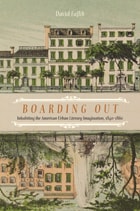
Boarding Out
Inhabiting the American Urban Literary Imagination, 1840-1860David Faflik
Northwestern University Press, 2012
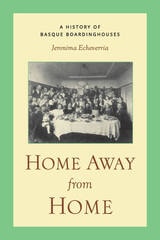
Home Away From Home
A History of Basque BoardinghousesJeronima Echeverria
University of Nevada Press, 1999
In this meticulously researched study of Basque boardinghouses in the United States, Jeronima Echeverria offers a compelling history of the institution that most deeply shaped Basque immigrant life and served as the center of Basque communities throughout the West. She weaves into her narrative the stories of the boarding house owners and operators and the ways they made their establishments a home away from home for their fellow compatriots, as well as the stories of the young Basques who left the security of their beloved homeland to find work in the United States.
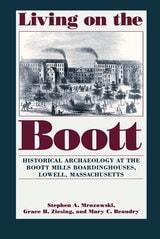
Living on the Boott
Historical Archaeology at the Boott Mills Boardinghouses of Lowell, MassachusettsStephen A. Mrozowski
University of Massachusetts Press, 1996
Lowell, Massachusetts was the first fully planned industrial city in the United States, and the Boott Mill, established in the 1820s along the Merrimack River, stood at the center of this bold experiment in industrial capitalism. For decades, the company-owned boardinghouses that housed the mills' workers were as much a part of the Lowell system as the looms themselves: a managed, closely supervised domestic world where the rhythms of mill life extended from the factory floor into every corner of daily existence.
Living on the Boott brings this vanished world back to life through rigorous historical archaeology. Drawing on excavations conducted at the Boott Mills boardinghouse complex, Stephen A. Mrozowski, Grace H. Ziesing, and Mary C. Beaudry examine the material remains of the men and women who lived and worked in Lowell's textile industry from the early nineteenth century through its long decline. Through painstaking analysis of ceramics, faunal assemblages, tobacco-related artifacts, and other recovered objects, the authors reconstruct the daily lives, diets, domestic routines, and social relationships of successive generations of boardinghouse residents—from the young "mill girls" recruited from rural New England who made Lowell famous, to the Irish immigrant workers who increasingly replaced them as the century progressed.
The result is a richly documented social history written not from official records alone, but from the objects people actually used, discarded, and left behind. The book illuminates how class, gender, ethnicity, and labor intersected in the intimate spaces of the boardinghouse, and documents the profound changes in living conditions as the Lowell system evolved and the workforce transformed. A landmark contribution to historical archaeology, industrial archaeology, and the history of American labor, Living on the Boott demonstrates the unique power of archaeological evidence to recover the lives of those too often overlooked by conventional historical sources.

The Crux
Charlotte Perkins Gilman
Duke University Press, 2003
Dana Seitler’s introduction provides historical context, revealing The Crux as an allegory for social and political anxieties—including the rampant insecurities over contagion and disease—in the United States at the beginning of the twentieth century. Seitler highlights the importance of The Crux to understandings of Gilman’s body of work specifically and early feminism more generally. She shows how the novel complicates critical history by illustrating the biological argument undergirding Gilman’s feminism. Indeed, The Crux demonstrates how popular conceptions of eugenic science were attractive to feminist authors and intellectuals because they suggested that ideologies of national progress and U.S. expansionism depended as much on women and motherhood as on masculine contest.
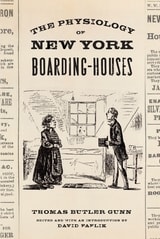
The Physiology of New York Boarding-Houses
Faflik, David
Rutgers University Press, 2008
In his introduction, David Faflik considers what made Gunn's book a compelling read in the past and how today it can elucidate our understanding of the formation and evolution of urban American life and letters.