Results by title
14 books match the query 'Body image'

Aesthetics of Excess
The Art and Politics of Black and Latina EmbodimentJillian Hernandez
Duke University Press, 2020
Blind to Sameness
Sexpectations and the Social Construction of Male and Female BodiesAsia Friedman
University of Chicago Press, 2013
Drawing on more than sixty interviews with two decidedly different populations—the blind and the transgendered—Blind to Sameness answers provocative questions about the relationships between sex differences, biology, and visual perception. Both groups speak from unique perspectives that magnify the social construction of dominant visual conceptions of sex, allowing Friedman to examine the visual construction of the sexed body and highlighting the processes of social perception underlying our everyday experience of male and female bodies. The result is a notable contribution to the sociologies of gender, culture, and cognition that will revolutionize the way we think about sex.
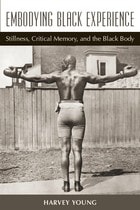
Embodying Black Experience
Stillness, Critical Memory, and the Black BodyHarvey Young
University of Michigan Press, 2010
"Young's linkage between critical race theory, historical inquiry, and performance studies is a necessary intersection. Innovative, creative, and provocative."
---Davarian Baldwin, Paul E. Raether Distinguished Professor of American Studies, Trinity College
In 1901, George Ward, a lynching victim, was attacked, murdered, and dismembered by a mob of white men, women, and children. As his lifeless body burned in a fire, enterprising white youth cut off his toes and, later, his fingers and sold them as souvenirs. In Embodying Black Experience, Harvey Young masterfully blends biography, archival history, performance theory, and phenomenology to relay the experiences of black men and women who, like Ward, were profoundly affected by the spectacular intrusion of racial violence within their lives. Looking back over the past two hundred years---from the exhibition of boxer Tom Molineaux and Saartjie Baartman (the "Hottentot Venus") in 1810 to twenty-first century experiences of racial profiling and incarceration---Young chronicles a set of black experiences, or what he calls, "phenomenal blackness," that developed not only from the experience of abuse but also from a variety of performances of resistance that were devised to respond to the highly predictable and anticipated arrival of racial violence within a person's lifetime.
Embodying Black Experience pinpoints selected artistic and athletic performances---photography, boxing, theater/performance art, and museum display---as portals through which to gain access to the lived experiences of a variety of individuals. The photographs of Joseph Zealy, Richard Roberts, and Walker Evans; the boxing performances of Jack Johnson, Joe Louis, and Muhammad Ali; the plays of Suzan-Lori Parks, Robbie McCauley, and Dael Orlandersmith; and the tragic performances of Bootjack McDaniels and James Cameron offer insight into the lives of black folk across two centuries and the ways that black artists, performers, and athletes challenged the racist (and racializing) assumptions of the societies in which they lived.
Blending humanistic and social science perspectives, Embodying Black Experience explains the ways in which societal ideas of "the black body," an imagined myth of blackness, get projected across the bodies of actual black folk and, in turn, render them targets of abuse. However, the emphasis on the performances of select artists and athletes also spotlights moments of resistance and, indeed, strength within these most harrowing settings.
Harvey Young is Associate Professor of Theatre, Performance Studies, and Radio/Television/Film at Northwestern University.
A volume in the series Theater: Theory/Text/Performance
Framing Fat
Competing Constructions in Contemporary CultureKwan, Samantha
Rutgers University Press, 2013
Alongside public health officials at the Centers for Disease Control and Prevention are advertisers of the fashion-beauty complex, food industry advocates at the Center for Consumer Freedom, and activists at the National Association to Advance Fat Acceptance.
Framing Fat takes a bird’s-eye view of how these multiple actors construct the fat body by identifying the messages these groups put forth, particularly where issues of beauty, health, choice and responsibility, and social justice are concerned. Samantha Kwan and Jennifer Graves examine how laypersons respond to these conflicting messages and illustrate the gendered, raced, and classed implications within them. In doing so, they shed light on how dominant ideas about body fat have led to the moral indictment of body nonconformists, essentially “framing” them for their fat bodies.
Hard Right
Muscular Rhetoric and the New NationalismCasey Ryan Kelly
The Ohio State University Press, 2026
A groundbreaking examination of far-right rhetoric around fitness and the human body and how such rhetoric serves white nationalist, masculinist aims.
In recent years, far-right, white-nationalist groups in the US have churned out streams of discourse glorifying “muscularity” as the ideal masculine form. This preoccupation with physical fitness—along with expressed fears of declining testosterone levels in men, race-mixing, and transgender women—all reveal the masculine bodily fantasies and anxieties that underwrite the political unconscious of the far right. In Hard Right, Casey Ryan Kelly examines the link between extreme fitness culture and fascist organizations, arguing that the human body operates as a privileged signifier of national belonging in the rhetoric of the far right.
Drawing from psychoanalytic theory, Kelly shows that far-right rhetoric constructs fantasies of recovering the “natural” or primal masculine body. These fantasies are frequently accompanied by anxieties about “soft,” disabled, and ambiguously gendered bodies, all of which are seen as signs of degeneracy that must be transformed, exiled, or eradicated for the sake of national and racial health. Through its examination of “Red Pill” fitness influencers, “bro science” conspiracy theories, far-right podcasts, and more, Hard Right ultimately shows how the cultural logics of men’s health and physical fitness converge with the political logics of white nationalism and late fascism.
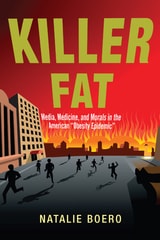
Killer Fat
Media, Medicine, and Morals in the American "Obesity Epidemic”Boero, Natalie
Rutgers University Press, 2013
In the past decade, obesity has emerged as a major public health concern in the United States and abroad. At the federal, state, and local level, policy makers have begun drafting a range of policies to fight a war against fat, including body-mass index (BMI) report cards, “snack taxes,” and laws to control how fast food companies market to children. As an epidemic, obesity threatens to weaken the health, economy, and might of the most powerful nation in the world.
In Killer Fat, Natalie Boero examines how and why obesity emerged as a major public health concern and national obsession in recent years. Using primary sources and in-depth interviews, Boero enters the world of bariatric surgeries, Weight Watchers, and Overeaters Anonymous to show how common expectations of what bodies are supposed to look like help to determine what sorts of interventions and policies are considered urgent in containing this new kind of disease.
Boero argues that obesity, like the traditional epidemics of biological contagion and mass death, now incites panic, a doomsday scenario that must be confronted in a struggle for social stability. The “war” on obesity, she concludes, is a form of social control. Killer Fat ultimately offers an alternate framing of the nation’s obesity problem based on the insights of the “Health at Every Size” movement.
Manhood Impossible
Men's Struggles to Control and Transform Their Bodies and WorkMelzer, Scott
Rutgers University Press, 2018

Many Mirrors
Body Image and Social RelationsEdited by Nicole Sault
Rutgers University Press, 1994
“We've needed a book like Many Mirrors for a long time. In the veritable explosion of new scholarship on the human body, this book stands out in its focus on empirical research. Many Mirrors will move . . . the Anthropology of the Body a giant step forward.”--C. H. Browner, University of California at Los Angeles
In every society, people define and change their physical appearance in response to their relationships to others: we add clothes and masks, remove them, build up our muscles, perforate our flesh, cut parts away, comb our hair, and modify our diets. In rural Jamaica, fat women are considered desirable; in American suburbia, teenage girls are obsessed with thinness. Bedouin women use tattoos to express their secret longings; Asian American women undergo cosmetic surgery to conform to internalized western standards of beauty. Even with mirrors to see ourselves, we rely on the reactions of others to learn how we look and who we are.
Where contemporary Western culture sees the body as a concrete thing with an objective, observable reality, separate from the self, many other societies regard the person as an integrated whole that includes the mind, the body, and the spirit. Through the contributors' studies of individual cultures and through the editor’s unifying “body image system”, this volume gives us a new conceptual framework for understanding how women and men in any society perceive, describe, and alter their bodies.
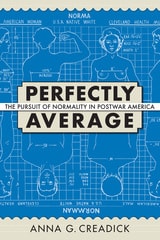
Perfectly Average
The Pursuit of Normality in Postwar AmericaAnna G. Creadick
University of Massachusetts Press, 2010
At the end of World War II, many Americans longed for a return to a more normal way of life after decades of depression and war. In fact, between 1945 and 1963 the idea of “normality” circulated as a keyword in almost every aspect of American culture. But what did this term really mean? What were its parameters? Whom did it propose to include and exclude?
In Perfectly Average, Anna Creadick investigates how and why “normality” reemerged as a potent homogenizing category in postwar America. Working with scientific studies, material culture, literary texts, film, fashion, and the mass media, she charts the pursuit of the “normal” through thematic chapters on the body, character, class, sexuality, and community.
Creadick examines such evidence as the “Norm and Norma” models produced during the war by sexologists and anthropologists—statistical composites of “normal” American bodies. In 1945, as thousands of Ohio women signed up for a Norma Look-Alike contest, a “Harvard Study of Normal Men” sought to define the typical American male according to specific criteria, from body shape to upbringing to blood pressure. By the early 1950s, the “man in the gray flannel suit” had come to symbolize what some regarded as the stultifying sameness of the “normalized” middle class. Meanwhile, novels such as From Here to Eternity and Peyton Place both supported and challenged normative ideas about gender, race, and sexuality, even as they worked to critique the postwar culture of surveillance—watching and being watched—through which normalizing power functioned.
As efforts to define normality became increasingly personal, the tensions em-bedded in its binary logic multiplied: Was normal descriptive of an average or prescriptive of an ideal? In the end, Creadick shows, a variety of statistics, assumptions, and aspirations converged to recast “normality” not as something innate or inborn, but rather as a quality to be actively pursued—a standard at once highly seductive and impossible to achieve because it required becoming perfectly average.
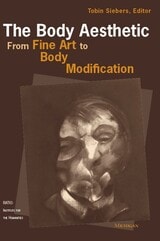
The Body Aesthetic
From Fine Art to Body ModificationTobin Siebers, Editor
University of Michigan Press, 2000
Generously and variously illustrated, this volume gathers together the work of literary critics and artists, classicists, art historians, and specialists on the history of the body, who survey the strangeness and variety with which the body has given human beings form. Richard Leppert traces how the representation of little girls responds directly to the cultural anxieties of modernity. René Girard plots how starvation becomes an art form, while Eric Gans surveys the contemporary phenomenon of body modification. Sander Gilman explores aesthetic surgery as a response to human unhappiness. Simon Goldhill discovers in the Roman empire the initial stirrings of institutions that focus on the spectacle of the body, and Cynthia S. Greig provides a glimpse of what the history of photography would look like if male nudes replaced female ones. Marion Jackson details how the different physical existence of the Inuit guides the way they make art. Joseph Grigely transforms aesthetics as usual by focusing on the disabled body, while Tobin Siebers describes the traumatic appeal in both fine art and the media of wounded flesh, whether human or animal.
The Body Aesthetic is a broad exercise in cultural studies and will address a variety of readers, from those interested in detailed, theoretical accounts of the body, to those interested in belles lettres, to those interested in fine art.
Tobin Siebers is Professor of English, University of Michigan.

The Panza Monologues
Written, Compiled, and Collected by Virginia Grise and Irma Mayorga
University of Texas Press, 2014
The Panza Monologues is an original solo performance piece based on women's stories about their panzas—tú sabes—that roll of belly we all try to hide. Written, compiled, and collected by Virginia Grise and Irma Mayorga and fashioned into a tour-de-force solo performance, The Panza Monologues features the words of Chicanas speaking with humor and candor. Their stories boldly place the panza front and center as a symbol that reveals the lurking truths about women's thoughts, lives, loves, abuses, and living conditions.
This second edition of The Panza Monologues presents the performance script in its entirety, as well as a rich supporting cast of dramaturgical and pedagogical materials. These include a narrative history of the play’s development by the playwrights; critical materials that enhance and expand upon the script’s themes and ideas (a short introduction to San Antonio, where the play was developed; playwright autogeographies; and a manifesto on women of color making theater); and a selection of pedagogical and creative ideas, including guidelines and advice for staging a production of the play and for teaching it in the classroom, community-making activities (screenings, hosting “Panza Parties,” community/group discussions), and creative writing activities connected to the play.
The fashioned self
Joanne. Finkelstein
Temple University Press, 1991
Working Out in Japan
Shaping the Female Body in Tokyo Fitness ClubsLaura Spielvogel
Duke University Press, 2003
Fitness clubs have proliferated in Japanese cities over the past decade. Yet, despite the pervasive influence of a beauty industry that values thinness above all else, they have met with only mixed success . Exploring this paradox, Spielvogel focuses on the tensions and contradictions within the world of Japanese fitness clubs and on the significance of differences between Japanese and North American philosophies of mind and body. Working Out in Japan explores the ways spaces and bodies are organized and regulated within the clubs, the frustrations of female instructors who face various gender inequities, and the difficult demands that the ideal of slimness places on Japanese women. Spielvogel’s vivid investigation illuminates not only the fitness clubs themselves, but also broader cultural developments including the growth of the service industry and the changing character of work and leisure in Japan.
You Feel So Mortal
Essays on the BodyPeggy Shinner
University of Chicago Press, 2014
Over the course of twelve essays, Shinner holds a mirror up to the complex desires, fears, confusions, and mysteries that shape our bodily perceptions. Driven by the collision between herself and the larger world, she examines her feet through the often-skewed lens of history to understand what makes them, in the eyes of some, decidedly Jewish; considers bras, breasts, and the storied skills of the bra fitter; asks, from the perspective of a confused and grieving daughter, what it means to cut the body open; and takes a reeling time-trip through myth, culture, and history to look at women’s hair in ancient Rome, Laos, France, Syria, Cuba, India, and her own past. Some pieces investigate the body under emotional or physical duress, while others use the body to consider personal heritage and legacy. Throughout, Shinner writes with elegance and assurance, weaving her wide-ranging thoughts into a firm and fascinating fabric.
Turning the category of body books on, well, its ear, You Feel So Mortal offers a probing view of our preoccupation with the body that is both idiosyncratic and universal, leaving us with the deep satisfaction of our shared humanity.