Results by title
2 books match the query 'Bollywood'

The Neoliberal Self in Bollywood
Cinema, Popular Culture, and IdentityNamrata Rele Sathe
Intellect Books, 2025
An exploration of the consequences of unbridled expansion of neoliberal values within India through the lens of popular film and culture.
The neoliberal self, far from being a stable marker of urban, liberal, millennial Indian identity, is replete with contradictions and oppositions. This study of the unstable neoliberal identity lays bare the sense of precarity and inherent inequality that neoliberal regimes confer upon their subjects.
This analysis draws upon theories of feminist media studies, popular culture analyses, and film studies to critique mainstream Hindi cinema texts produced in the last two decades. Rele Sathe also examines a variety of peripheral subjects and texts, including the film star, the urban space, web series, YouTube videos, and social media content.
[more]
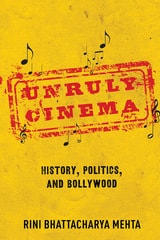
Unruly Cinema
History, Politics, and BollywoodRini Bhattacharya Mehta
University of Illinois Press, 2020
Between 1931 and 2000, India's popular cinema steadily overcame Hollywood domination. Bollywood, the film industry centered in Mumbai, became nothing less than a global cultural juggernaut. But Bollywood is merely one part of the country's prolific, multilingual cinema. Unruly Cinema looks at the complex series of events that allowed the entire Indian film industry to defy attempts to control, reform, and refine it in the twentieth century and beyond.
Rini Bhattacharya Mehta considers four aspects of Indian cinema's complicated history. She begins with the industry's surprising, market-driven triumph over imports from Hollywood and elsewhere in the 1930s. From there she explores how the nationalist social melodrama outwitted the government with its 1950s cinematic lyrical manifestoes. In the 1970s, an action cinema centered on the angry young male co-opted the voice of the oppressed. Finally, Mehta examines Indian film's discovery of the global neoliberal aesthetic that encouraged the emergence of Bollywood.
[more]