Results by title
6 books match the query 'Book One'

Manfred Macmillan
Book One of the Three Magicians TrilogyBy Jirí Karásek ze Lvovic, translated from the Czech and annotated by Carleton Bulkin with an introduction co-authored by Brian James Baer
Amherst College Press, 2024
Karasék rejected Czech translations of ancient Greek writers that bowdlerized gay themes, and he personally and vigorously defended Oscar Wilde in print, both on the grounds of artistic freedom and of private morality. He also published a cycle of homoerotic poems under the title Sodom, confiscated by the Austrian authorities but republished in 1905 and repeatedly afterward. A colonized subject, a literary decadent, and a sexual outlaw, Karasék’s complex responses to his own marginalization can be traced through his fantastically strange novel trilogy Three Magicians. As the first volume in that series, Manfred Macmillan is a gorgeous, compelling, and important addition to expanding canons of LGBTQI+ literature.

Marlborough
His Life and Times, Book OneWinston S. Churchill
University of Chicago Press, 2002
John Churchill, the Duke of Marlborough (1644-1722), was one of the greatest military commanders and statesmen in the history of England. Victorious in the Battles of Blenheim (1704), Ramillies (1706), and countless other campaigns, Marlborough, whose political intrigues were almost as legendary as his military skill, never fought a battle he didn't win. Although he helped James II crush the rebellion of the Duke of Monmouth, Marlborough later supported William of Orange against James II in the Glorious Revolution of 1688 and brilliantly managed England's diplomatic triumphs during the War of the Spanish Succession. Marlborough also bequeathed the world another great British military strategist and diplomat—his descendant, Winston S. Churchill, who wrote this book to redeem Marlborough's reputation from Macaulay's smears.
One million words long and ten years in the making, Churchill's Marlborough stands as both a literary and historical masterpiece, giving us unique insights into the Churchill of World War II, for just as Churchill's literary skill helps us understand the complexities of Marlborough's life, so too did his writing of Marlborough help Churchill master the arts of military strategy and diplomacy. This two-volume edition includes the entire text and almost all the original maps.
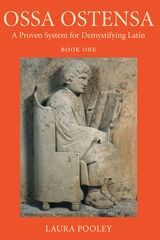
Ossa Ostensa
A proven system for demystifying Latin, Book OneLaura Pooley
Catholic University of America Press, 2021
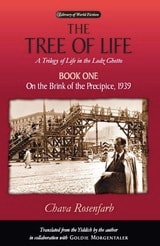
The Tree of Life, Book One
On the Brink of the Precipice, 1939Chava Rosenfarb
University of Wisconsin Press, 2004
Winner of the 1972 J. J. Segal Prize and the 1979 Manger Prize for Yiddish Literature
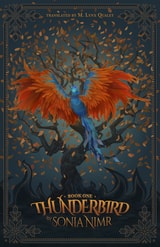
Thunderbird
Book OneSonia Nimr, translated by M. Lynx Qualey
University of Texas Press, 2022
Shortlisted for the 2023 Saif Ghobash Banipal Prize for Arabic Literary Translation, Society of Authors
A Palestinian girl travels to the past in a magical quest to save the world.
The Thunderbird trilogy is a fast-paced time-traveling fantasy adventure centered on Noor, a young orphaned Palestinian girl who starts in the present and must go back in time to get four magical bird feathers and save the world. Aided by a djinn cat and girls who look identical to Noor and who each have one of the bird’s powers, in this initial volume Noor begins her journey through different historical periods, striving to keep the wall between worlds intact.

Unhappy Valley, Book One
Conflict in Kenya & AfricaBruce Berman
Ohio University Press, 1992
The authors investigate major themes. These include the conquest origins and subsequent development of the colonial state, the contradictory social forces that articulated African societies to European capitalism, and the creation of new political communities and changing meanings of ethnicity in Africa, in the context of social differentiation and class formation. There is substantial new work on the problems of Mau Mau and of wealth, poverty and civic virtue in Kikuyu political thought.
The authors make a fresh contribution to a deeper historical understanding of the development of contemporary Kenyan society and, in particular, of the British and Kukuyu origins of Mau Mau and the emergency of the 1950s.
They also highlight some of the shortcomings of ideas about development, explore the limitations of narrowly structuralist Marxist theory of the state, and reflect on the role of history in the future of Africa.
Book One on State and Class will be used by students of African history as well as of colonial Kenya; it is also concerned with the theory of history and of political science.