Results by title
8 books match the query 'Book clubs (Discussion groups)'

After-School Clubs for Kids
Thematic Programming to Encourage ReadingLisa M. Shaia
American Library Association, 2014
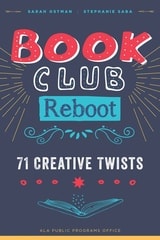
Book Club Reboot
71 Creative TwistsSarah Ostman
American Library Association, 2019
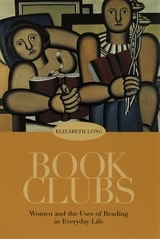
Book Clubs
Women and the Uses of Reading in Everyday LifeElizabeth Long
University of Chicago Press, 2003
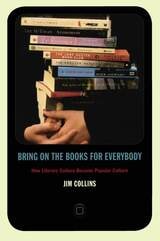
Bring on the Books for Everybody
How Literary Culture Became Popular CultureJim Collins
Duke University Press, 2010
Collins explores how digital technologies and the convergence of literary, visual, and consumer cultures have changed what counts as a “literary experience” in phenomena ranging from lush film adaptations such as The English Patient and Shakespeare in Love to the customer communities at Amazon. Central to Collins’s analysis and, he argues, to contemporary literary culture, is the notion that refined taste is now easily acquired; it is just a matter of knowing where to access it and whose advice to trust. Using recent novels, he shows that the redefined literary landscape has affected not just how books are being read, but also what sort of novels are being written for these passionate readers. Collins connects literary bestsellers from The Jane Austen Book Club and Literacy and Longing in L.A. to Saturday and The Line of Beauty, highlighting their depictions of fictional worlds filled with avid readers and their equations of reading with cultivated consumer taste.
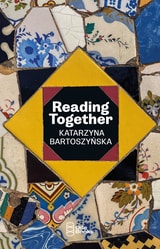
Reading Together
Katarzyna Bartoszynska
Prickly Paradigm Press, 2025
In this engaging and vivacious memoir, college professor Katarzyna Bartoszyńska thinks back on various book clubs she has been a part of. Through brief discussions of a variety of novels, memoirs, and nonfiction works such as Ottessa Moshfegh’s My Year of Rest and Relaxation, Marjane Satrapi’s Chicken with Plums, and Alma Guillermoprieto’s Dancing in Cuba, she considers how the things she has learned in book club discussions differ from what she tries to teach students in her literature classes. As she muses on the various benefits that we imagine reading offers, she describes the unique knowledge that book clubs can provide.
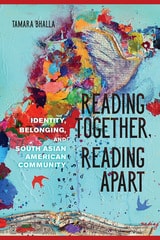
Reading Together, Reading Apart
Identity, Belonging, and South Asian American CommunityTamara Bhalla
University of Illinois Press, 2016
Tamara Bhalla blends a case study with literary and textual analysis to illuminate this phenomenon. Her fascinating investigation considers institutions from literary reviews to the marketplace to social media and other technologies, as well as traditional forms of literary discussion like book clubs and academic criticism. Throughout, Bhalla questions how her subjects' circumstances, desires, and shared race and class, limit the values they ascribe to reading. She also examines how ideology circulating around a body of literature or a self-selected, imagined community of readers shapes reading itself and influences South Asians' powerful, if contradictory, relationship with ideals of cultural authenticity.
The Librarian’s Guide to Book Programs and Author Events
Brad Hooper
American Library Association, 2016
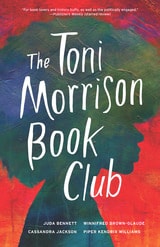
The Toni Morrison Book Club
Juda Bennett
University of Wisconsin Press, 2020
Framing their book club around collective secrets, the group bears witness to how Morrison’s works and words can propel us forward while we sit with uncomfortable questions about race, gender, and identity. How do we make space for black vulnerability in the face of white supremacy and internalized self-loathing? How do historical novels speak to us now about the delicate seams that hold black minds and bodies together?
This slim and brilliant confessional offers a radical vision for book clubs as sites of self-discovery and communal healing. The Toni Morrison Book Club insists that we find ourselves in fiction and think of Morrison as a spiritual guide to our most difficult thoughts and ideas about American literature and life.