Results by title
2 books match the query 'Book collecting'
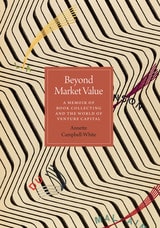
Beyond Market Value
A Memoir of Book Collecting and the World of Venture CapitalBy Annette Campbell-White
University of Texas Press, 2019
Beyond Market Value chronicles Annette Campbell-White’s remarkable life, from a childhood spent in remote mining camps throughout the British Commonwealth, where books created an imaginary home; to her early adulthood in London, where she first discovered a vocation as a book collector; to Silicon Valley, where she built a pioneering career as a formidable venture capitalist. She recalls the impulsive purchase of the first book in her collection, T. S. Eliot’s A Song for Simeon, and her pursuit of rare editions of all one hundred titles listed in Cyril Connolly’s The Modern Movement. Campbell-White’s collecting and career peaked in 2005, when she acquired the last of the Connolly titles and was first named to Forbes’ Midas List, the annual ranking of the most successful dealmakers in venture capital.
In 2007, out of concern for their preservation, Campbell-White rashly sold the Connolly titles she had spent more than twenty years assembling, leading to a new appreciation of what remained of her collection and, going forward, a broader focus on collecting modernist letters, manuscripts, and ephemera. Beyond Market Value is both a loving tribute to literary collecting and a telling account of the challenges of being a woman in the male-dominated world of finance.
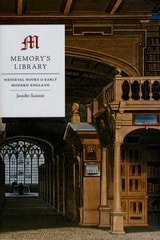
Memory's Library
Medieval Books in Early Modern EnglandJennifer Summit
University of Chicago Press, 2008
In Jennifer Summit’s account, libraries are more than inert storehouses of written tradition; they are volatile spaces that actively shape the meanings and uses of books, reading, and the past. Considering the two-hundred-year period between 1431, which saw the foundation of Duke Humfrey’s famous library, and 1631, when the great antiquarian Sir Robert Cotton died, Memory’s Library revises the history of the modern library by focusing on its origins in medieval and early modern England.
Summit argues that the medieval sources that survive in English collections are the product of a Reformation and post-Reformation struggle to redefine the past by redefining the cultural place, function, and identity of libraries. By establishing the intellectual dynamism of English libraries during this crucial period of their development, Memory’s Library demonstrates how much current discussions about the future of libraries can gain by reexamining their past.