Results by title
5 books match the query 'Book design'
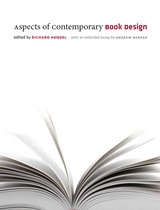
Aspects of Contemporary Book Design
Richard Hendel
University of Iowa Press, 2013
In this manifestly practical book, Richard Hendel has invited book and journal designers he admires to describe how they approach and practice the craft of book design. Designers with interesting and varied careers in the field, who work with contemporary technology in today’s publishing environment, describe their methods of managing the challenges presented by specific types of books, presented side by side with numerous images from those books. Not an instruction manual but a unique, on-the-job, title page–to–index guide to the ways that professional British and American designers think about design, Aspects of Contemporary Book Design continues the conversation that began with Hendel’s 1998 classic, On Book Design.
Contributing designers who focus on solving problems posed by nonfiction, fiction, cookbooks, plays, poetry, illustrated books, and journals include Cherie Westmoreland, Amy Ruth Buchanan, Mindy Basinger Hill, Nola Burger, Ron Costley, Kristina Kachele, Barbara Wiedemann, and Sue Hall, as well as a host of other designers, typesetters, editors, and even an author. Abbey Gaterud attempts to define the conundrum that the e-book presents to designers; Kent Lew describes the evolution of his Whitman typeface family; Charles Ellertson reflects upon the vital relationship between the typesetter and the designer; and Sean Magee writes about the uneasy alliance between designers and editors. In an extended essay that is as frank and funny as it is illuminating, Andrew Barker takes the reader deep into the morass—excavating the fine, finer, and finest details of working through a series design.
[more]
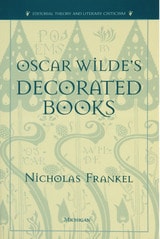
Oscar Wilde's Decorated Books
Nicholas Frankel
University of Michigan Press, 2000
Oscar Wilde's Decorated Books addresses Wilde's obsession with the visual appearance or "look" of his published writings. It examines the role played by graphic designers in the production of Wilde's writings and demonstrates how marginal and decorative elements of the printed book affect interpretation. Nicholas Frankel approaches Wilde's writings as graphical or "printed" phenomena that reveal their significance through the beautiful and elaborate decorations with which they were published in Wilde's own lifetime. With extensive reference to and exposition on Wilde's theoretical writings and letters, the author shows that, far from being marginal elements of the literary text, these decorative devices were central to Wilde's understanding of his own writings as well as to his "aesthetic" theory of language. Extensive illustrations support Frankel's arguments. The first part of the book lays out a broadly historical view of Wilde’s writings, emphasizing their volatility at the hands of time as well as Wilde’s changing conceptions of his own work. The second part demonstrates the significance that Wilde and his publishers attached to the process of graphic design, showing how marginal and decorative elements of the printed book affect interpretation. Both parts stress the importance of late-Victorian publishing practices to our understanding of Wilde’s writings. The book further challenges the prevailing view of Wilde as essentially a playwright, demonstrating the importance of poetry to Wilde’s own understanding of himself as an author.The book attempts to do justice to Wilde’s own valorization of literature as one of the decorative arts. By emphasizing the visual and collaborative dimensions of Wilde’s texts, Frankel argues that visual decoration was central to Wilde’s theory of language as well as his practice as a writer. Anticipating Baudrillard's distinctionbetween appearance and the transparency, of the sign, Wilde’s writings argue that literary language is both a visual and a material phenomenon — what Wilde himself would call a “beautiful untrue thing” — that demands to be read with the eye as much as the brain.This book will appeal to specialists of Oscar Wilde and the Victorian fin de siècle, to textual and literary scholars, art historians, and linguistic philosophers interested in the graphical nature of the linguistic sign.
[more]

Taking Part
A Twentieth-Century LifeRobert Josephy
University of Iowa Press, 1993
[more]
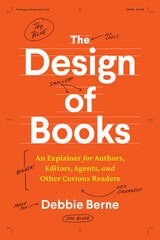
The Design of Books
An Explainer for Authors, Editors, Agents, and Other Curious ReadersDebbie Berne
University of Chicago Press, 2024
Seasoned designer Debbie Berne presents an accessible introduction to book design for authors, editors, and other book people.
Design is central to the appeal, messaging, and usefulness of books, but to most readers, it’s mysterious or even invisible. Through interiors as well as covers, designers provide structure and information that shape the meaning and experience of books. In The Design of Books, Debbie Berne shines a light on the conventions and processes of her profession, revealing both the aesthetic and market-driven decisions designers consider to make books readable and beautiful. In clear, unstuffy language, Berne reveals how books are put together, with discussions of production considerations, typography and fonts, page layouts, use of images and color, special issues for ebooks, and the very face of each book: the cover.
The Design of Books speaks to readers and directly to books’ creators—authors, editors, and other publishing professionals—helping them to become more informed partners in the design of their projects. Berne lays out the practical steps at each stage of the design process, providing insight into who does what when and offering advice for authors on how to be effective advocates for their ideas while also letting go and trusting their manuscripts with teams of professionals. She includes guidance as well for self-publishing authors, including where to find a designer, what to expect from that relationship, and how to art direct your own book.
Throughout, Berne teaches how understanding the whats, hows, and whys of book design heightens our appreciation of these cherished objects and helps everyone involved in the process to create more functional, desirable, and wonderful books.
[more]

The Moxon Tennyson
A Landmark in Victorian IllustrationSimon Cooke
Ohio University Press, 2021
A new perspective on a book that transformed Victorian illustration into a stand-alone art
Edward Moxon’s 1857 edition of Alfred, Lord Tennyson’s Poems dramatically redefined the relationship between images and words in print. Cooke’s study, the first book to address the subject in over 120 years, presents a sweeping analysis of the illustrators and the complex and challenging ways in which they interpreted Tennyson’s poetry. This book considers the volume’s historical context, examining in detail the roles of publisher, engravers, and binding designer, as well as the material difficulties of printing its fine illustrations, which recreate the effects of painting. Arranged thematically and reproducing all the original images, the chapters present a detailed reappraisal of the original volume and the distinctive culture that produced it.
[more]