Results by title
7 books match the query 'Boom'
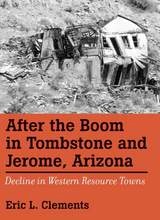
After The Boom In Tombstone And Jerome, Arizona
Decline In Western Resource TownsEric L. Clements
University of Nevada Press, 2014
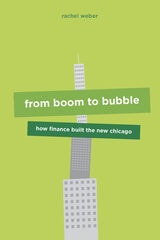
From Boom to Bubble
How Finance Built the New ChicagoRachel Weber
University of Chicago Press, 2015
In From Boom to Bubble, Rachel Weber debunks the idea that booms occur only when cities are growing and innovating. Instead, she argues, even in cities experiencing employment and population decline, developers rush to erect new office towers and apartment buildings when they have financial incentives to do so. Focusing on the main causes of overbuilding during the early 2000s, Weber documents the case of Chicago’s “Millennial Boom,” showing that the Loop’s expansion was a response to global and local pressures to produce new assets. An influx of cheap cash, made available through the use of complex financial instruments, helped transform what started as a boom grounded in modest occupant demand into a speculative bubble, where pricing and supply had only tenuous connections to the market. From Boom to Bubble is an innovative look at how property markets change and fail—and how that affects cities.
Legions of Boom
Filipino American Mobile DJ Crews in the San Francisco Bay AreaOliver Wang
Duke University Press, 2015
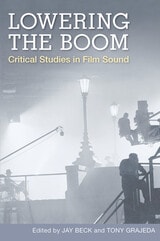
Lowering the Boom
Critical Studies in Film SoundEdited by Jay Beck and Tony Grajeda
University of Illinois Press, 2007
As the first collection of new work on sound and cinema in over a decade, Lowering the Boom addresses the expanding field of film sound theory and its significance in rethinking historical models of film analysis. The contributors consider the ways in which musical expression, scoring, voice-over narration, and ambient noise affect identity formation and subjectivity. Lowering the Boom also analyzes how shifting modulation of the spoken word in cinema results in variations in audience interpretation. Introducing new methods of thinking about the interaction of sound and music in films, this volume also details avant-garde film sound, which is characterized by a distinct break from the narratively based sound practices of mainstream cinema. This interdisciplinary, global approach to the theory and history of film sound opens the eyes and ears of film scholars, practitioners, and students to film's true audio-visual nature.
Contributors are Jay Beck, John Belton, Clark Farmer, Paul Grainge, Tony Grajeda, David T. Johnson, Anahid Kassabian, David Laderman, James Lastra, Arnt Maasø, Matthew Malsky, Barry Mauer, Robert Miklitsch, Nancy Newman, Melissa Ragona, Petr Szczepanik, Paul Théberge, and Debra White-Stanley.

Mapping Post-War Italian Literature
Boom and Aftermath (1956–1979)Giulia Brecciaroli
University of London Press, 2024
In the aftermath of the Reconstruction era, immediately after the Second World War, Italy experienced an unprecedented phase of economic development, which transformed it from a traditionally agricultural and impoverished country into one of Europe’s most industrialized nations. The idea, treasured to this day by many Italians, that this period represents a golden age has been increasingly called into question by historical research that has unveiled the evident contradictions of Italian society at the time.
Mapping Post-War Italian Literature examines the “boom years” and their legacy to explore the long-lasting impact of post-war Italy’s urbanization and modernization on the imagination of Italian writers. Brecciaroli looks at how transformations affecting Italy’s leading industrial cities of the North, specifically Milan and Turin, as well as the provinces have been conceptualized in contemporary novels and travel accounts. The selected texts cross genre boundaries and reflect an array of literary perspectives, giving a compelling and multifaceted account of the post-war historical transition.
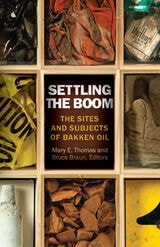
Settling the Boom
The Sites and Subjects of Bakken OilMary E. Thomas
University of Minnesota Press, 2023
Examines how settler colonial and sexist infrastructures and narratives order a resource boom
Over the past decade, new oil plays have unsettled U.S. energy landscapes and imaginaries. Settling the Boom studies how the disruptive forces of an oil boom in the northern Great Plains are contained through the extension of settler temporalities, reassertions of heteropatriarchy, and the tethering of life to the volatility of oil and its cruel optimisms.
This collection reveals the results of sustained research in Williston, North Dakota, the epicenter of the “Bakken Boom.” While the boom brought a rapid influx of capital and workers, the book questions simple timelines of before and after. Instead, Settling the Boom demonstrates how the unsettling forces of an oil play resolve through normative narratives and material and affective infrastructures that support settler colonialism’s violent extension and its gendered orders of time and space. Considering a wide range of evidence, from urban and regional policy, interviews with city officials, media, photography, and film, these essays analyze the ongoing material, aesthetic, and narrative ways of life and land in the Bakken.
Contributors: Morgan Adamson, Macalester College; Kai Bosworth, Virginia Commonwealth U; Thomas S. Davis, Ohio State U; Jessica Lehman, Durham U.
The Boom in Contemporary Israeli Fiction
Edited by Alan Mintz
Brandeis University Press, 1997