Results by title
4 books match the query 'Boone, Elizabeth Hill'
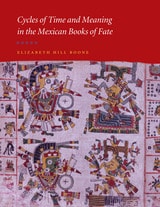
Cycles of Time and Meaning in the Mexican Books of Fate
By Elizabeth Hill Boone
University of Texas Press, 2007
In communities throughout precontact Mesoamerica, calendar priests and diviners relied on pictographic almanacs to predict the fate of newborns, to guide people in choosing marriage partners and auspicious wedding dates, to know when to plant and harvest crops, and to be successful in many of life's activities. As the Spanish colonized Mesoamerica in the sixteenth century, they made a determined effort to destroy these books, in which the Aztec and neighboring peoples recorded their understanding of the invisible world of the sacred calendar and the cosmic forces and supernaturals that adhered to time. Today, only a few of these divinatory codices survive. Visually complex, esoteric, and strikingly beautiful, painted books such as the famous Codex Borgia and Codex Borbonicus still serve as portals into the ancient Mexican calendrical systems and the cycles of time and meaning they encode.
In this comprehensive study, Elizabeth Hill Boone analyzes the entire extant corpus of Mexican divinatory codices and offers a masterful explanation of the genre as a whole. She introduces the sacred, divinatory calendar and the calendar priests and diviners who owned and used the books. Boone then explains the graphic vocabulary of the calendar and its prophetic forces and describes the organizing principles that structure the codices. She shows how they form almanacs that either offer general purpose guidance or focus topically on specific aspects of life, such as birth, marriage, agriculture and rain, travel, and the forces of the planet Venus. Boone also tackles two major areas of controversy—the great narrative passage in the Codex Borgia, which she freshly interprets as a cosmic narrative of creation, and the disputed origins of the codices, which, she argues, grew out of a single religious and divinatory system.
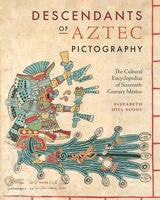
Descendants of Aztec Pictography
The Cultural Encyclopedias of Sixteenth-Century MexicoBy Elizabeth Hill Boone
University of Texas Press, 2021
In the aftermath of the sixteenth-century Spanish conquest of Mexico, Spanish friars and authorities partnered with indigenous rulers and savants to gather detailed information on Aztec history, religious beliefs, and culture. The pictorial books they created served the Spanish as aids to evangelization and governance, but their content came from the native intellectuals, painters, and writers who helped to create them. Examining the nine major surviving texts, preeminent Latin American art historian Elizabeth Hill Boone explores how indigenous artists and writers documented their ancestral culture.
Analyzing the texts as one distinct corpus, Boone shows how they combined European and indigenous traditions of documentation and considers questions of motive, authorship, and audience. For Spanish authorities, she shows, the books revealed Aztec ideology and practice, while for the indigenous community, they preserved venerated ways of pictorial expression as well as rhetorical and linguistic features of ancient discourses. The first comparative analysis of these encyclopedias, Descendants of Aztec Pictography analyzes how the painted compilations embraced artistic traditions from both sides of the Atlantic.
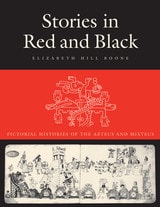
Stories in Red and Black
Pictorial Histories of the Aztecs and MixtecsBy Elizabeth Hill Boone
University of Texas Press, 2000
Winner, Arvey Award, Association for Latin American Art, 2001
Honorable Mention, Honorable Mention, George Wittenborn Memorial Book Award, Art Libraries Society of North America, 2001
The Aztecs and Mixtecs of ancient Mexico recorded their histories pictorially in images painted on hide, paper, and cloth. The tradition of painting history continued even after the Spanish Conquest, as the Spaniards accepted the pictorial histories as valid records of the past. Five Pre-Columbian and some 150 early colonial painted histories survive today.
This copiously illustrated book offers the first comprehensive analysis of the Mexican painted history as an intellectual, documentary, and pictorial genre. Elizabeth Hill Boone explores how the Mexican historians conceptualized and painted their past and introduces the major pictorial records: the Aztec annals and cartographic histories and the Mixtec screenfolds and lienzos.
Boone focuses her analysis on the kinds of stories told in the histories and on how the manuscripts work pictorially to encode, organize, and preserve these narratives. This twofold investigation broadens our understanding of how preconquest Mexicans used pictographic history for political and social ends. It also demonstrates how graphic writing systems created a broadly understood visual "language" that communicated effectively across ethnic and linguistic boundaries.
Writing Without Words
Alternative Literacies in Mesoamerica and the AndesElizabeth Hill Boone and Walter D. Mignolo, eds.
Duke University Press, 1994
The contributors--who include art historians, anthropologists, and literary theorists--examine the ways in which ancient Mesoamerican and Andean peoples conveyed meaning through hieroglyphic, pictorial, and coded systems, systems inseparable from the ideologies they were developed to serve. We see, then, how these systems changed with the European invasion, and how uniquely colonial writing systems came to embody the post-conquest American ideologies. The authors also explore the role of these early systems in religious discourse and their relation to later colonial writing.
Bringing the insights from Mesoamerica and the Andes to bear on a fundamental exchange among art history, literary theory, semiotics, and anthropology, the volume reveals the power contained in the medium of writing.
Contributors. Elizabeth Hill Boone, Tom Cummins, Stephen Houston, Mark B. King, Dana Leibsohn, Walter D. Mignolo, John Monaghan, John M. D. Pohl, Joanne Rappaport, Peter van der Loo