Results by title
46 books match the query 'Borderlands'
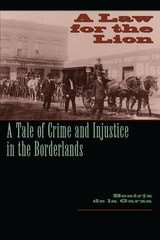
A Law for the Lion
A Tale of Crime and Injustice in the BorderlandsBy Beatriz de la Garza
University of Texas Press, 2003
"Esto no es cosa de armas" (this is not a matter for weapons). These were the last words of Don Francisco Gutiérrez before Alonzo W. Allee shot and killed him and his son, Manuel Gutiérrez. What began as a simple dispute over Allee's unauthorized tenancy on a Gutiérrez family ranch near Laredo, Texas, led not only to the slaying of these two prominent Mexican landowners but also to a blatant miscarriage of justice.
In this engrossing account of the 1912 crime and the subsequent trial of Allee, Beatriz de la Garza delves into the political, ethnic, and cultural worlds of the Texas-Mexico border to expose the tensions between the Anglo minority and the Mexican majority that propelled the killings and their aftermath. Drawing on original sources, she uncovers how influential Anglos financed a first-class legal team for Allee's defense and also discusses how Anglo-owned newspapers helped shape public opinion in Allee's favor. In telling the story of this long-ago crime and its tragic results, de la Garza sheds new light on the interethnic struggles that defined life on the border a century ago, on the mystique of the Texas Rangers (Allee was said to be a Ranger), and on the legal framework that once institutionalized violence and lawlessness in Texas.
Alabama and the Borderlands
From Prehistory To StatehoodEdited by R. Reid Badger and Lawrence A. Clayton
University of Alabama Press, 1985
Brings together the nation's leading scholars on the prehistory and early history of Alabama and the southeastern US
This fascinating collection was born of a concern with Alabama's past and the need to explore and explain that legacy, so often hidden by the veils of time, ignorance, or misunderstanding. In 1981 The University of Alabama celebrated its 150th anniversary, and each College contributed to the celebration by sponsoring a special symposium. The College of Arts and Sciences brought together the nation's leading scholars on the prehistory and early history of Alabama and the Southeastern United States, and for two memorable days in September 1981 several hundred interested listeners heard those scholars present their interpretations of Alabama's remarkable past.
The organizers of the symposium deliberately chose to focus on Alabama's history before statehood. Alabama as a constituent state of the Old South is well known. Alabama as a home of Indian cultures and civilizations of a high order, as an object of desire, exploration, and conquest in the sixteenth century, and as a borderland disputed by rival European nationalities for almost 300 years is less well known. The resulting essays in this collection prove as interesting, enlightening, and provocative to the casual reader as to the professional scholar, for they are intended to bring to the general reader artifacts and documents that reveal the realities and romance of that older Alabama.
Topics in the collection range from the Mississippian Period in archaeology and the de Soto expedition (and other early European explorations and settlements of Alabama) to the 1780 Siege of Mobile.
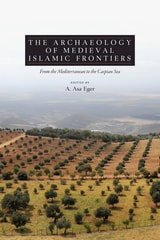
Archaeology of Medieval Islamic Frontiers
From the Mediterranean to the Caspian SeaA. Asa Eger
University Press of Colorado, 2019
Chapters highlight the significance of these respective regions to the emergence of new sociopolitical, cultural, and economic practices within the Islamic world. These studies successfully overcome the dichotomy of civilization’s center and peripheries in academic discourse by presenting the actual dynamics of identity formation and the definition, both spatial and cultural, of boundaries. The Archaeology of Medieval Islamic Frontiers is a rare combination of a new reading of written evidence with results from archaeological studies that will modify established opinions on the character of the Islamic frontiers and stimulate similar studies for other regions. The book will be relevant to medieval Islamic studies as well as to research in the medieval world in general.
Contributors:
Karim Alizadeh, Jana Eger, Kathryn J. Franklin, Renata Holod, Tarek Kahlaoui, Anthony J. Lauricella, Ian Randall, Giovanni R. Ruffini, Tasha Vorderstrasse
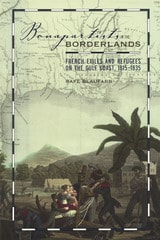
Bonapartists in the Borderlands
French Exiles and Refugees on the Gulf Coast, 1815-1835Rafe Blaufarb
University of Alabama Press, 2005
Bonapartists in the Borderlands debunks the standard account of the Vine and Olive Colony, which stresses the failure of aristocratic, luxury-loving French to tame the wilderness. Rafe Blaufarb recounts how Napoleonic exiles and French refugees from Europe and the Caribbean joined forces with Latin American insurgents, Gulf pirates, and international adventurers to seek their fortune in the Gulf borderlands. The US Congress welcomed the French and granted them a capacious tract of rich Black Belt land near Demopolis, Alabama, on the condition that they would establish a Mediterranean-style Vine and Olive colony.
Blaufard shows that it was not a lack of grit that caused the enterprise to fail. Rather, the Napoleonic officers involved in the colony sold their land shares to speculators to finance an even more perilous adventure—invading the Texas borderlands contested by Spain and the US. Their departure left the Vine and Olive colony in the hands of French refugees from the Haitian slave revolt. They soon abandoned vine cultivation and fused with the neighboring communities of Anglo-American slaveholding cotton planters and speculators.
Rafe Blaufarb examines the underlying motivations and aims that inspired this endeavor and details the nitty-gritty politics, economics, and backroom bargaining that resulted in the settlement. He employs a wide variety of local, national, and international resources: from documents held by the Alabama State Archives, Marengo County court records, and French-language newspapers published in America to material from the War Ministry Archives at Vincennes, the Diplomatic Archives at the Quai d’Orasy, and the French National Archives.
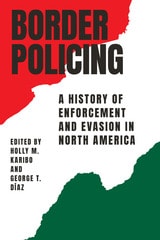
Border Policing
A History of Enforcement and Evasion in North AmericaEdited by Holly M. Karibo and George T. Díaz
University of Texas Press, 2020
An interdisciplinary group of borderlands scholars provide the first expansive comparative history of the way North American borders have been policed—and transgressed—over the past two centuries.
An extensive history examining how North American nations have tried (and often failed) to police their borders, Border Policing presents diverse scholarly perspectives on attempts to regulate people and goods at borders, as well as on the ways that individuals and communities have navigated, contested, and evaded such regulation.
The contributors explore these power dynamics though a series of case studies on subjects ranging from competing allegiances at the northeastern border during the War of 1812 to struggles over Indian sovereignty and from the effects of the Mexican Revolution to the experiences of smugglers along the Rio Grande during Prohibition. Later chapters stretch into the twenty-first century and consider immigration enforcement, drug trafficking, and representations of border policing in reality television. Together, the contributors explore the powerful ways in which federal authorities impose political agendas on borderlands and how local border residents and regions interact with, and push back against, such agendas. With its rich mix of political, legal, social, and cultural history, this collection provides new insights into the distinct realities that have shaped the international borders of North America.
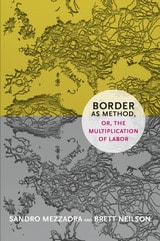
Border as Method, or, the Multiplication of Labor
Sandro Mezzadra and Brett Neilson
Duke University Press, 2013
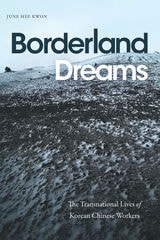
Borderland Dreams
The Transnational Lives of Korean Chinese WorkersJune Hee Kwon
Duke University Press, 2023
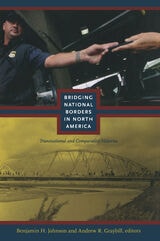
Bridging National Borders in North America
Transnational and Comparative HistoriesBenjamin H. Johnson and Andrew R. Graybill, eds.
Duke University Press, 2010
The contributors engage topics such as how mixed-race groups living on the peripheries of national societies dealt with the creation of borders in the nineteenth century, how medical inspections and public-health knowledge came to be used to differentiate among bodies, and how practices designed to channel livestock and prevent cattle smuggling became the model for regulating the movement of narcotics and undocumented people. They explore the ways that U.S. immigration authorities mediated between the desires for unimpeded boundary-crossings for day laborers, tourists, casual visitors, and businessmen, and the restrictions imposed by measures such as the Chinese Exclusion Act of 1882 and the 1924 Immigration Act. Turning to the realm of culture, they analyze the history of tourist travel to Mexico from the United States and depictions of the borderlands in early-twentieth-century Hollywood movies. The concluding essay suggests that historians have obscured non-national forms of territoriality and community that preceded the creation of national borders and sometimes persisted afterwards. This collection signals new directions for continental dialogue about issues such as state-building, national expansion, territoriality, and migration.
Contributors: Dominique Brégent-Heald, Catherine Cocks, Andrea Geiger, Miguel Ángel González Quiroga, Andrew R. Graybill, Michel Hogue, Benjamin H. Johnson, S. Deborah Kang, Carolyn Podruchny, Bethel Saler, Jennifer Seltz, Rachel St. John, Lissa Wadewitz
Published in cooperation with the William P. Clements Center for Southwest Studies, Southern Methodist University.
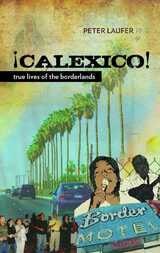
Calexico
True Lives of the BorderlandsPeter Laufer
University of Arizona Press, 2011
A “sleepy crossroads that exists at a global flashpoint,” Calexico serves as the reference point for veteran journalist Peter Laufer’s chronicle of day-to-day life on the border. This wide-ranging, interview-driven book finds Laufer and travel companion/photographer on a weeklong road trip through the Imperial Valley and other border locales, engaging in earnest and revealing conversations with the people they meet along the way. Laufer talks to secretaries and politicians, restaurateurs and salsa dancers, poets and real estate agents about the issues that matter to them the most.
What draws them to border towns? How do they feel about border security and the fences that may someday run through their backyards? Is “English-only” a realistic policy? Why have some towns flourished and others declined? What does it mean to be Mexican or American in such a place? Waitress Bonnie Peterson banters with customers in Spanish and English. Mayor Lewis Pacheco laments the role that globalization has played in his city’s labor market. Some of their anecdotes are humorous, others grim. Moreover, not everyone agrees. But this very diversity is part of the fabric of the borderlands, and these stories demand to be heard.
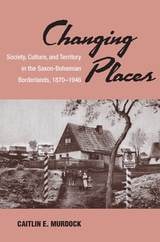
Changing Places
Society, Culture, and Territory in the Saxon-Bohemian Borderlands, 1870-1946Caitlin E. Murdock
University of Michigan Press, 2010
"Changing Places is an interesting meditation on the varying identities and rights claimed by residents of borderlands, the limits placed on the capacities of nation-states to police their borders and enforce national identities, and the persistence of such contact zones in the past and present. It is an extremely well-written and engaging study, and an absolute pleasure to read."
---Dennis Sweeney, University of Alberta
"Changing Places offers a brilliantly transnational approach to its subject, the kind that historians perennially demand of themselves but almost never accomplish in practice."
---Pieter M. Judson, Swarthmore College
Changing Places is a transnational history of the birth, life, and death of a modern borderland and of frontier peoples' changing relationships to nations, states, and territorial belonging. The cross-border region between Germany and Habsburg Austria---and after 1918 between Germany and Czechoslovakia---became an international showcase for modern state building, nationalist agitation, and local pragmatism after World War I, in the 1930s, and again after 1945.
Caitlin Murdock uses wide-ranging archival and published sources from Germany and the Czech Republic to tell a truly transnational story of how state, regional, and local historical actors created, and eventually destroyed, a cross-border region. Changing Places demonstrates the persistence of national fluidity, ambiguity, and ambivalence in Germany long after unification and even under fascism. It shows how the 1938 Nazi annexation of the Czechoslovak "Sudetenland" became imaginable to local actors and political leaders alike. At the same time, it illustrates that the Czech-German nationalist conflict and Hitler's Anschluss are only a small part of the larger, more complex borderland story that continues to shape local identities and international politics today.
Caitlin E. Murdock is Associate Professor of History at California State University, Long Beach.
Jacket Credit: Cover art courtesy of the author
Criticism in the Borderlands
Studies in Chicano Literature, Culture, and IdeologyHéctor Calderón and José David Saldívar, eds.
Duke University Press, 1991
The editors have organized essays around four board themes: the situation of Chicano literary studies within American literary history and debates about the “canon”; representations of the Chicana/o subject; genre, ideology, and history; and the aesthetics of Chicano literature. The volume as a whole aims at generating new ways of understanding what counts as culture and “theory” and who counts as a theorist. A selected and annotated bibliography of contemporary Chicano literary criticism is also included.
By recovering neglected authors and texts and introducing readers to an emergent Chicano canon, by introducing new perspectives on American literary history, ethnicity, gender, culture, and the literary process itself, Criticism in the Borderlands is an agenda-setting collection that moves beyond previous scholarship to open up the field of Chicano literary studies and to define anew what is American literature.
Contributors. Norma Alarcón, Héctor Calderón, Angie Chabram, Barbara Harlow, Rolando Hinojosa, Luis Leal, José E. Limón, Terese McKenna, Elizabeth J. Ordóñez, Genero Padilla, Alvina E. Quintana, Renato Rosaldo, José David Saldívar, Sonia Saldívar-Hull, Rosaura Sánchez, Roberto Trujillo

Deepening Divides
How Physical Borders and Social Boundaries Delineate our WorldDidier Fassin
Pluto Press, 2019
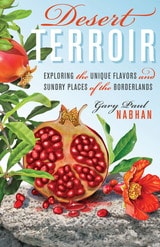
Desert Terroir
Exploring the Unique Flavors and Sundry Places of the BorderlandsBy Gary Paul Nabhan
University of Texas Press, 2012
Why does food taste better when you know where it comes from? Because history—ecological, cultural, even personal—flavors every bite we eat. Whether it’s the volatile chemical compounds that a plant absorbs from the soil or the stories and memories of places that are evoked by taste, layers of flavor await those willing to delve into the roots of real food. In this landmark book, Gary Paul Nabhan takes us on a personal trip into the southwestern borderlands to discover the terroir—the “taste of the place”—that makes this desert so delicious.
To savor the terroir of the borderlands, Nabhan presents a cornucopia of local foods—Mexican oregano, mesquite-flour tortillas, grass-fed beef, the popular Mexican dessert capirotada, and corvina (croaker or drum fish) among them—as well as food experiences that range from the foraging of Cabeza de Vaca and his shipwrecked companions to a modern-day camping expedition on the Rio Grande. Nabhan explores everything from the biochemical agents that create taste in these foods to their history and dispersion around the world. Through his field adventures and humorous stories, we learn why Mexican oregano is most potent when gathered at the most arid margins of its range—and why foods found in the remote regions of the borderlands have surprising connections to foods found by his ancestors in the deserts of the Mediterranean and the Middle East. By the end of his movable feast, Nabhan convinces us that the roots of this fascinating terroir must be anchored in our imaginations as well as in our shifting soils.

Fatherhood in the Borderlands
A Daughter's Slow ApproachDomino Renee Perez
University of Texas Press, 2022
2026 Best Book Award, Association for Borderlands Studies
2023 Finalist, Best Academic Themed Book, College Level – English, International Latino Book Awards
A contemplative exploration of cultural representations of Mexican American fathers in contemporary media.
As a young girl growing up in Houston, Texas, in the 1980s, Domino Perez spent her free time either devouring books or watching films—and thinking, always thinking, about the media she consumed. The meaningful connections between these media and how we learn form the basis of Perez’s “slow” research approach to race, class, and gender in the borderlands. Part cultural history, part literary criticism, part memoir, Fatherhood in the Borderlands takes an incisive look at the value of creative inquiry while it examines the nuanced portrayal of Mexican American fathers in literature and film.
Perez reveals a shifting tension in the literal and figurative borderlands of popular narratives and shows how form, genre, and subject work to determine the roles Mexican American fathers are allowed to occupy. She also calls our attention to the cultural landscape that has allowed such a racialized representation of Mexican American fathers to continue, unopposed, for so many years. Fatherhood in the Borderlands brings readers right to the intersection of the white cultural mainstream in the United States and Mexican American cultural productions, carefully considering the legibility and illegibility of Brown fathers in contemporary media.
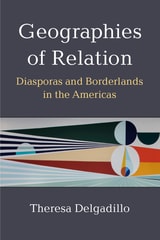
Geographies of Relation
Diasporas and Borderlands in the AmericasTheresa Delgadillo
University of Michigan Press, 2024
Not only does Delgadillo offer a rare extended analysis of Black Latinidades in Chicanx literature and theory, but she also considers over a century’s worth of literary, cinematic, and performative texts to support her argument about the significance of these cultural sites and overlaps. Chapters illuminate the significance of Toña La Negra in the Golden Age of Mexican cinema, reconsider feminist theorist Gloria Anzaldúa’s work in revising exclusionary Latin American ideologies of mestizaje, delve into the racial and gender frameworks Sandra Cisneros attempts to rewrite, unpack encounters between African Americans and Black Puerto Ricans in texts by James Baldwin and Marta Moreno Vega, explore the African diaspora in colonial and contemporary Peru through Daniel Alarcón’s literature and the documentary Soy Andina, and revisit the centrality of Black power in ending colonialism in Cuban narratives. Geographies of Relation demonstrates the long histories of networks and exchanges across the Americas as well as the interrelationships among Indigenous, Black, African American, mestizx, Chicanx, and Latinx peoples. It offers a compelling argument that geographies of relation are as significant as national frameworks in structuring cultural formation and change in this hemisphere.

Globalizing the Lower Rio Grande
European Entrepreneurs in the Borderlands, 1749-1881Kyle Carpenter
University of North Texas Press, 2024
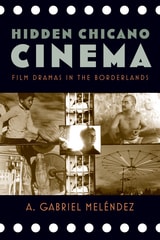
Hidden Chicano Cinema
Film Dramas in the BorderlandsMeléndez, A. Gabriel
Rutgers University Press, 2013
The book highlights “film moments” in this region’s history including the “filmic turn” ushered in by Chicano/a filmmakers who created new ways to represent their community and region. A. Gabriel Meléndez narrates the drama, intrigue, and politics of these moments and accounts for the specific cinematic practices and the sociocultural detail that explains how the camera itself brought filmmakers and their subjects to unexpected encounters on and off the screen. Such films as Adventures in Kit Carson Land, The Rattlesnake, and Red Sky at Morning, among others, provide examples of movies that have both educated and misinformed us about a place that remains a “distant locale” in the mind of most film audiences.
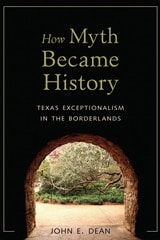
How Myth Became History
Texas Exceptionalism in the BorderlandsJohn E. Dean
University of Arizona Press, 2016
How Myth Became History explores the formation of national, ethnic, racial, and class identities in the Texas borderlands. Examining Mexican, Mexican American, and Anglo Texan narratives as competing representations of the period spanning the Texas Declaration of Independence to the Mexican Revolution, John E. Dean traces the creation and development of border subjects and histories. Dean uses history, historical fiction, postcolonial theory, and U.S.-Mexico border theory to disrupt “official” Euro-American histories.
Dean argues that the Texas-Mexico borderlands complicate national, ethnic, and racial differences. He makes this clear in his discussion of the Mexican Revolution, when many Mexican Americans who saw themselves as Mexicans fought for competing revolutionary factions in Mexico, while others who saw themselves as U.S. Americans tried to distance themselves from Mexico altogether.
Analyzing literary representations of the border, How Myth Became History emphasizes the heterogeneity of border communities and foregrounds narratives that have often been occluded, such as Mexican-Indio histories. The border, according to Dean, still represents a contested geographical entity that destabilizes ethnic and racial groups. Border dynamics provide critical insight into the vexed status of the contemporary Texas-Mexico divide and point to broader implications for national and transnational identity.
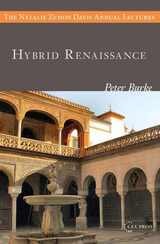
Hybrid Renaissance
Culture, Language, ArchitecturePeter Burke
Central European University Press, 2016
Hybrid Renaissance introduces the idea that the Renaissance in Italy, elsewhere in Europe, and in the world beyond Europe is an example of cultural hybridization.
The two key concepts used in this book are “hybridization” and “Renaissance”. Roughly speaking, hybridity refers to something new that emerges from the combination of diverse older elements. (The term “hybridization” is preferable to “hybridity” because it refers to a process rather than to a state, and also because it encourages the writer and the readers alike to think in terms of degree: where there is more or less, rather than presence versus absence.)
The book begins with a discussion of the concept of cultural hybridization and a cluster of other concepts related to it. Then comes a geography of cultural hybridization focusing on three locales: courts, major cities (whether ports or capitals) and frontiers. The following seven chapters describe the hybridity of the Renaissance in different fields: architecture, painting and sculpture, languages, literature, music, philosophy and law and finally religion. The essay concludes with a brief account of attempts to resist hybridization or to purify cultures or domains from what was already hybridized.

I Am My Language
Discourses of Women and Children in the BorderlandsNorma González
University of Arizona Press, 2001
“I am my language,” says the poet Gloria Anzaldúa, because language is at the heart of who we are. But what happens when a person has more than one language? Is there an overlay of language on identity, and do we shift identities as we shift languages? More important, what identities do children construct for themselves when they use different languages in particular ways?
In this book, Norma González uses language as a window on the multiple levels of identity construction in children—as well as on the complexities of life in the borderlands—to explore language practices and discourse patterns of Mexican-origin mothers and the language socialization of their children. She shows how the unique discourses that result from the interplay of two cultures shape perceptions of self and community, and how they influence the ways in which children learn and families engage with their children’s schools.
González demonstrates that the physical presence of the border profoundly affects the practices and ideologies of Mexican-origin women and children. She then argues that language and cultural background should be used as a basis for building academic competencies, and she demonstrates why the evocative/emotive dimension of language should play a major part in studies of discourse, language socialization, and language ideology.
Drawing on women’s own narratives of their experiences as both mothers and borderland residents, I Am My Language is firmly rooted in the words of common people in their everyday lives. It combines personal odyssey with cutting-edge ethnographic research, allowing us to hear voices that have been muted in the academic and public policy discussions of “what it means to be Latina/o” and showing us new ways to connect language to complex issues of education, political economy, and social identity.
Imperial Designs, Postimperial Extremes
Studies in Interdisciplinary and Comparative History of Russia and Eastern EuropeAndrei Cusco
Central European University Press, 2023
Anchored in the Russian Empire, but not limited to it, the eight studies in this volume explore the nineteenth-century imperial responses to the challenge of modernity, the dramatic disruptions of World War I, the radical scenarios of the interwar period and post-communist endgames at the different edges of Eurasia. The book continues and amplifies the historiographic momentum created by Alfred J. Rieber’s long and fruitful scholarly career.
First, the volume addresses the attempts of Russian imperial rulers and elites to overcome the economic backwardness of the empire with respect to the West. The ensuing rivalry of several interest groups (entrepreneurs, engineers, economists) created new social forms in the subsequent rounds of modernization. The studies explore the dynamics of the metamorphoses of what Rieber famously conceptualized as a “sedimentary society” in the pre-revolutionary and early Soviet settings.
Second, the volume also expands and dwells on the concept of frontier zones as dynamic, mutable, shifting areas, characterized by multi-ethnicity, religious diversity, unstable loyalties, overlapping and contradictory models of governance, and an uneasy balance between peaceful co-existence and bloody military clashes. In this connection, studies pay special attention to forced and spontaneous migrations, and population politics in modern Eurasia.
Indigenous Peoples and Borders
Sheryl Lightfoot and Elsa Stamatopoulou, editors
Duke University Press, 2024
Contributors. Tone Bleie, Andrea Carmen, Jacqueline Gillis, Rauna Kuokkanen, Elifuraha Laltaika, Sheryl Lightfoot, David Bruce MacDonald, Toa Elisa Maldonado Ruiz, Binalakshmi “Bina” Nepram, Melissa Z. Patel, Manoel B. do Prado Junior, Hana Shams Ahmed, Elsa Stamatopoulou, Liubov Suliandziga, Rodion Sulyandziga, Yifat Susskind, Erika M. Yamada
Interspecies Politics
Nature, Borders, StatesRafi Youatt
University of Michigan Press, 2020
This book explores the ways that international politics is a form of interspecies politics, one that involves the interactions, ideas, and practices of multiple species, both human and nonhuman, to generate differences and create commonalities. While we frequently think of having an international politics “of” the environment, a deep and thoroughgoing anthropocentrism guides our idea of what political life can be, which prevents us from thinking about a politics “with” the environment. This anthropocentric assumption about politics drives both ecological degradation and deep forms of interhuman injustice and hierarchy.
Interspecies Politics challenges that assumption, arguing that a truly ecological account of interstate life requires us to think about politics as an activity that crosses species lines. It therefore explores a postanthropocentric account of international politics, focusing on a series of cases and interspecies practices in the American borderlands, ranging from the US-Mexico border in southern Texas, to Guantánamo Bay in Cuba, to Isle Royale, near the US-Canadian border. The book draws on international relations, environmental political theory, anthropology, and animal studies, to show how key international dimensions of states—sovereignty, territory, security, rights—are better understood as forms of interspecies assemblage that both generate new forms of multispecies inclusion, and structure forms of violence and hierarchy against human and nonhuman alike.
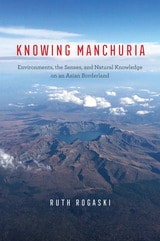
Knowing Manchuria
Environments, the Senses, and Natural Knowledge on an Asian BorderlandRuth Rogaski
University of Chicago Press, 2022
According to Chinese government reports, hundreds of plague-infected rodents fell from the skies over Gannan county on an April night in 1952. Chinese scientists determined that these flying voles were not native to the region, but were vectors of germ warfare, dispatched over the border by agents of imperialism. Mastery of biology had become a way to claim political mastery over a remote frontier. Beginning with this bizarre incident from the Korean War, Knowing Manchuria places the creation of knowledge about nature at the center of our understanding of a little-known but historically important Asian landscape.
At the intersection of China, Russia, Korea, and Mongolia, Manchuria is known as a site of war and environmental extremes, where projects of political control intersected with projects designed to make sense of Manchuria’s multiple environments. Covering more than 500,000 square miles, Manchuria’s landscapes include temperate rainforests, deserts, prairies, cultivated plains, wetlands, and Siberian taiga. With analysis spanning the seventeenth century to the present day, Ruth Rogaski reveals how an array of historical actors—Chinese poets, Manchu shamans, Russian botanists, Korean mathematicians, Japanese bacteriologists, American paleontologists, and indigenous hunters—made sense of the Manchurian frontier. She uncovers how natural knowledge, and thus the nature of Manchuria itself, changed over time, from a sacred “land where the dragon arose” to a global epicenter of contagious disease; from a tragic “wasteland” to an abundant granary that nurtured the hope of a nation.
Life beyond the Boundaries
Constructing Identity in Edge Regions of the North American SouthwestKaren Harry
University Press of Colorado, 2018
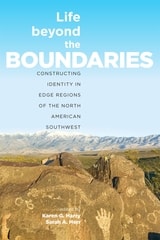
Life beyond the Boundaries explores identity formation on the edges of the ancient Southwest. Focusing on some of the more poorly understood regions, including the Jornada Mogollon, the Gallina, and the Pimería Alta, the authors use methods drawn from material culture science, anthropology, and history to investigate themes related to the construction of social identity along the perimeters of the American Southwest.
Through an archaeological lens, the volume examines the social experiences of people who lived in edge regions. Through mobility and the development of extensive social networks, people living in these areas were introduced to the ideas and practices of other cultural groups. As their spatial distances from core areas increased, the degree to which they participated in the economic, social, political, and ritual practices of ancestral core areas increasingly varied. As a result, the social identities of people living in edge zones were often—though not always—fluid and situational.
Drawing on an increase of available information and bringing new attention to understudied areas, the book will be of interest to scholars of Southwestern archaeology and other researchers interested in the archaeology of low-populated and decentralized regions and identity formation. Life beyond the Boundaries considers the various roles that edge regions played in local and regional trajectories of the prehistoric and protohistoric Southwest and how place influenced the development of social identity.
Contributors: Lewis Borck, Dale S. Brenneman, Jeffery J. Clark, Severin Fowles, Patricia A. Gilman, Lauren E. Jelinek, Myles R. Miller, Barbara J. Mills, Matthew A. Peeples, Kellam Throgmorton, James T. Watson
Long Stories Cut Short
Fictions from the BorderlandsFrederick Luis Aldama; Foreword by Ana María Shua
University of Arizona Press, 2017
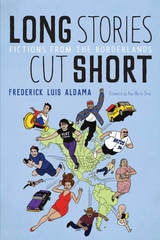
Xbox videogamer cholo cyberpunks. Infants who read before they talk. Vatos locos, romancing abuelos, border crossers and border smugglers, drug kingpins, Latina motorbike riders, philosophically musing tweens, and so much more.
The stories in this dynamic bilingual prose-art collection touch on the universals of romance, family, migration and expulsion, and everyday life in all its zany configurations. Each glimpse into lives at every stage—from newborns and children to teens, young adults, and the elderly—further submerges readers in psychological ups and downs. In a world filled with racism, police brutality, poverty, and tensions between haves and have-nots, these flashes of fictional insight bring gleaming clarity to life lived where all sorts of borders meet and shift.
Frederick Luis Aldama and graphic artists from Mapache Studios give shape to ugly truths in the most honest way, creating new perceptions, thoughts, and feelings about life in the borderlands of the Américas. Each bilingual prose-art fictional snapshot offers an unsentimentally complex glimpse into what it means to exist at the margins of society today. These unflinching and often brutal fictions crisscross spiritual, emotional, and physical borders as they give voice to all those whom society chooses not to see.

Meditación Fronteriza
Poems of Love, Life, and LaborNorma Elia Cantú
University of Arizona Press, 2019
The poems are a celebration of culture, tradition, and creativity that navigates themes of love, solidarity, and political transformation. Deeply personal yet warmly relatable, these poems flow from Spanish to English gracefully. With Gloria Anzaldúa’s foundational work as an inspiration, Meditación Fronteriza unveils unique images that provide nuance and depth to the narrative of the borderlands.
Poems addressed to talented and influential women such as Gwendolyn Brooks and Adrienne Rich, among others, pour gratitude and recognition into the collection. While many of the poems in Meditación Fronteriza are gentle and inviting, there are also moments that grieve for the state of the borderlands, calling for political resistance.
Mining the Borderlands
Industry, Capital, and the Emergence of Engineers in the Southwest Territories, 1855-1910Sarah E. M. Grossman
University of Nevada Press, 2018
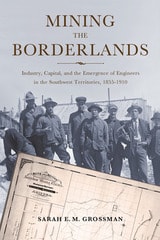
At the dawn of the twentieth century, the US-Mexico border was home to some of the largest and most technologically advanced industrial copper mines. This despite being geographically, culturally, and financially far-removed from traditional urban centers of power. Mining the Borderlands argues that this was only possible because of the emergence of mining engineers—a distinct technocratic class of professionals who connected capital, labor, and expertise.
Mining engineers moved easily between remote mining camps and the upscale parlors of east coast investors. Working as labor managers and technical experts, they were involved in the daily negotiations, which brought private US capital to the southwestern border. The success of the massive capital-intensive mining ventures in the region depended on their ability to construct different networks, serving as intermediaries to groups that rarely coincided.
Grossman argues that this didn’t just lead to bigger and more efficient mines, but served as part of the ongoing project of American territorial and economic expansion. By integrating the history of technical expertise into the history of the transnational mining industry, this in-depth look at borderlands mining explains how American economic hegemony was established in a border region peripheral to the federal governments of both Washington, D.C. and Mexico City.
Not a Catholic Nation
The Ku Klux Klan Confronts New England in the 1920sMark Paul Richard
University of Massachusetts Press, 2015
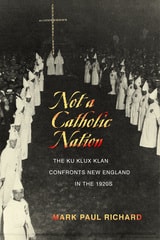
Drawing on a wide range of previously untapped sources—French-language newspapers in the New England–Canadian borderlands; KKK documents scattered in local, university, and Catholic repositories; and previously undiscovered copies of the Maine Klansmen—Richard demonstrates that the Klan was far more active in the Northeast than previously thought. He also challenges the increasingly prevalent view that the Ku Klux Klan became a mass movement during this period largely because it functioned as a social, fraternal, or civic organization for many Protestants. While Richard concedes that some Protestants in New England may have joined the KKK for those reasons, he shows that the politics of ethnicity and labor played a more significant role in the Klan's growth in the region.
The most comprehensive analysis of the Ku Klux Klan's antagonism toward Catholics in the 1920s, this book is also distinctive in its consideration of the history of the Canada–U.S. borderlands, particularly the role of Canadian immigrants as both proponents and victims of the Klan movement in the United States.
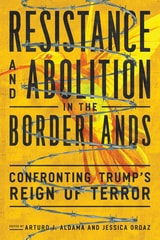
Resistance and Abolition in the Borderlands
Confronting Trump's Reign of TerrorEdited by Arturo J. Aldama and Jessica Ordaz; Foreword by Leo R. Chavez; Afterword by Karma R. Chávez
University of Arizona Press, 2024
This volume provides a well-argued look at the Trump era. Insightful contributions delve into the impact of Donald Trump’s rhetoric and policies on migrants detained and returned, immigrant children separated from their parents and placed in detention centers, and migrant women subjected to sexual and reproductive abuses, among other timely topics. The chapter authors document a long list in what the book calls “Trump’s Reign of Terror.”
Organized thematically, the book has four sections: The first gathers histories about the Trump years’ roots in a longer history of anti-migration; the second includes essays on artistic and activist responses on the border during the Trump years; the third critiques the normalization of Trump’s rhetoric and actions in popular media and culture; and the fourth envisions the future.
Resistance and Abolition in the Borderlands is an essential reader for those wishing to understand the extent of the damage caused by the Trump era and its impact on Latinx people.
Contributors
Arturo J. Aldama
Rebecca Avalos
Cynthia Bejarano
Tria Blu Wakpa
Renata Carvalho Barreto
Karma R. Chávez
Leo R. Chavez
Jennifer Cullison
Jasmin Lilian Diab
Allison Glover
Jamila Hammami
Alexandria Herrera
Diana J. Lopez
Sergio A. Macías
Cinthya Martinez
Alexis N. Meza
Roberto A. Mónico
José Enrique Navarro
Jessica Ordaz
Eliseo Ortiz
Kiara Padilla
Leslie Quintanilla
J-M Rivera
Heidy Sarabia
Tina Shull
Nishant Upadhyay
Maria Vargas
Antonio Vásquez
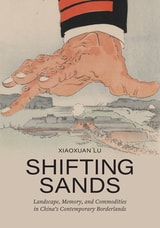
Shifting Sands
Landscape, Memory, and Commodities in China's Contemporary BorderlandsXiaoxuan Lu
University of Texas Press, 2023
How China’s borderlands transformed politically and culturally throughout the twentieth and twenty-first centuries.
China’s land borders, shared with fourteen other nations, are the world’s longest. Like all borders, they are not just lines on a map but also spaces whose histories and futures are defined by their frontier status. An ambitious appraisal of China’s borderlands, Shifting Sands addresses the full scope and importance of these regions, illustrating their transformation from imperial backwaters to hotbeds of resource exploitation and human development in the age of neoliberal globalization.
Xiaoxuan Lu brings to bear an original combination of archival research, fieldwork, cartography, and landscape analysis, broadening our understanding of the political economy and cultural changes in China’s borderlands in the twentieth and twenty-first centuries. While conventional wisdom looks to the era of Deng Xiaoping for China’s “opening,” Lu shows the integration of China’s borderlands into national and international networks from Sun Yat-sen onward. Yet, while the state has left a firm imprint on the borderlands, they were hardly created by China alone. As the Chinese case demonstrates, all borderlands are transnational, their physical and socioeconomic landscapes shaped by multidirectional flows of materials, ideas, and people.

Smugglers Secessionists & Loyal Citizens
On The Ghana-Togo FrontierPaul Nugent
Ohio University Press, 2002
Paul Nugent contends that whatever the origins of partition, border peoples quickly became knowing and active participants in the shaping of this international boundary. The study itself straddles the conventional divide between social and political history and offers a reconstruction of a long-range history of smuggling and a reappraisal of Ewe identity.
Addressing topics such as imperialism, cocoa, the Customs Preventive Service, Christianity, and Ewe unification, this study will be of interest to scholars and to others concerned with issues of criminality, identity, and the state.
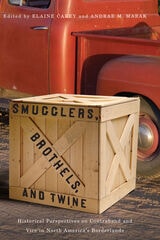
Smugglers, Brothels, and Twine
Historical Perspectives on Contraband and Vice in North America’s BorderlandsEdited by Elaine Carey and Andrae M. Marak
University of Arizona Press, 2011
By studying the historical flows of contraband and vice across North American borders, the contributors seek to bring a greater understanding of borderlanders, the actual agents of historical change who often remain on the periphery of most historical analyses that focus on the state or on policy.
To examine the political, economic, and social shifts resulting from the transnational movement of goods, people, and ideas, these contributions employ the analytical categories of race, class, modernity, and gender that underlie this evolution. Chapters focus on the ways power relations created opportunities for engaging in “deviance,” thus questioning the constructs of economic reality versus concepts of criminal behavior. Looking through the lens of transnational flows of contraband and vice, the authors develop a new understanding of nation, immigration, modernization, globalization, consumer society, and border culture.
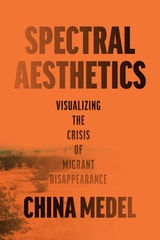
Spectral Aesthetics
Visualizing the Crisis of Migrant DisappearanceChina Medel
University of Texas Press, 2026
Analyzing how artists reimagine migrant disappearance and visibility at the US–Mexico border.
In the mid-1990s, the US government implemented Prevention through Deterrence, a major buildup of troops, walls, and surveillance around El Paso and San Diego. Cut off from these crucial urban crossings, migrants flowed into the dangerous surrounding deserts, where some ten thousand have since died. This is all according to plan: Pentagon documents describe the strategy of funneling migrants toward “mortal danger.”
In this bracing critique, China Medel explores the aesthetics enabling and resisting the crisis of migrant death. The nation-state’s performance of sovereignty along the border, predicated on mass casualties, is tolerated and even celebrated, thanks to the images in our heads of racialized and therefore criminal bodies, made invisible as they disintegrate in the baking sand. Spectral Aesthetics shows how state officials and mainstream media, relying on postracial ideologies and white-supremacist agendas, collectively foster this picture of a brown body so abject that it is disposable. In close readings of artworks contesting this murderous visual regime, Medel discovers an alternative kind of sight, one emphasizing the ghostly traces of the dead. These are images not of the individual “alien” but of life itself, indisposable.
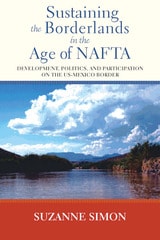
Sustaining the Borderlands in the Age of NAFTA
Development, Politics, and Participation on the US-Mexico BorderSuzanne Simon
Vanderbilt University Press, 2014
Although the key to the side accords' anticipated success lay in their ostensibly generous encouragement of a participatory politics and sustainable development opportunities, Sustaining the Borderlands reveals that the Mexican border populations for which they were largely created are effectively excluded from participating due to the ongoing online, territorial, class, and cultural barriers that shape the borderlands. Rather than experiencing the side accords and their companion institutions as transparent and accessible, residents experienced them as opaque and indecipherable. Simon concludes that the side accords have failed to deliver on their promise of bringing democracy to Mexico because practical mechanisms that would ensure their effective implementation were never put in place.
NAFTA took effect at a time when Mexico was undergoing a democratic transition. The treaty was supposed to encourage this transition and improve environmental and labor conditions on the US-Mexico border. This book demonstrates that, twenty years later, the promises of NAFTA have not come to pass.
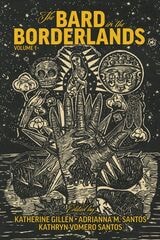
The Bard in the Borderlands
An Anthology of Shakespeare Appropriations en La Frontera, Volume 1Edited by Katherine Gillen, Adrianna M. Santos, and Kathryn Vomero Santos
Arizona Center for Medieval and Renaissance Studies, 2023
For several decades, Chicanx and Indigenous theatermakers have been repurposing Shakespeare’s plays to reflect the histories and lived realities of the US–Mexico Borderlands and to create space to tell stories of and for La Frontera. Celebrating this rich tradition, The Bard in the Borderlands: An Anthology of Shakespeare Appropriations en La Frontera brings a wide range of Borderlands Shakespeare plays together for the first time in a multi-volume open-access scholarly edition.
This anthology celebrates the dynamic, multilingual reworking of canon and place that defines Borderlands Shakespeare, and it situates these geographically and temporally diverse plays within the robust study of Shakespeare’s global afterlives. The editors offer a critical framework for understanding the artistic and political traditions that shape these plays and the place of Shakespeare within the multilayered colonial histories of the region. Borderlands Shakespeare plays, they contend, do not simply reproduce Shakespeare in new contexts but rather use his work in innovative ways to negotiate colonial power and to envision socially just futures.
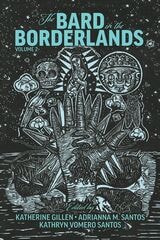
The Bard in the Borderlands
An Anthology of Shakespeare Appropriations en La Frontera, Volume 2Edited by Katherine Gillen, Adrianna M. Santos, and Kathryn Vomero Santos
Arizona Center for Medieval and Renaissance Studies, 2024
For decades, Chicanx and Indigenous theater-makers have worked to repurpose the plays of William Shakespeare to reflect the histories and lived realities of the United States–Mexico Borderlands, or La Frontera. Celebrating this rich tradition, The Bard in the Borderlands brings a wide range of Borderlands Shakespeare plays together for the first time in a multi-volume, open-access scholarly edition, creating space to tell stories of and for this complex and important region.
This second volume continues to celebrate the dynamic, multilingual reworking of canon and place that defines Borderlands Shakespeare, situating geographically and temporally diverse plays within the robust study of Shakespeare’s global afterlives.
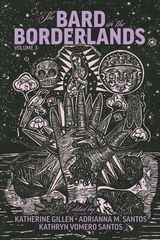
The Bard in the Borderlands
An Anthology of Shakespeare Appropriations en La Frontera, Volume 3Edited by Katherine Gillen, Adrianna M. Santos, and Kathryn Vomero Santos
Arizona Center for Medieval and Renaissance Studies, 2026
The third volume in the anthology, featuring a wide range of plays that reimagine Shakespeare works from Borderlands perspectives.
For several decades, Chicanx and Indigenous theatermakers have been repurposing Shakespeare’s plays to reflect the histories and lived realities of the US–Mexico Borderlands and to create space to tell stories of and for La Frontera. Celebrating this rich tradition, The Bard in the Borderlands: An Anthology of Shakespeare Appropriations en La Frontera brings a wide range of Borderlands Shakespeare plays together for the first time in a multi-volume open-access scholarly edition. This anthology celebrates the dynamic, multilingual reworking of canon and place that defines Borderlands Shakespeare, and it situates these geographically and temporally diverse plays within the robust study of Shakespeare’s global afterlives.
The plays featured in this volume diverge drastically from Shakespeare, bringing elements of Hamlet, Henry IV, Part 1, Macbeth, and The Tempest into a range of subcultures that challenge dominant structures of power. In so doing, they remix and revise intersecting histories and traditions to heal colonial wounds and to call forth new worlds for fronterizos.
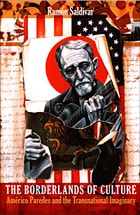
The Borderlands of Culture
Americo Paredes and the Transnational ImaginaryRamón Saldívar
Duke University Press, 2006
Saldívar demonstrates how Paredes’s poetry, prose, and journalism prefigured his later work as a folklorist and ethnographer. In song, story, and poetry, Paredes first developed the themes and issues that would be central to his celebrated later work on the “border studies” or “anthropology of the borderlands.” Saldívar describes how Paredes’s experiences as an American soldier, journalist, and humanitarian aid worker in Asia shaped his understanding of the relations between Anglos and Mexicans in the borderlands of south Texas and of national and ethnic identities more broadly. Saldívar was a friend of Paredes, and part of The Borderlands of Culture is told in Paredes’s own words. By explaining how Paredes’s work engaged with issues central to contemporary scholarship, Saldívar extends Paredes’s intellectual project and shows how it contributes to the remapping of the field of American studies from a transnational perspective.
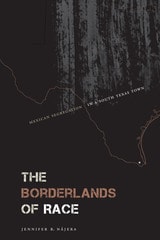
The Borderlands of Race
Mexican Segregation in a South Texas TownBy Jennifer R. Nájera
University of Texas Press, 2015
Throughout much of the twentieth century, Mexican Americans experienced segregation in many areas of public life, but the structure of Mexican segregation differed from the strict racial divides of the Jim Crow South. Factors such as higher socioeconomic status, lighter skin color, and Anglo cultural fluency allowed some Mexican Americans to gain limited access to the Anglo power structure. Paradoxically, however, this partial assimilation made full desegregation more difficult for the rest of the Mexican American community, which continued to experience informal segregation long after federal and state laws officially ended the practice.
In this historical ethnography, Jennifer R. Nájera offers a layered rendering and analysis of Mexican segregation in a South Texas community in the first half of the twentieth century. Using oral histories and local archives, she brings to life Mexican origin peoples’ experiences with segregation. Through their stories and supporting documentary evidence, Nájera shows how the ambiguous racial status of Mexican origin people allowed some of them to be exceptions to the rule of Anglo racial dominance. She demonstrates that while such exceptionality might suggest the permeability of the color line, in fact the selective and limited incorporation of Mexicans into Anglo society actually reinforced segregation by creating an illusion that the community had been integrated and no further changes were needed. Nájera also reveals how the actions of everyday people ultimately challenged racial/racist ideologies and created meaningful spaces for Mexicans in spheres historically dominated by Anglos.
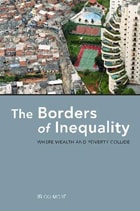
The Borders of Inequality
Where Wealth and Poverty CollideÍñigo Moré
University of Arizona Press, 2011
In this fascinating book, originally published in Spain to much acclaim, researcher Íñigo Moré looks at the bigger picture. With a professionally trained eye, he examines the world’s “top twenty most unequal borders.” What he finds is that many of these border situations share similar characteristics. There is always illegal immigration from the poor country to the wealthy one. There is always trafficking in illegal substances. And the unequal neighbors usually regard each other with suspicion or even open hostility.
After surveying the “top twenty,” Moré explores in depth the cases of three borders: between Germany and Poland, Spain and Morocco, and the United States and Mexico. The core problem, he concludes, is not drugs or immigration or self-protection. Rather, the problem is inequality itself. Unequal borders result, he writes, from a skewed interaction among markets, people, and states. Using these findings, Moré builds a useful new framework for analyzing border dynamics from a quantitative view based on economic inequality.
The Borders of Inequality illustrates how longstanding “multidirectional misunderstandings” can exacerbate cross-border problems—and consequent public opinion. Perpetuating these misunderstandings can inflame and complicate the situation, but purposeful efforts to reduce inequality can produce promising results.
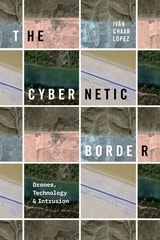
The Cybernetic Border
Drones, Technology, and IntrusionIván Chaar López
Duke University Press, 2024
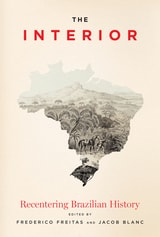
The Interior
Recentering Brazilian HistoryFrederico Freitas and Jacob Blanc
University of Texas Press, 2024
A new history of Brazil told through the lens of the often-overlooked interior regions.
In colonial Brazil, observers frequently complained that Portuguese settlers appeared content to remain “clinging to the coastline, like crabs.” From their perspective, the vast Brazilian interior seemed like an untapped expanse waiting to be explored and colonized. This divide between a thriving coastal area and a less-developed hinterland has become deeply ingrained in the nation’s collective imagination, perpetuating the notion of the interior as a homogeneous, stagnant periphery awaiting the dynamic influence of coastal Brazil.
The Interior challenges these narratives and reexamines the history of Brazil using an “interior history” perspective. This approach aims to reverse the conventional conceptual and geographical boundaries often employed to study Brazilian history, and, by extension, Latin America as a whole. Through the work of twelve leading scholars, the volume highlights how the people and spaces within the interior have played a pivotal role in shaping national identities, politics, the economy, and culture. The Interior goes beyond the traditional boundaries of borderland and frontier history, expands on the current wave of scholarship on regionalism in Brazil, and, by asking new questions about space and nation, provides a fresh perspective on Brazil’s history.
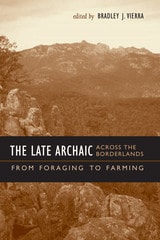
The Late Archaic across the Borderlands
From Foraging to FarmingEdited by Bradley J. Vierra
University of Texas Press, 2005
Why and when human societies shifted from nomadic hunting and gathering to settled agriculture engages the interest of scholars around the world. One of the most fruitful areas in which to study this issue is the North American Southwest, where Late Archaic inhabitants of the Sonoran and Chihuahuan Deserts of Mexico, Arizona, and New Mexico turned to farming while their counterparts in Trans-Pecos and South Texas continued to forage. By investigating the environmental, biological, and cultural factors that led to these differing patterns of development, we can identify some of the necessary conditions for the rise of agriculture and the corresponding evolution of village life.
The twelve papers in this volume synthesize previous and ongoing research and offer new theoretical models to provide the most up-to-date picture of life during the Late Archaic (from 3,000 to 1,500 years ago) across the entire North American Borderlands. Some of the papers focus on specific research topics such as stone tool technology and mobility patterns. Others study the development of agriculture across whole regions within the Borderlands. The two concluding papers trace pan-regional patterns in the adoption of farming and also link them to the growth of agriculture in other parts of the world.

The Loyal West
Civil War and Reunion in Middle AmericaMatthew E. Stanley
University of Illinois Press, 2017
Matthew E. Stanley's intimate study explores the Civil War, Reconstruction, and sectional reunion in this bellwether region. Using the lives of area soldiers and officers as a lens, Stanley reveals a place and a strain of collective memory that was anti-rebel, anti-eastern, and anti-black in its attitudes--one that came to be at the forefront of the northern retreat from Reconstruction and toward white reunion. The Lower Middle West's embrace of black exclusion laws, origination of the Copperhead movement, backlash against liberalizing war measures, and rejection of Reconstruction were all pivotal to broader American politics. And the region's legacies of white supremacy--from racialized labor violence to sundown towns to lynching--found malignant expression nationwide, intersecting with how Loyal Westerners remembered the war.
A daring challenge to traditional narratives of section and commemoration, The Loyal West taps into a powerful and fascinating wellspring of Civil War identity and memory.

The Parker Sisters
A Border KidnappingLucy Maddox
Temple University Press, 2016
In The Parker Sisters, Lucy Maddox gives an eloquent, urgent account of the tragic kidnapping of these young women. Using archival news and courtroom reports, Maddox tells the larger story of the disastrous effect of the Fugitive Slave Act on the small farming communities of Chester County and the significant, widening consequences for the state and the nation.
The Parker Sisters is also a story about families whose lives and fates were deeply embedded in both the daily rounds of their community and the madness and violence consuming all of antebellum America. Maddox’s account of this horrific and startling crime reveals the strength and vulnerability of the Parker sisters and the African American population.