Results by title

5 books match the query 'Bosnia'
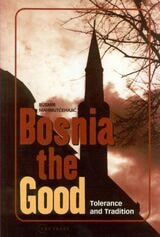
cover of Bosnia the Good: Tolerance and Tradition

Bosnia the Good

Tolerance and Tradition

Rusmir Mahmutcehajic

Central European University Press, 2000

Bosnia the Good is an indictment of the partition of Bosnia, formalized in 1995 by the Dayton Accord. This unequalled volume is a plea from one of Bosnia-Herzegovina's most prominent dissidents appealing for Bosnia's communities to reject ethnic segregation and restore mutual trust. The author argues for the history and reality of a Bosnia-Herzegovina based upon a model of 'unity in diversity'. He shows that ethnic and religious cultures co-existed in Bosnia for centuries and that Croatian and Serbian leaders determined to enact their own nationalist programs are to be blamed for the conflicts that devastated a nation. He points out the decisive moment when the international community accepted the Serb/Croat argument that ancient ethnic hatreds were endemic to Bosnia and that ethnic segregation became not only acceptable but desirable. He examines the reasons why Western liberal democracies have regarded with sympathy the struggles of Serbia and Croatia for national recognition, while viewing Bosnia's multicultural society with suspicion. Bosnia the Good confronts the religious dimension of the Bosnian dilemmas from the perspective of a Bosniak committed to inter-religious dialogue. The author argues that the only way Bosnia will reclaim its unique civilization is more than simple tolerance among Serbs, Croats and Bosnians. They have to recognize that Judaism, Christianity and Islam all share the same deity and it is this common transcendent perspective that should open the door to the acceptance and celebration of religious diversity. Bosnia is at present divided and shaken to its foundations, but the author argues it could become a model for European progress. The greatest danger is for Bosnia to be declared just another ethnoreligious entity, in this case a 'Muslim State' ghettoized inside Europe. If protected and allowed to develop however, the author explains how Bosnia could find a place in a new European order.
[more]
cover of Bosnia: Faking Democracy After Dayton

Bosnia

Faking Democracy After Dayton

David Chandler

Pluto Press, 2000

The Dayton Accords brought the Bosnian war to an end in November 1995, establishing a detailed framework for the reconstitution of the Bosnian state and its consolidation through a process of democratisation. In Bosnia David Chandler makes the first in-depth critical analysis of the policies and impact of post-Dayton democratisation. Drawing on interviews with key officials within the OSCE in Bosnia and extensive original research exploring the impact of policies designed to further political pluralism, develop multi-ethnic administrations, protect human rights and support civil society, Chandler reveals that the process has done virtually nothing to develop democracy in this troubled country. Political autonomy and accountability are now further away than at any time since the outbreak of the Bosnian war. The Afterword to this new edition updates Bosnian developments and adds an analysis of the structures and problems of the international protectorate in Kosovo.
[more]
cover of Contested Memoryscapes in Bosnia and Herzegovina: Presence of Absence in Everyday Peace

Contested Memoryscapes in Bosnia and Herzegovina

Presence of Absence in Everyday Peace

Johanna Mannergren

Central European University Press, 2027

Contested Memoryscapes in Bosnia and Herzegovina: Presence of Absence in Everyday Peace examines what lies beyond immediate, visible politics: silences, secrets, voids, and erasures. Through the conceptual lens of “presence of absence,” the book explores the tension between the loss in the past and the politics surrounding that loss in the present. Drawing on emplaced, embodied, and narrative perspectives, it advances understandings of the impact of memory politics on peace and offers new insights into lived realities in Bosnia and Herzegovina – insights that are relevant for other societies grappling with the long-term consequences of mass violence.
[more]
cover of Dubious Mandate: A Memoir of the UN in Bosnia, Summer 1995

Dubious Mandate

A Memoir of the UN in Bosnia, Summer 1995

Phillip Corwin

Duke University Press, 1999

A critical year in the history of peacekeeping, 1995 saw the dramatic transformation of the role of United Nations’ forces in Bosnia from a protective force to being an active combatant under NATO leadership. Phillip Corwin, the UN’s chief political officer in Sarajevo during the summer of that year, presents an insider’s account of the momentous events that led to that transformation. Dubious Mandate interweaves personal experiences of daily life in a war zone—supply shortages, human suffering, assassination attempts, corruption—with historical facts, as Corwin challenges commonly held views of the war with his own highly informed, discerning, and trenchant political commentary.
Sympathetic to the UN’s achievements, yet skeptical of its acquiescence to the use of military force, Corwin is critical both of the Bosnian government’s tactics for drawing NATO into the conflict and of NATO’s eagerness to make peace by waging war. He challenges the popular depiction of the Bosnian government as that of noble victim, arguing that the leaders of all three sides in the conflict were “gangsters wearing coats and ties.” Highly caustic about Western reportage, he examines the policies of various Western political and military leaders and gives a detailed account of a pivotal phase of the war in Bosnia, a period that culminated with NATO’s massive bombing of Bosnian Serb targets and ultimately led to the Dayton Peace Agreement. Without a proper understanding of this critical period, he argues, it is difficult to understand the greater scope of the conflict. Corwin also offers insightful portraits of some of the leading players in the Bosnian drama, including Yasushi Akashi, the UN’s top official in the former Yugoslavia in 1994–95; General Rupert Smith, the British commander in Sarajevo in 1995; and Hasan Muratovic, a future Bosnian prime minister.
Capturing the essence of a tense and difficult time, Dubious Mandate will interest diplomats, politicians, military personnel, scholars, and those still trying to fathom the continuing mission of the United Nations and the unfolding of events in the former Yugoslavia during the 1990s.


[more]
cover of National Deconstruction: Violence, Identity, and Justice in Bosnia

National Deconstruction

Violence, Identity, and Justice in Bosnia

David Campbell

University of Minnesota Press, 1998

What our response to the Bosnian crisis can tell us about multiculturalism in the United States and beyond.

How did Bosnia, once a polity of intersecting and overlapping identities, come to be understood as an intractable ethnic problem? David Campbell pursues this question-and its implications for the politics of community, democracy, justice, and multiculturalism-through readings of media and academic representations of the conflict in Bosnia. National Deconstruction is a rethinking of the meaning of “ethnic/nationalist” violence and a critique of the impoverished discourse of identity politics that crippled the international response to the Bosnian crisis.

Rather than assuming the preexistence of an entity called Bosnia, Campbell considers the complex array of historical, statistical, cartographic, and other practices through which the definitions of Bosnia have come to be. These practices traverse a continuum of political spaces, from the bodies of individuals and the corporate body of the former Yugoslavia to the international bodies of the world community. Among the book’s many original disclosures, arrived at through a critical reading of international diplomacy, is the shared identity politics of the peacemakers and paramilitaries. Equally significant is Campbell’s conclusion that the international response to the Bosnian war was hamstrung by the poverty of Western thought on the politics of heterogeneous communities. Indeed, he contends that Europe and the United States intervened in Bosnia not to save the ideal of multiculturalism abroad but rather to shore up the nationalist imaginary so as to contain the ideal of multiculturalism at home.By bringing to the fore the concern with ethics, politics, and responsibility contained in more traditional accounts of the Bosnian war, this book is a major statement on the inherently ethical and political assumptions of deconstructive thought-and the reworkings of the politics of community it enables.Awarded “Book of the Year 1999” by the International Forum Bosnia (Sarajevo) and the Human Rights Review (USA).ISBN 0-8166-2936-6 Cloth $62.95xxISBN 0-8166-2937-4 Paper $24.95x382 pages 5 7/8 x 9 SeptemberTranslation inquiries: University of Minnesota Press
[more]